
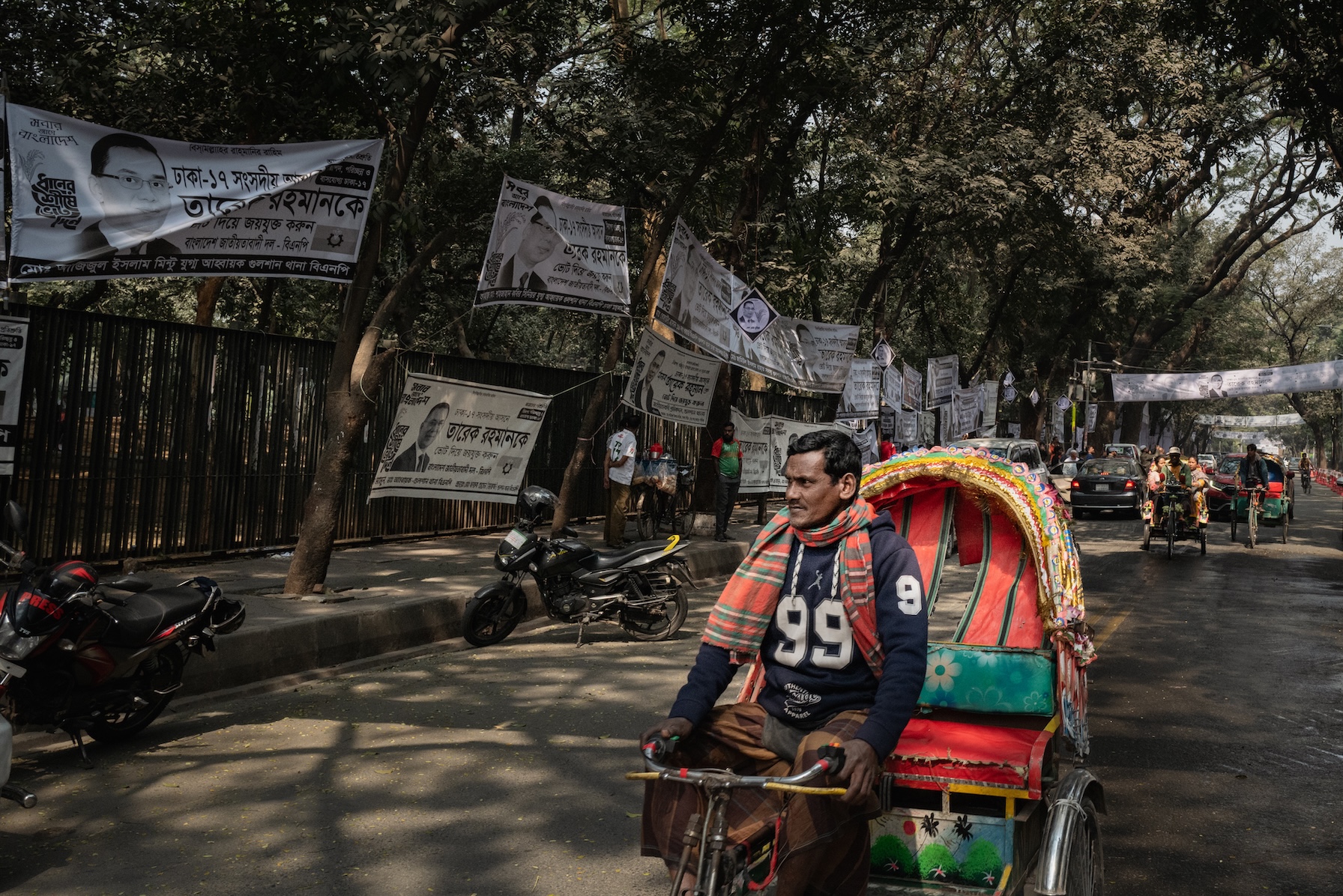
Recently, a significant number of Chinese bloggers have been creating videos and live streaming from slum areas in Dhaka, the capital of Bangladesh, misleading audiences by claiming they are in New Delhi, India. This activity serves to undermine India’s image. India’s Ministry of External Affairs has condemned the spread of false information and the distortion of India’s national identity, while Indian media has pointed out that these actions by Chinese bloggers are part of a propaganda campaign orchestrated by the Chinese Communist Party.
During a press conference on November 10 in New Delhi, spokesperson Randhir Jaiswal stated that it is unacceptable for individuals to film and produce short videos in Dhaka and falsely present it as if they are in India. He emphasized that such behavior should be denounced, and that local authorities must take action to stop these individuals from using Bangladeshi territory to tarnish India’s reputation.
Jaiswal indicated that it is unfortunate for one country’s territory to be used to defame another, and those who fabricate and disseminate false narratives must understand that their actions are also damaging to the credibility of their own country.
According to a report by The Print, for months now, numerous Chinese bloggers have been live streaming from residential areas and street vendors in the northern suburbs of Dhaka. During these live streams, they tell viewers that they are in New Delhi, describing the area as dirty, backward, and unsafe. Some bloggers have even paid local Bangladeshis to assist them in their endeavors.
Local residents have expressed their confusion regarding the influx of foreign live streamers, pointing out that these broadcasters often invade their privacy by filming their daily lives without permission, and in some instances, trespassing into private homes and bathrooms, which has caused extreme dissatisfaction among the locals.
Residents have stated that they are unaware of where these videos are being posted or what content is being shared, and they noted that local law enforcement has not monitored these activities.
The reports mention that these videos have garnered attention on Chinese social media platforms.
In a video filmed on November 1, a woman identifying herself as from Sichuan, China, broadcasted live by a canal in Uttara, showcasing the adjacent Tekpara community. “This is New Delhi. Their houses are very dirty. The tin-roofed houses don’t even have fans. This place is very backward, filthy, and in poor sanitary condition,” she claimed, despite the recording actually taking place in Dhaka.
Residents indicated that some Chinese citizens bring Indian consumer goods, including shampoos, soaps, and Kesh King hair oil, to local pharmacies for promotional live streams, using the pharmacies as their backdrop. Reports suggest that pharmacy owners receive around 500 takas in compensation for allowing the recordings.
A report from Bangladesh Vision revealed that local reporters tried to interview these Chinese individuals, but many distanced themselves, claiming they could not speak English. Others provided their names and nationality before leaving.
In another instance, a reporter approached them and asked what they were filming, to which they responded with a quick “No, no, no,” and hurried away.
On October 27, a reporter from Prothom Alo encountered a Bangladeshi woman, Ritu Akhtar, who stated that she had been acting as a guide for these Chinese citizens for several months. She also mentioned that several other Bangladeshi women were involved in similar work.
Reports indicate that there are at least dozens of Chinese bloggers involved in filming such videos, with some estimates suggesting there could be as many as 150, while local residents speculate that the number of participating Chinese citizens may range from 5,000 to 6,000.
These figures, however, vary widely, and there is currently no official statistical data to confirm them.
While the language used by the Indian government at the press conference was relatively measured, some Indian media outlets and commentators have elevated the actions of the Chinese bloggers to the level of a “media war” or “propaganda battle.”
On November 11, NDTV described the live streaming activities of these Chinese bloggers as appearing to be part of a coordinated disinformation campaign.
The Times of India, in a report dated November 10, referred to this behavior as an “Anti-India campaign,” asserting that it is a deliberate action aimed at damaging India’s image.
In a video released by India Today on November 10, Indian strategic analyst Sushant Sareen candidly referred to this as a form of “political propaganda,” labeling it as a government-driven action.
Despite a brief thaw in relations following border conflicts, the relationship between India and China remains nuanced and delicate.
Earlier in October, the head of India’s border police stated that the Chinese military had returned in large numbers to disputed areas along the Himalayan border, pitching tents just a few kilometers within territory claimed by India.
Additionally, India’s cybersecurity agency revealed on November 4 the existence of a hacker group utilizing artificial intelligence (AI) to attack financial institutions, with at least two of the tools linked to China.
Among overseas Chinese netizens, there has been a strong backlash against the deceptive actions of these individuals.
A user known as “Sydney闲人” expressed their frustration by sharing relevant news articles, rejecting the idea that the true state of the world could be seen from within China, noting the narrative that portrayed foreign places as worse. This “pink superiority” emerges from distorted viewpoints.
In the comments section, one user said, “They are all accomplices of the CCP media!” while another commented, “Yes, making light of someone else’s poverty just to boost domestic morale is an old tactic.”
Another commenter, “Southeast Asian Night Traveler,” added, “A few streamers earn tips, but the negative reputation falls upon honest Chinese living overseas. Using the belongings of the poor as a backdrop and treating the audience like fools, such people do not deserve to be called streamers.”