
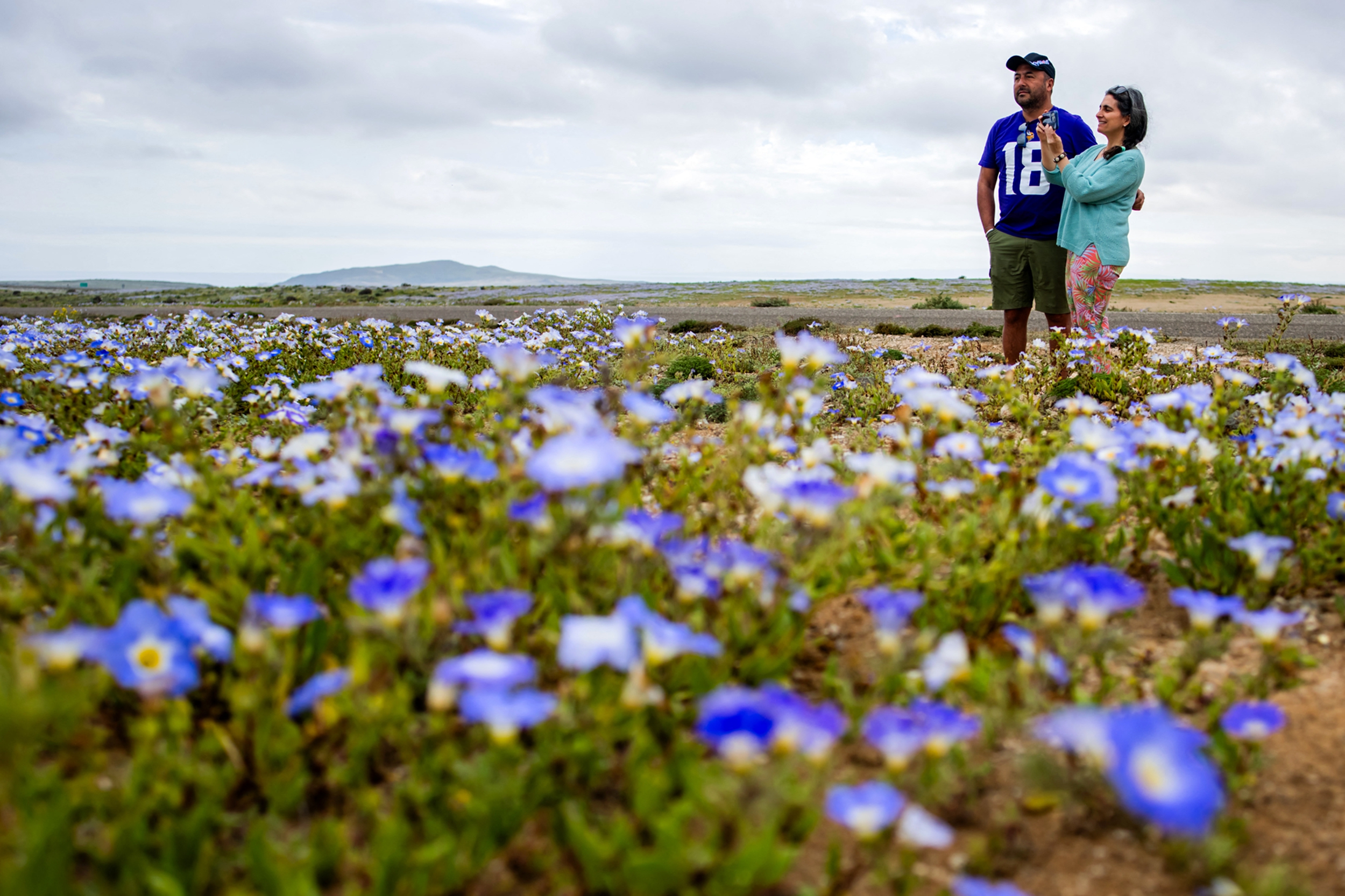
In the Atacama Desert in northern Chile, which is known as the driest non-polar desert in the world, an extraordinary phenomenon known as the “Desierto Florido” (Flowering Desert) has captivated visitors in September. This event marked the most spectacular desert bloom in nearly 30 years, drawing crowds of tourists to witness the rare spectacle of wildflowers in full bloom.
Traditionally receiving only about 2 millimeters of rain on average each year, the Atacama Desert experienced unusually heavy rainfall this winter due to the strong El Niño phenomenon. Some areas in northern Chile received over 180 millimeters of rain, which had not been seen in decades. The unprecedented amount of rainwater penetrated deep into the soil, awakening millions of seeds and bulbs that had been dormant for years, resulting in a stunning display of blooming flowers covering an area of approximately 15,000 hectares.
Where once was barren land, over two hundred species of wildflowers now blanket the desert, including the vibrant purple flowers of the “patas de guanaco” and the white blooms known as “suspiros blancos”. Looking down from above, the once reddish desert now appears to be adorned with a colorful blanket of purple and white flowers, shimmering under the setting sun. Recently, many visitors and photographers have captured mesmerizing scenes of the flower fields alongside rainbows.
In addition to the flourishing wildflowers, the plants’ pollen and nectar have attracted a plethora of insects, reptiles, birds, and small mammals, creating a brief but complete ecological food chain in the otherwise barren desert.
It is known that the flowering season in the Atacama Desert typically lasts only a few weeks to a few months. As the moisture evaporates, the flowers gradually wither, and plants will leave behind seeds to enter a dormant state lasting several years, returning the desert to its original quiet and arid state.
Chilean authorities expect that the peak of this “Desierto Florido” spectacle will occur in October, leading to a further increase in the number of visitors eager to witness this natural wonder.