
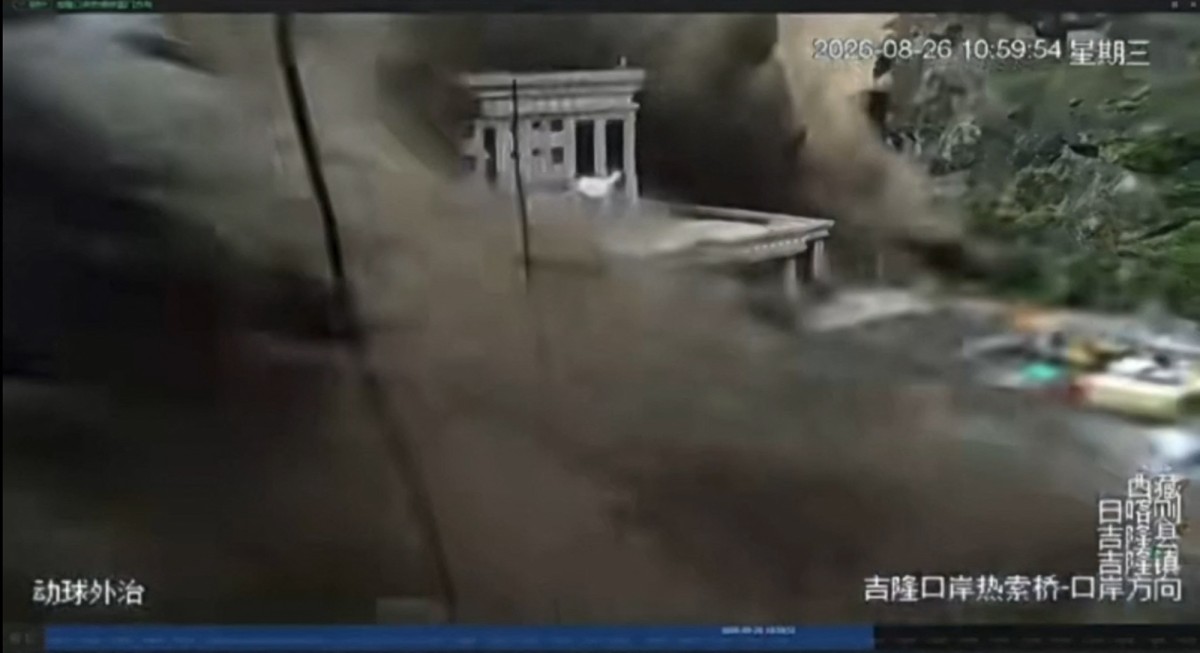
On the morning of August 26th, a large-scale mudslide and flash flood occurred at the border area between Jilong County in Shigatse, Tibet, China, and Lalitpur District in Nepal. However, the accounts of the disaster from both China and Nepal are significantly different, with major discrepancies in the public information released.
According to preliminary statistics from Nepal, the death toll has risen to at least 98 people, with at least 800 people missing. In contrast, the Chinese authorities have only mentioned “significant casualties and missing individuals” at this point.
As per the official notification from mainland China, around 10:30 a.m. on August 26th, “due to a mudslide disaster on the Nepali side,” significant casualties and missing individuals were reported at the Jilong Port in Jilong County, Shigatse, Tibet. The road to the port, communication, and power supply have all been cut off. Rescue workers still need to clear about 1.5 meters of mud and debris to advance towards the core disaster area.
Nepal, on the other hand, has a different account of the origin of the flood. The Nepalese military and some media outlets have cited official sources stating that the flood entered the Botekoshi River from the “Tibetan direction,” first destroying areas such as Timure, Rasuwa Port, and Shabrubesi, then advancing towards Dadhing and Chitwan via Nuwakot District.
According to Saswata Sanyal, a disaster reduction expert from the International Centre for Integrated Mountain Development (ICIMOD), the flood was triggered by a glacier collapse on the Nepali side, blocking the Lhende Khola River and subsequently releasing a sudden surge of water downstream.
Furthermore, the German Research Centre for Geosciences (GFZ) reported a 4.4 magnitude earthquake in the vicinity, occurring approximately 7 minutes before the disaster, as per Reuters. Experts have warned that there may still be blockages upstream, and a second flood peak cannot be ruled out.
By 8:30 p.m. Beijing time, the Chinese authorities have only provided vague statements without detailing how many workers or cargo personnel were missing or casualties at the port. Official media reported that troops have reached the blocked sections of the disaster area, using excavators and engineers to clear the approximately 1.5-meter-thick mudflow deposits. Light rain continues at the scene, complicating ongoing clearance and rescue efforts.
Public discussions suggest that in such a catastrophe, not even a trace of a building remains, with possibly tens of thousands of people missing.
Authorities have announced a 7-day two-way control from Jilong Town towards the national border, allowing only rescue vehicles to enter.
Unlike China, Nepal has continuously updated casualty figures within hours after the disaster. As of early morning on the 27th, Nepal’s latest casualty report indicates at least 98 deaths and 800 people missing in the disaster. 26 police officers stationed at various ports such as Timure, Shabrubesi, Mailung, and Rasuwa have gone missing, along with around 60 workers and engineering personnel from a hydropower project.
Earlier, Nepal’s tourism department, based on lists provided by over a dozen travel agencies, announced that 384 travelers and climbers were temporarily out of contact, including 291 foreign nationals and 93 Nepalese. Foreigners include 105 Indians, 12 British, 17 Malaysians, 4 South Africans, 3 Americans, as well as citizens from Australia, the Netherlands, and others.
According to reports from the mobile information platform “23Info” under the “China Business News,” at least three Chinese tourists who had planned to go rafting in Nepal and then travel to Pokhara arrived at the rafting point around 10:50 a.m., only to be informed that the activity was canceled due to the flood. They are currently stranded at a local resort.
Moreover, a merchant in Nepal, Mr. Tang, confirmed that some goods from mainland China bound for Nepal were swept away by the mudslide, leading to the interruption of cross-border freight transportation. Damaged goods also included those awaiting customs clearance or in the process of transfer.