
The US federal government finalized a two-year plan on Friday (August 21) to reduce water supplies to California, Nevada, and Arizona in response to a water shortage crisis affecting the Colorado River, while leaving room for possible further reductions in the future.
According to the plan signed by US Interior Secretary Doug Burgum, the three downstream states will see a reduction of about 21% in the water they receive from the Colorado River in 2027 and 2028. However, the cuts could double in the following years.
Under this new ten-year plan, which will be reviewed every two years, the four upstream states – Colorado, Utah, New Mexico, and Wyoming – will not face mandatory cuts to their water supplies.
Before federal intervention, negotiations between upstream and downstream states on how to manage the declining river had failed. The Colorado River provides water to one-tenth of the US population, irrigates land that produces 15% of the nation’s food, and supplies power to 6 million people in seven states.
In 1922, the Colorado River Compact allocated roughly equal water amounts between the upper and lower basins, but California, Arizona, and Nevada have historically consumed more water, a core point of contention.
During the three-year negotiations among the seven states, the upstream states refused to cut water supplies as severe drought had impacted the western US, leading to decreased water availability.
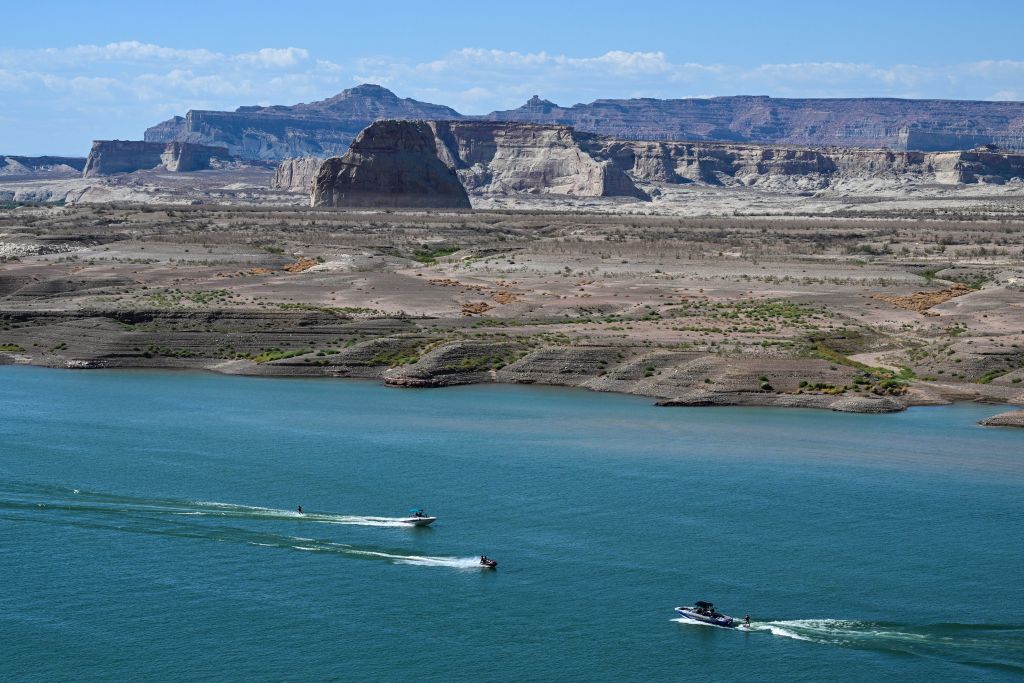
Lake Powell and Lake Mead on the Colorado River are the two largest reservoirs in the US, both reaching record low levels earlier this month. Further decreases in water levels could jeopardize the power generation capacity of these reservoirs.
Burgum’s new plan has sparked discontent from the three downstream states. Arizona and Nevada have expressed concerns that doubling the cuts after 2028 would severely harm their economies. Arizona’s Democratic Governor Katie Hobbs even threatened to sue the federal government to protect the state’s water rights.
California Governor Gavin Newsom also stated in a release that “this operating plan only provides short-term stability,” emphasizing that all seven states relying on the Colorado River water need to conserve water.
(Reference: Reuters)