
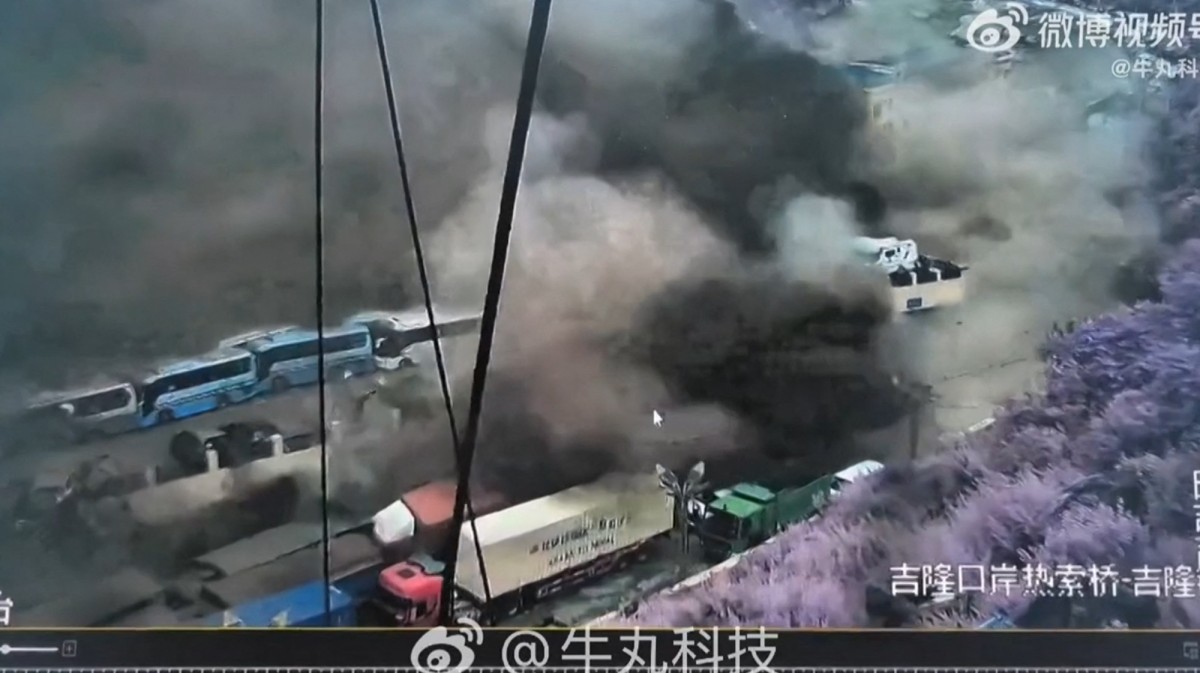
On Wednesday (August 26), a sudden flash flood occurred at the border between Nepal and Tibet, resembling scenes of doomsday. As of now, it has been confirmed that hundreds of people have died, with thousands missing. Scientists say that this deadly flood, described as “liquid cement,” has a force approximately twice that of regular water. The composition of the floodwaters also makes rescue efforts more dangerous.
According to CNN, Hatim Sharif, an engineering professor at the University of Texas at San Antonio, explained that the destructive power of this flood stems from the materials mixed in the floodwaters.
Sharif stated that the flood carries a high concentration of mud, sand, gravel, and boulders, flowing together like “liquid cement.”
He added that at the same flow rate, when this type of flood collides with buildings, the impact force is approximately twice that of regular water. He further mentioned that this flood can even carry “car-sized boulders,” making it impossible for people to outrun. The only way to escape is to move to higher ground, at least climbing 6 meters (around 20 feet).
Videos circulating on social media show that wherever the flood passes, buildings and people disappear from view in an instant.
The border crossing at Gyirong, Tibet, was instantly washed away, with a large number of vehicles and personnel engulfed by the floodwaters, creating a distressing scene.
Not only is this flood extremely destructive, but its composition also makes rescue work more hazardous. Sharif pointed out that these debris can retain water for an extended period, making ground conditions extremely dangerous and unpredictable. Some areas may support a person’s weight, while in another spot, one might suddenly sink to the waist.
Sharif also emphasized the issue of depth. The sediment left by this disaster could be several feet thick in certain areas, meaning that searching for missing persons can only be done through detection and manual methods, and at a very slow pace.
People are very concerned that new rainfall may cause everything to start flowing again.
“Even on seemingly calm days, downstream residents need to stay away from the riverbanks,” Sharif said.
Both China and Nepal have issued warnings that due to anticipated rainfall in the next three days, areas near the border are still at risk of a second flood.