
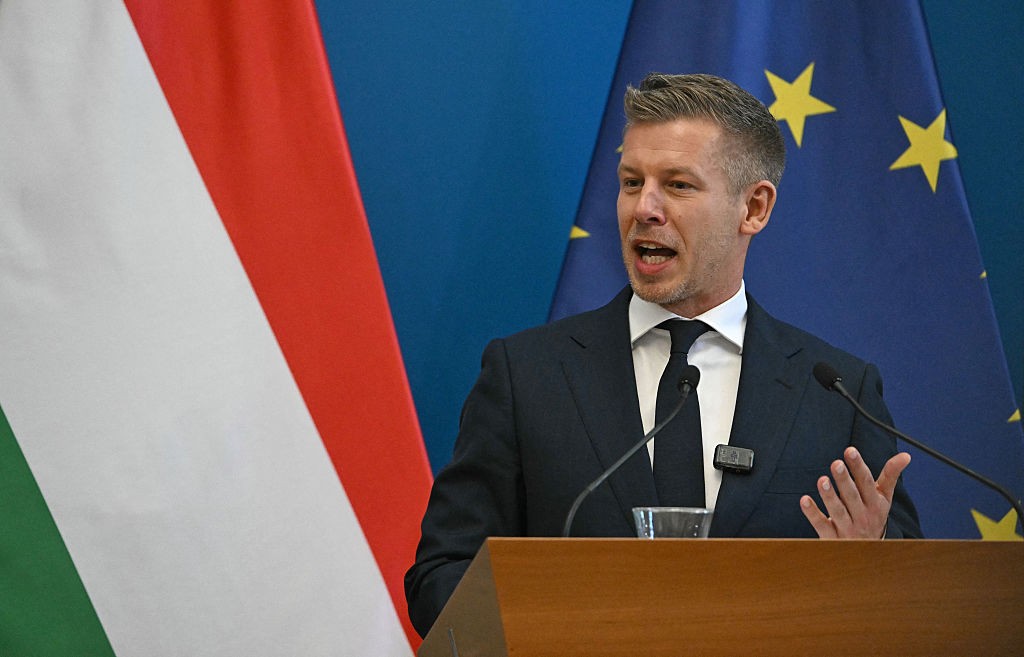
Hungarian Prime Minister Peter Magyar announced on Sunday (August 2nd) that the record-breaking drought has led to a continuous drop in the water level of the Danube River, forcing the government to shut down the country’s only nuclear power plant – the Paks nuclear power plant. This marks the first complete shutdown of the plant in its 44-year operation history. Magyar emphasized that a new heatwave is expected to hit, making the next 5 days critical for power supply.
The Paks nuclear power plant, with four units built during the Soviet era, is located 120 kilometers south of the capital Budapest and began operation around 1982, providing over 40% of Hungary’s electricity. The plant heavily relies on water from the Danube River to cool its reactor cores. Due to the historically low water levels, the cooling water intake systems have stopped working, leading the plant to gradually reduce output and complete the unprecedented full shutdown on August 2nd.
Europe has been facing prolonged high temperatures and drought this summer, severely impacting water supply, river navigation, and power generation. According to Hungarian government data, the decreasing river water levels have affected shipping and tourism industries in the country, with water supply restrictions implemented in over a hundred towns and villages including the outskirts of Budapest.
Measurements by Hungarian water authorities showed the water level of the Danube River in Budapest dropping to approximately 23 centimeters, significantly lower than the historical low of 33 centimeters recorded in 2018, with further decreases predicted in the coming days.
In a video message, Prime Minister Magyar stated, “We are facing the most critical 5 days… on Monday (August 3rd), the Paks nuclear power plant will stop generating power as a scorching heatwave of 40 degrees Celsius is approaching. With our power system under immense pressure, I urge everyone to pay closer attention to each other starting from Monday.”
He warned that closing the nuclear power plant during peak summer demand could lead to an energy crisis. “Given the enormous pressure on the power system, we need to take coordinated steps and exercise restraint to avoid more severe consequences.”
To alleviate the strain on the electricity grid, the Hungarian government has ordered public sector employees to work from home for the first three days of the week, and encouraged businesses to follow suit if possible. Additionally, some railway freight services will be suspended during specific periods.
In a later video release, Magyar mentioned that households nationwide and over 300 businesses have voluntarily joined the electricity consumption reduction plan, which has slightly eased the pressure on the power grid. He expressed gratitude for the unity of the Hungarian people and acknowledged the efforts of many individuals in reducing water consumption and waste upon learning of the water shortages.
He mentioned that there is currently no need for mandatory power cuts for businesses, but restrictions may be implemented in the coming days if the situation worsens.
Mark Radnai, the vice chairman of the Tisza party, to which Magyar belongs, estimated that Hungary could incur losses of 100 billion to 200 billion forints (approximately 315 million to 630 million USD) due to the crisis, as the country must import expensive electricity in large quantities.
In response to Hungary’s energy challenges, neighboring countries have expressed willingness to provide assistance. Slovak Prime Minister Robert Fico stated that they are closely monitoring Hungary’s energy crisis and are prepared to aid the country.
The European Commission is closely monitoring the situation and stands ready to convene an emergency meeting of the power coordination group, if needed, to address the closure of the Paks nuclear power plant and respond to the crisis.