
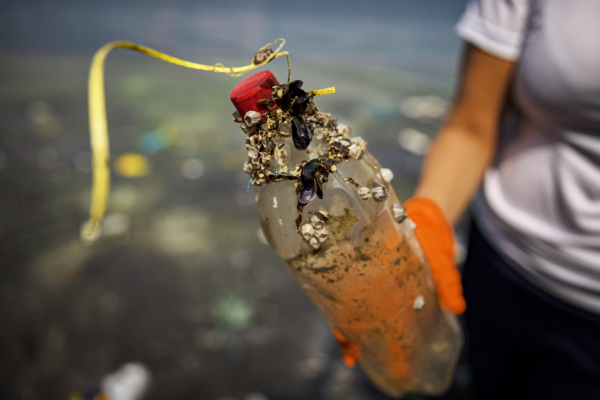
Plastic pollution in the ocean is becoming increasingly severe, and plastic is a widely used material today. Finding a plastic material that can quickly degrade in seawater has been the focus of scientists’ efforts. Recently, their efforts have finally paid off.
The Woods Hole Oceanographic Institution (WHOI), the largest independent marine research institute in the United States, has discovered in its research a new type of “novel cellulose diacetate (CDA)” bioplastic foam. This foam not only possesses many advantages of other plastics but is also more easily and quickly biodegradable in seawater. Moreover, the production cost is not significantly higher than other bioplastics, and it causes less pollution to the environment compared to other plastics. The research findings were published in late October in the journal “ACS Sustainable Chemistry & Engineering.”
Cellulose diacetate is a plastic-like polymer extracted from wood pulp that can degrade in natural environments such as soil, freshwater, and seawater.
Researchers at the Woods Hole Oceanographic Institution first designed a simulated marine ecology box to mimic natural ocean conditions. They controlled variables like temperature, light, and other environmental factors to simulate the marine environment. To emulate the constantly changing nature of the ocean, they also added microbes and nutrients to increase its complexity. They then conducted a series of tests by placing items such as polypropylene plastic (PP), polystyrene foam (Styrofoam), cowhide paper, solid and foam CDA straws into the simulated marine ecology box.
After a nine-month wait, polypropylene plastic, polylactic acid plastic, and polystyrene materials hardly degraded. On the other hand, medium-density and low-density CDA foam lost over 35% and 65% of their mass, respectively. The degradation rate of the foam was 15 times faster than that of solid CDA material, even faster than typical paper.
Although the overall performance score of CDA foam is four times lower than PS foam, it surpasses PS foam in degradation and pollution aspects. It holds the potential to replace plastic products made from polystyrene (PS) foam and other disposable plastics like food packaging trays.
Products made from CDA foam have already entered the market, such as CDA foam containers introduced by Eastman Chemical Company, which degrade through composting, aiming to replace existing plastic foam containers for take-out purposes.
Colin Ward, a senior author of the research paper, expressed to the institution’s press office, “This material can meet consumer demands while degrading in the ocean faster than any other known plastic material, even quicker than paper.”
Jeff Carbeck, Vice President of Innovation at Eastman Chemical Company, stated, “Our collaboration with Woods Hole Oceanographic Institution has helped us understand how they degrade, which greatly aids us in commercial development and application. The characteristics of this foam make it very suitable for various packaging and thermal insulation applications, contributing to reducing plastic pollution and protecting the environment for sustainable development.”