
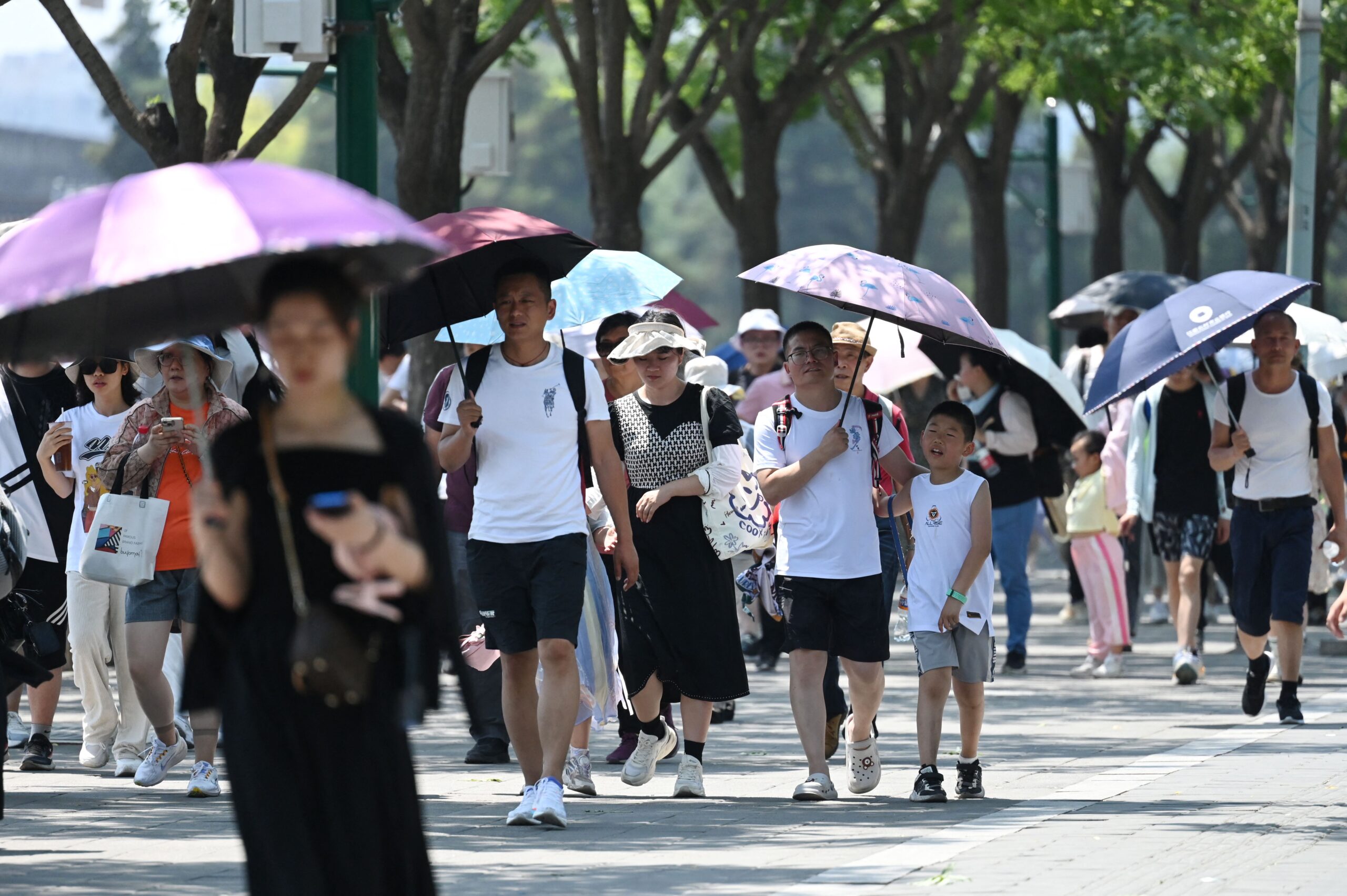
In recent days, temperatures in several regions of central and western China have soared to over 40℃, breaking historical records. On July 21, 2026, the meteorological observation station in Aiding Lake, Xinjiang reached a scorching 50℃, marking the first 50℃ recorded by a national-level meteorological station in 2026. Meanwhile, Turpan in Xinjiang and Ziyang in Sichuan have recorded surface temperatures exceeding 70℃, with 16 cities in Sichuan issuing red weather warnings for high temperatures, with localized temperatures exceeding 44℃.
According to reports from China Weather Network, as of 5:00 PM Beijing time on July 21, the highest recorded temperatures include Dongkan in Turpan at 49℃, breaking the local record of 48.7℃. Aiding Lake’s meteorological station reached 50℃, becoming the first national-level meteorological station in 2026 to hit 50℃. The regional automatic weather station at Mangxiang Lake recorded a scorching 51.1℃, ranking first at that time.
By 6:00 PM, Dongkan in Turpan reached 49.6℃, continuing to break local temperature records. Aiding Lake’s observation station soared to 50.2℃, setting a new national-level record in 2026. The regional automatic station at Mangxiang Lake remained at 51.1℃. In addition, Urumqi experienced temperatures surpassing 40℃ for the first time in 2026 with the Old National Meteorological Observatory (Station 51463) recording 40.6℃ and the New National Meteorological Observatory (Station Y6001) recording 41.5℃.
On July 2, 2026, the regional automatic meteorological station at Mangxiang Lake in Turpan recorded 50.7℃, making it the first location in the country to hit above 50℃ in 2026. Besides Mangxiang Lake station, the regional automatic station at Baoxin Iron and Steel also surpassed 50℃, reaching 50.4℃ on the same day.
Monitoring data shows that on the afternoon of July 21, 2026, surface temperatures at some meteorological observation points in Xinjiang and the Sichuan Basin exceeded 70℃. For instance, between 2:00 PM and 3:00 PM, Turpan hit 75.9℃, Ziyang in Sichuan reached 76.8℃, surpassing Turpan. From 3:00 PM to 4:00 PM, Dongkan in Turpan recorded a maximum surface temperature of 78.2℃. Ziyang, Sichuan, set record highs with 77.1℃ on July 19 and 77.2℃ on July 20, consecutively breaking the local temperature records.
Since July 2026, Turpan has experienced over 20 days with temperatures exceeding 40℃. According to forecasts, the scorching heat in Turpan Basin is expected to continue for another week with temperatures surpassing 40℃. Particularly on July 22, there will be an extremely prolonged high temperature period lasting 19 hours from 9:00 AM to past 3:00 AM the next day.
As of July 20, 2026, a total of 58 national-level meteorological stations in Xinjiang, Shaanxi, Sichuan, and Chongqing recorded temperatures above 40℃. Among them, 16 national-level stations in Xinjiang, Gansu, Shaanxi, and Sichuan broke their local July high temperature records, with Huoerguosi in Xinjiang and Luoyang in Shaanxi reaching record highs.
Recent days have seen widespread and intense high temperatures in central and western China, with regions like northeast Sichuan, Chongqing, southern Gansu, central and southern parts of Shaanxi, southwest Henan, western-central Hubei, northwest Hunan, western Inner Mongolia, and Xinjiang experiencing temperatures above 35℃, with localized areas in northeast Sichuan and Xinjiang exceeding 40℃.
As of July 21, Shapingba in Chongqing has seen 17 consecutive days of high temperatures, with predictions suggesting the heat will persist until at least July 25, potentially breaking the record for consecutive days with high temperatures in July.
By 1:00 PM on July 21, parts of 16 cities in Sichuan including Chengdu, Mianyang, Deyang, Ya’an, Meishan, Leshan, Yibin, Luzhou, Guangyuan, Nanchong, Suining, Ziyang, Neijiang, Guang’an, Dazhou, and Zigong have issued red weather warnings for high temperatures, with most areas expecting temperatures to reach 40℃ or higher, and some areas potentially reaching 44℃ or more.
The Meteorological Center of Alxa League in Inner Mongolia issued a red weather warning at 5:30 PM on July 21, predicting temperatures to exceed 40℃ in the central and eastern parts of Ejina Banner, over 37℃ in western and southern Ejina Banner, most parts of Alxa Right Banner, and the northern and central parts of Alxa Left Banner, with temperatures reaching over 35℃ in other regions.
On July 21, 2021, the Ministry of Agriculture and Rural Affairs and the China Meteorological Administration jointly issued a warning of high-temperature drought risks in agriculture. From July, the southern and central parts of Shaanxi, the southwestern parts of Henan, the western parts of Hubei, the Sichuan Basin, and other regions have experienced 11-15 days with temperatures above 35℃, which is 8-14 days more than usual for the same period. It is predicted that from July 22 to 24, there will be continued high temperatures above 35℃ in the southern and central parts of Shaanxi, Henan, the northwest of Hubei, and the Sichuan Basin, with temperatures reaching 39℃-40℃. With fast soil moisture loss, there is a high risk of agricultural high-temperature drought, potentially leading to droughts in areas like Baoji and Xianyang in Shaanxi, Nanyang and Zhumadian in Henan, and Guang’an, Nanchong, and Bazhong in Sichuan, which could unfavorably impact autumn grain production.
In a press conference held by the China Meteorological Administration on July 2, 2026, deputy director of the National Meteorological Center, Huang Zhuo, stated that higher than usual temperatures (with daily highs above 35℃) are expected in July in northern parts of East China, Central China, northeastern Southwest China, the northern parts and southeastern parts of Northwest China, Xinjiang, and western Inner Mongolia. There will be four phases of episodic high-temperature weather patterns occurring during July 3-8, July 10-16, July 18-22, and July 25-28.