
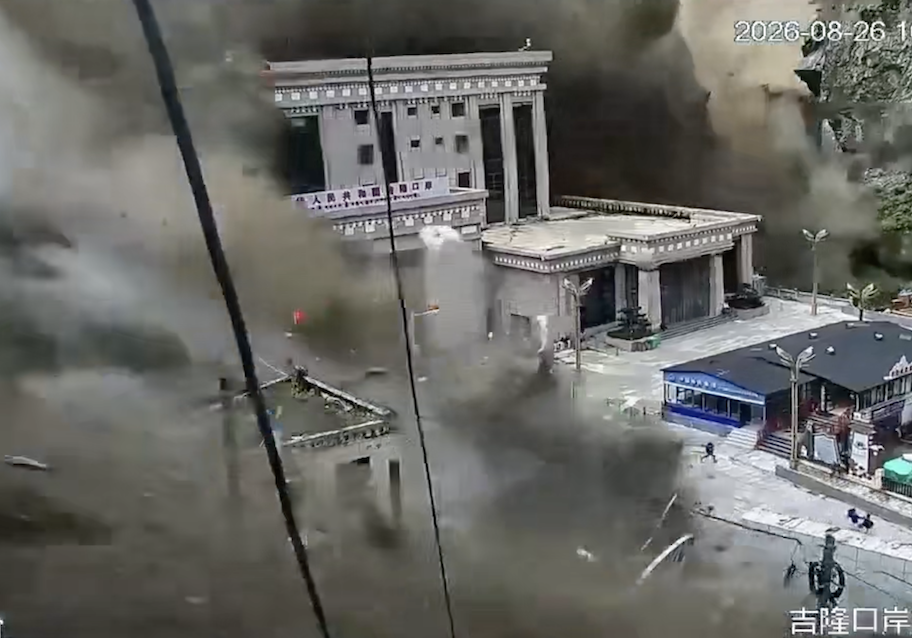
As of Monday, August 31st, floods in the border areas between Nepal and Tibet, China have resulted in over 900 fatalities and nearly 5000 people missing. Indian prominent broadcasters and strategic scholars have condemned the Chinese Communist Party (CCP), blaming their engineering activities in the upstream border regions and failure to provide adequate warning for exacerbating the disaster.
Indian strategic scholar, writer, and professor of strategic studies, Brahma Chellaney, took to the social media platform X on Monday to express his views. He stated, “Just as China (CCP) has not signed any water resource sharing agreements with downstream countries, it has failed to establish year-round operational real-time hydrological data sharing and emergency notification mechanisms with any neighboring country.”
Chellaney, a former national security advisor in India, has long been writing extensively on China and transboundary water resource disputes. In his post, he mentioned, “Nepal has been actively seeking to formalize a bilateral agreement with China and hopes to use its hydro-meteorological data sharing framework with India as a reference.”
Furthermore, Chellaney believes that China has a wide range of water temperature monitoring networks in the upstream source areas of the Brahmaputra River and is fully capable of “transmitting upstream water level information and issuing warnings.”
In a commentary piece in the Nikkei Asia, he pointed out that while the floods were triggered by natural glacier and rock collapses, China’s infrastructure development and river diversion projects in the Himalayan river system “may have exacerbated the consequences.”
At the same time, several Indian media outlets have raised similar questions.
Recently, Indian renowned journalist and broadcaster, Arnab Goswami, in his show “Debate with Arnab,” discussed the theme “Is Nepal’s disaster caused by China (CCP)?” He sharply questioned the guest, the CCP’s “wolf warrior” diplomat and former translator Gao Zhikai, about China’s projects in Tibet and whether they had provided sufficient disaster warnings to Nepal.
Clips of the related interviews quickly spread on English-language platforms online. India Today television aired a similar prime time program questioning the Beijing authorities.
On Monday, the Chinese Ministry of Foreign Affairs responded, attributing the disaster to a high-altitude glacier collapse within Nepal’s borders, dismissing India and Nepal’s criticism and questioning as “malicious speculation.”
In another post on X, Chellaney pointed out that the flood disaster between Nepal and Tibet should draw global attention to the super dam projects that China is constructing in the Himalayas. He revealed that Chinese scientists had warned as early as June this year that there were serious geological risks at the construction site.
He wrote, “This unprecedented dam is rising within the seismic zone of the Himalayas under extreme secrecy, and the area is one of the most seismically active regions on Earth. The massive reservoir of this dam itself could induce earthquakes by exacerbating geological stress.”