
Los Angeles’s Boyle Heights warehouse fire, which occurred on June 17th and was not fully controlled until the evening of the 24th, has had lingering effects for nearly a month now. Under the intense summer heat, the millions of tons of food stored in the warehouse have rotted and spoiled, emitting a foul odor that has made life unbearable for nearby residents, some even claiming it’s “almost impossible to breathe.”
The fire not only destroyed the warehouse structure but also caused 88 million pounds of meat stored inside to deteriorate. The city government has ordered the operators Lineage Logistics and the building owners of Chill Build to complete the cleanup within 45 days of the transfer of the building.
This week, on Tuesday (the 21st), was the deadline for the warehouse company to report to the South Coast Air Quality Management District on the progress of air purification measures. As our reporters drove to the location of the warehouse, road closures forced them to park one block away and immediately they were overwhelmed by the pungent stench, making breathing difficult.
Residents like Patrick Valentine, who lives a block away from the warehouse, have been suffering from the foul air since the fire. He mentioned that he had a scheduled medical procedure on Wednesday but they might have to cancel it due to his breathing difficulties.
Valentine described the unbearable air, saying, “I have to keep my doors and windows tightly shut every day”; even with the air conditioning on, the unpleasant smell still seeps inside. The warehouse company provided him with an air purifier.
Absalon Ramirez, living across the street from Valentine, also shared how the stench forced him and his family to keep all doors and windows closed, and he had visited a doctor due to respiratory discomfort.
In a residential area just a street away from the warehouse, shaded by trees, even the mail carriers are wearing masks. Unusual scenes were observed in the flower beds along the sidewalks with dozens of green bottle flies buzzing around.
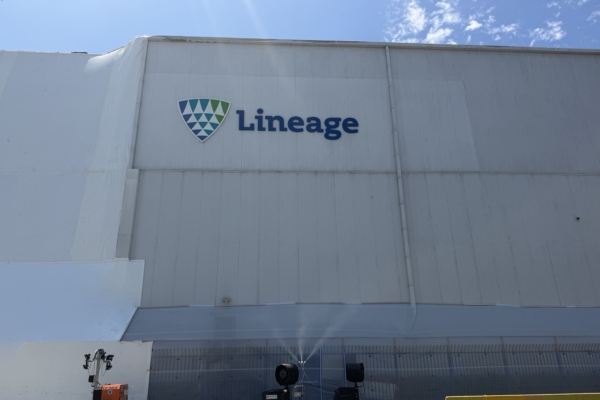
Observing from the street, the five-six story high warehouse building is mostly covered with temporary white material to prevent debris scattering and reduce odors.
On the street below, several machines are spraying mist into the air, making the air noticeably fresher than one block away, without the nauseating smell. A traffic control officer mentioned to our reporter that this might be related to spraying air purifiers.
Unable to bear the post-fire stench, residents have been filing complaints against Lineage Logistics. At the city council meeting on the 9th of this month, hundreds of residents protested outside the venue, with several dozen even making their way into the city hall to voice their dissatisfaction with the cleanup progress.
The progress report on the company’s website shows that as of the 20th, 1,506 tons of food waste had been cleared, which is only a small portion of the 88 million pounds of spoiled food.
Mayor Karen Bass of Los Angeles stated during the meeting on the 9th that they will continue to oversee the cleanup efforts, improve communication with the community, and investigate hundreds of warehouses in East Los Angeles, South Los Angeles, and the San Fernando Valley to ensure their safety.
After the warehouse fire was extinguished, Mayor Bass issued two emergency executive orders, requiring the thorough removal of biohazardous foods within 45 days of site transfer, and the cleanup of all building debris and structural fragments within 90 days.
Various county departments in Los Angeles have been supporting affected residents, distributing a total of 2,300 air purifiers, 10,000 N95 masks, and 1,500 meals to date.
With temperatures rising, more and more residents are finding the stench unbearable. According to the South Coast Air Quality Management District, they received over 900 odor complaints last week, resulting in six violation notices being issued to the warehouse company, demanding additional measures to strengthen odor management and minimize the impact. These measures include spraying deodorizer before loading decayed materials, daily cleaning of loading areas, and using mobile sweepers daily to clean one-quarter mile or one street along the truck route, among others.