
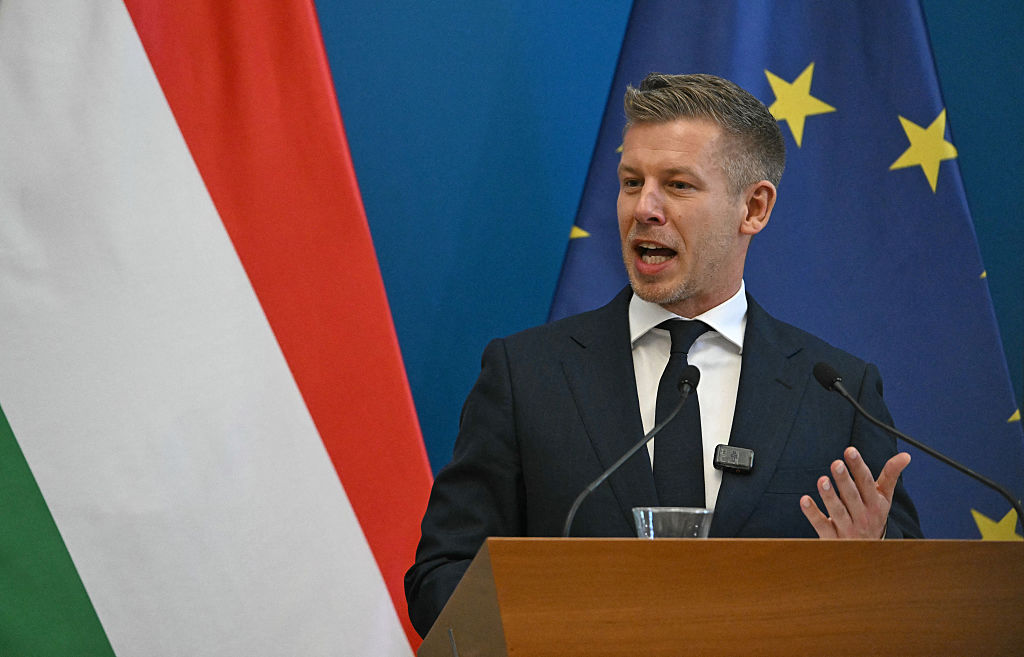
Hungarian Prime Minister Peter Magyar announced on social media on the afternoon of July 17 that the government will introduce the strictest environmental regulations in the European Union. The new regulations will increase taxes for polluting companies and eliminate tax benefits for multinational corporations. Media widely interpret this policy as targeting Chinese companies operating in Hungary.
In his official statement posted on Facebook on July 17, Magyar emphasized the government’s commitment to overhauling the corporate income tax system to expand the tax base and reduce tax incentives. One key measure is doubling the air pollution charge paid by polluting companies. The government is preparing to introduce new environmental protection regulations and tax reforms to compel water-intensive and polluting companies to comply with environmental and public health standards while safeguarding the country’s natural resources.
“We will adopt the strictest environmental protection standards in Europe and establish new tax regulations to compel large polluting companies to protect our national resources. Any businesses unwilling to significantly reduce water usage or pollution levels will face costs and tax burdens significantly higher than current levels,” Magyar stated.
The government under the “TISZA” party is not against industries. They aim to create a predictable and business-friendly economic environment that respects Hungarian laws, local communities, labor, and environmental protection regulations, for both domestic and foreign companies. All investors in Hungary will be subject to the same clear and predictable rules.
Magyar’s announcement is believed to be a reaction to the environmental policy shift targeting Chinese-owned enterprises in Hungary. One such company facing consequences is the lithium battery separator manufacturer “Semcorp” facility located in Debrecen, which was ordered to shut down on June 24 due to groundwater contamination caused by the plant’s activities.
During an inspection, the environmental agency in Hajdú-Bihar County found excessive levels of various metals and semi-metals in the groundwater monitoring wells within the factory premises. The excessive metals, including aluminum, barium, zinc, cadmium, cobalt, chromium, lithium, manganese, nickel, lead, copper, iron, and arsenic, not only exceeded legal limits but also surpassed the groundwater baseline established before the plant’s operation.
Following the discovery, the county government’s environmental and water resource authority issued an administrative decision requiring Semcorp to cease operations immediately. They also mandated measures to prevent infiltration at rainwater retention basins, expand groundwater monitoring areas, increase testing parameters, submit regular monitoring reports, and bear administrative expenses.
Semcorp is not a stranger to legal actions in Hungary due to environmental pollution. The facility faced partial shutdown in June 2025 shortly after commencing operations because seven out of sixteen emission points violated environmental assessment permits.
Another major player, electric vehicle manufacturer BYD, faced investigations for allegedly unlawfully disposing of contaminated soil. After authorities initiated administrative proceedings in February 2025 against BYD’s ongoing construction site in Szeged for unconventional soil disposal, the company faced accusations of improper handling of polluted “other alkylbenzenes” substances. Following subsequent investigations, authorities ordered the destruction of agriculture products exposed to the contaminated soil.
The environment department has concluded its inspection resulting in a fine of 10 million Hungarian forints (approximately 27,000 euros) imposed on BYD. However, the outcome of the police inquiry is pending.
Similarly, the battery manufacturer CATL is under scrutiny for suspected pollution. Local residents in Debrecen observed green liquid seeping from the ground around the CATL plant, prompting environmental investigations. CATL explained that the colored water was part of a pressure test carried out by contractors and did not contain pollutants. Nonetheless, environmental activists claimed to have found substances like N-methyl-2-pyrrolidone in the samples, challenging the harmless narrative.
The CATL investment in Hungary, particularly the massive battery plant project in Debrecen worth approximately 7.34 billion euros, has sparked controversies within the community. While the central and local authorities support the project, a significant portion of residents expressed opposition due to concerns about health and environmental impacts surpassing economic benefits.
Based on investment documents, the Hungarian government promised approximately 800 million euros in support for CATL, including tax incentives, infrastructure backing, and land and administrative assistance. Magyar’s administration criticized the previous pro-Beijing government for providing substantial subsidies to Chinese companies without adequate environmental oversight to protect water resources and prevent pollution risks.
Magyar, the leader of the pro-European center-right “TISZA” party, won the Hungarian election at the end of April and took office on May 9. His victory reflects public dissatisfaction with Viktor Orban’s 16-year governance and expectations for reforms and an end to the benefit-oriented governance model. The environmental disputes associated with battery factories, especially concerns regarding land, water sources, and pollution, have weakened support for the Orban government’s approach of economic growth through large foreign investments.
For years, Hungary has been considered a key gateway for Chinese electric vehicle and battery companies entering the European market. However, rising concerns over pollution, water usage, chemical management, and labor disputes have turned such projects into pressing social and political issues.
Magyar’s administration faces the challenge of balancing economic development with environmental protection measures and community interests, particularly in the context of growing skepticism towards large foreign investments with potentially detrimental environmental impacts.