
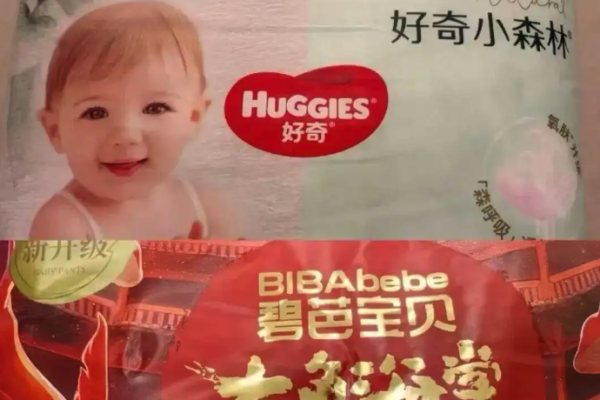
After the exposure of the “Toxic Diaper Incident” in mainland China, the brands and paper industry association involved collectively debunked the allegations, claiming that the reports were untrue. This shifted the focus of public opinion from infant health to controversies surrounding journalists spreading “rumors”. On June 21, the implicated journalists released an open letter, urging the authorities to promptly establish a national-level investigative team to look into the hundreds of children who tested positive for formaldehyde, providing parents with “an authoritative, transparent, and scientifically verifiable explanation”.
On June 18, the “Economic Reference News” published an investigative report stating that they commissioned a professional testing agency to conduct random testing on some brands of infant diapers on the market, revealing the presence of toxic substances – formaldehyde in brands such as “Curiosity,” “Beybey,” and “Babycare.”
In response to the report, on the early morning of June 21, “Curiosity,” “Beybey,” and “Babycare” successively issued statements declaring that independent authoritative institutions had confirmed through testing that their products did not contain formaldehyde. Some brands stated that they had reported the incident to the public security authorities to safeguard their own rights.
Investigative journalist “Reporter Wang Wenzhi” posted an open letter on Weibo on the night of June 21, addressing relevant regulatory authorities. They pointed out that the industrial association used the vague statement of “testing lacks credibility” in an attempt to completely deny the clinical research completed by provincial professional medical institutions supported by complete mass spectrometry original data. Essentially, they used industry discourse to endorse the potential safety loopholes of the companies involved, sacrificing the health rights and interests of millions of infants and toddlers in exchange for so-called “industry stability,” thereby plunging the public into endless debate over “who is lying.”
The open letter stated that all the original data, experimental records, and sample retention from the Shandong Provincial Public Health Clinical Center Mass Spectrometry Laboratory, which were publicized in this incident, can be traced. Among them, hundreds of infant blood samples for testing were all residual samples from routine pediatric treatment in cooperation hospitals, and the sampling process strictly followed medical ethics guidelines and biological sample collection and management technical specifications. The equipment used for testing was a high-resolution liquid chromatography-mass spectrometer and a high-resolution gas chromatograph-mass spectrometer produced by Agilent Technologies in the United States, which are recognized as top mainstream professional equipment in the global field of toxic substance testing, fully meeting national public health laboratory testing configuration standards.
The open letter also mentioned that to minimize potential testing errors, the laboratory set the detection limit far higher than conventional research standards, conducted double verification through standard sample qualification and isotope internal standard quantitative analysis. Despite these precautions, formaldehyde concentrations posing health risks were still detected in a large number of infant samples. Additionally, only bedridden elderly individuals who had long-term use of adult diapers in the adult control group tested positive for formaldehyde, with nearly zero detection rate in ordinary healthy adults. Two positive infants aged 1 and 3, under the condition of maintaining unchanged diet and living environment, only needed to stop using diapers for three days for the formaldehyde in their blood to change from positive to negative.
To verify these test results, the journalist, under the guidance of professionals, simulated infant close-contact scenarios by binding diapers to the skin of their thin forearm. After 10 hours, the formaldehyde concentration in the blood skyrocketed by nearly twice; after a 10-hour break, the value dropped by two-thirds.
The open letter pointed out that all experimental data collectively pointed to an objective fact: the high concentrations of formaldehyde in the bodies of a large number of infants and toddlers originate from the daily use of diapers. The so-called “third-party qualified testing reports” presented by the companies were all samples carefully selected by the companies for testing, specialized “privileged samples,” making these test results lack credibility.
Finally, the open letter urged the relevant authorities to establish a national-level investigation team to access all original test data, mass spectra, and sample records from the Shandong Provincial Public Health Center Laboratory, independently verify the retained biological samples, and investigate the possibility of formaldehyde residue from the production materials, foaming processes, and additive usage of diapers, in order to provide all parents with a clear and definitive answer.