
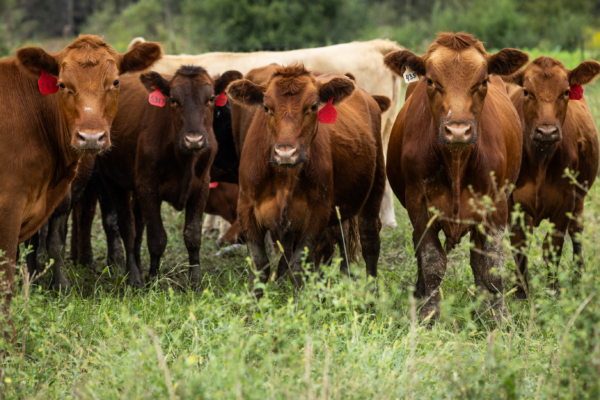
The United States Department of Agriculture (USDA) announced on Wednesday, June 3, the confirmation of a case of the New World Screwworm (NWS) in southern Texas, marking the first occurrence of such a case in Texas since 1966.
The USDA stated that “a 3-week-old calf was affected, with larvae found at its navel. No other cases have been detected so far.”
On the same day, the USDA reported that “a potential NWS case has been detected in southern Texas. Samples have been sent to the National Veterinary Services Laboratories (NVSL) in Iowa for further confirmation. Personnel have been deployed locally, and collaborations with local partners have been initiated.”
Just 25 miles from the Texas border, in Coahuila, Mexico, a 5-year-old goat was diagnosed with NWS on June 2, increasing concerns about the outbreak.
In response, Texas State Representative and member of the Agriculture and Livestock Committee, Don McLaughlin, called on Governor Abbott to declare a state of emergency to address the looming threat.
Subsequently, Governor Abbott’s spokesperson, Andrew Mahaleris, stated that the Governor’s NWS response team (comprising the Texas Animal Health Commission, Parks and Wildlife Department) is collaborating with the USDA and other federal partners to address the outbreak.
Mahaleris mentioned in the statement, “If test results are positive, the NWS emergency team will immediately establish an emergency response station, expand fly trapping and monitoring, limit animal movement, and prevent further spread of the pests. Additionally, we will accelerate the release of sterile NWS to eradicate any breeding populations in the area.”
Representative McLaughlin also expressed his concerns in a video posted online, highlighting the severe threat that NWS poses to the health, economy, and wildlife in the United States, emphasizing the need for swift action from the government.
According to data from the US Department of Health and Human Services (HHS), NWS is a parasitic fly that lays eggs on wounds of warm-blooded animals, usually livestock. Upon hatching, hundreds of larvae burrow into live tissue with their sharp mouthparts, potentially leading to host death if not treated promptly.
As of June 2, over 171,000 cases of animal infections with NWS and more than 2,070 human cases have been reported in Mexico and Central and South American countries. The Centers for Disease Control and Prevention (CDC) reported that one infected individual was identified upon returning to the US after traveling to El Salvador.
To combat the “parasitic flesh fly” from Mexico and Central and South America, the US government plans to release sterile male flies as a countermeasure. When sterile males mate with females, the females will lay fertilized eggs that cannot hatch, gradually reducing the fly population over time.
On April 17, officials from the USDA broke ground on a sterile screwworm production facility in Texas. The initial operation is set to begin in November 2027, producing 100 million sterile New World Screwworms per week.
The USDA emphasized in its statement that they are expediting the expansion of sterile fly production capacity in the US. After the initial operation, they plan to further expand to achieve a production capacity of around 300 million sterile flies per week.
The statement also mentioned that this new state-of-the-art facility will complement the USDA’s existing sterile fly factory in Panama, which produces 100 million flies per week. Furthermore, the agency has invested $21 million in establishing a factory in Mexico, slated to begin operations this summer.