
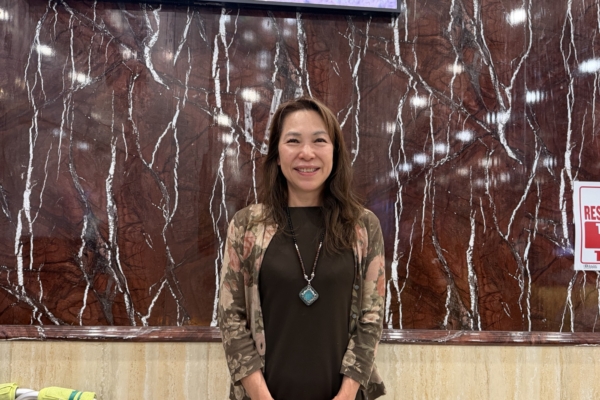
In July, Southern California experiences its driest month of the year. What is the water supply situation like this year? Is there a water shortage issue? Ms. Theresa Lee, a commissioner of the Walnut Valley Water District, stated that the water supply in Southern California for the 2025-26 season remains stable and reliable.
In March of this year, Southern California faced unprecedented high temperatures not seen in decades, with some areas surpassing 100 degrees Fahrenheit. The high temperatures led to faster melting of snow in the Sierra Nevada Mountains than usual, causing concerns among residents about the impact on this year’s water supply.
Ms. Lee recently mentioned in an interview that the Metropolitan Water District of Southern California (MWD), the main wholesale water supplier for Southern California, has invested significantly in water storage and supply reliability in recent years. They have a diversified water supply portfolio, including the State Water Project, Colorado River water sources, and important regional storage facilities such as Diamond Valley Lake. Therefore, despite the unusual high temperatures in the spring, the major reservoirs are currently in good condition, with water levels not below historical averages.
The Walnut Valley Water District primarily purchases water from MWD to supply cities with large Chinese populations such as Diamond Bar, Industry, Pomona, West Covina, Rowland Heights, and Walnut. As a result, the district closely monitors the outlook for MWD water supply, reservoir water levels, and infrastructure investments.
MWD serves a population of 19 million across six counties in Southern California. According to Ms. Lee, their main water sources include water imported via the State Water Project from the Sacramento-San Joaquin Delta in Northern California, water from the Colorado River Aqueduct, local groundwater reservoirs, recycled water, and rainwater collection projects.
In addition to existing water facilities, construction is set to begin at the end of this year or early next year on a large reservoir in Colusa County, north of Sacramento. With a capacity of 1.5 million acre-feet, this reservoir is expected to be completed by 2033, serving the water needs of 24 million residents and 500,000 acres of farmland, making it the largest new reservoir in nearly half a century.
Many residents are interested in the water quality of tap water in Southern California. Ms. Lee stated that to ensure the quality of residents’ water supply, the district conducts water quality testing at various locations daily to analyze mineral content. Just for the Walnut Valley Water District, water quality testing is conducted thousands of times a year, ensuring that the tap water in the vast majority of residents’ homes is safe to drink.
Some residents may notice differences in taste in their tap water, with some finding it sweeter while others perceive it as “hard.” These taste differences are related to the mineral content in the water. Ms. Lee noted that federal and state regulations set limits on mineral content in water, and any excess may result in penalties for the district. While residents may notice varying tastes, the water is generally safe to drink. Water from the Colorado River, for example, is often perceived as “hard.”
Ms. Lee cautioned that some older apartments may have lead pipes, which can affect water quality. If lead pipes are not replaced, residents are advised to consider switching to bottled or purified water.
Despite favorable water supply conditions in Southern California this year, the state and water districts still encourage residents to conserve water whenever possible. Ms. Lee suggested that taking slightly shorter showers could save a significant amount of water. However, she acknowledged that this could impact some people’s enjoyment of showering.
Additionally, installing water-efficient toilets can also save a significant amount of water over the course of a year. According to the Walnut Valley Water District’s website, they sometimes offer incentives for residents, providing water-efficient toilets for free – each flush only requires 1.3 gallons, saving up to 35 gallons of water per day for a household, amounting to thousands of gallons saved each year. However, Ms. Lee clarified that this incentive is currently unavailable, and residents should keep an eye out for updates on district incentives.
Ms. Lee concluded by stating that there are many ways to conserve water, such as checking for leaks in water pipes, using water-efficient faucets for washing cars and taking showers. “Water bills can be expensive, so cultivating awareness and habits of water conservation can also help families save some money.”