
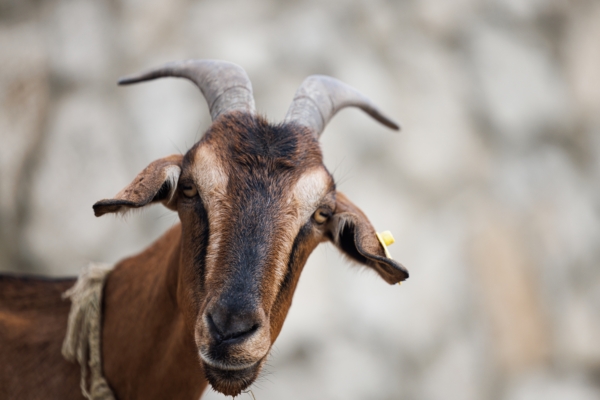
On a windy volcanic island in Brazil, there are no streams or any drinkable freshwater, yet a group of goats has been living there for over 200 years. How they manage to survive on the island has puzzled scientists.
These goats inhabit the largest island, Santa Bárbara, in the Abrolhos archipelago, located about 43 miles off the coast of Bahia state. Historical records indicate that they were left on the island by settlers 250 years ago and gradually became feral.
Despite the lack of rivers, springs, and stable rainfall on the island, the goats not only survived but also continued to reproduce. Researchers noted that the majority of newborn goats are twins, indicating successful breeding and being “well-nourished and healthy.”
Most remarkably, in years of observation by scientists, they have never seen the goats drink water, not even once.
Currently, the goat population on Santa Bárbara Island has been removed.
In March 2025, the Brazilian Biodiversity Conservation Management Agency (ICMBio) relocated the last 27 goats from the island due to their damage to various endemic plants and the threat they posed to at least seven species of seabirds’ nesting sites. Some of these goats were taken for research purposes.
Some researchers suggest that these goats may be able to drink seawater. Others believe that the key to their survival lies in consuming a succulent plant known as “beldroega,” native to the island and rich in water content.
This mystery has become an important scientific puzzle. Brazilian scientists aim to deepen their understanding of the goats’ survival mechanisms by studying their physiological functions, behavior patterns, and gut microbiota, and to develop more drought-resistant and robust livestock breeds.
Researchers point out that these goats may hold valuable clues on how animals adapt to extremely dry environments. With the climate becoming increasingly extreme, the expansion of arid regions, such findings are expected to have practical implications.
This article was referenced from a report by the American digital media platform VICE.