
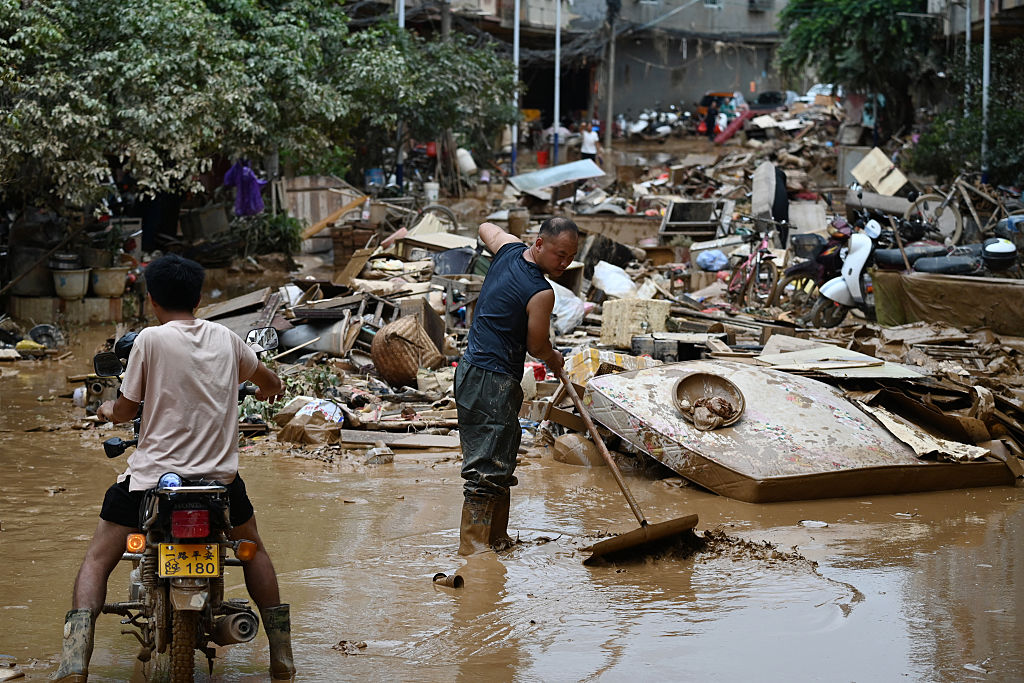
On July 17, 2026, devastating flooding in Hengzhou, Guangxi, has dealt a severe blow to the local jasmine industry. The price of fresh flowers skyrocketed from the pre-disaster low of 3 yuan per catty to a peak of 50 yuan, but with flower fields submerged and continuous rainy weather leading to a sharp drop in production, many flower farmers find themselves in a situation of having value but no flowers. Some large-scale growers have started reducing their planting areas, with some even considering leasing out or completely exiting the industry.
According to a report from the “Daily Economic News,” on July 12, the opening price of jasmine flowers at the Hengzhou flower trading market soared to over 50 yuan per catty, more than ten times higher than before. As the limited supply began to recover, by July 14, flower prices had fallen back to around 36 yuan per catty.
The rise in flower prices is not due to a sudden increase in demand, but rather a significant decrease in market supply. Before the flood, larger flower vendors typically purchased 40,000 to 50,000 catties of fresh flowers per day. After the disaster, some vendors could only obtain three to five thousand catties per day, a decrease of about 90% compared to normal times.
Li Fudong, who owns a jasmine flower base of over 800 mu, mentioned that although most of his flower fields were not submerged by the flood, continuous rainy weather still caused a noticeable decrease in production. For one 300 mu base, the daily output dropped from 2500 to 3000 catties during normal times to around 300 catties. He plans to eliminate low-yield plots and reduce the planting scale to five to six hundred mu.
Hengzhou is the world’s largest jasmine and jasmine tea production base. In 2025, the local jasmine planting area was about 180,000 mu, with an annual output of fresh flowers of about 150,000 tons, accounting for over 80% of China’s total production and over 60% of global production. The industry’s comprehensive annual output value exceeded 19 billion yuan.
The flood struck during the jasmine picking season. According to local planting enterprise representatives, if jasmine plants are submerged in water for more than five days, the roots and branches may die. Even if damaged plants recover well, it will take at least 30 to 45 days for them to bloom again. Newly planted jasmine seedlings require two to three years of cultivation before stable yields are achieved.
Before the flood, the Hengzhou jasmine industry had already experienced an expansion in cultivation and a price collapse. In 2024, fresh flower prices reached a high of 42 yuan per catty, attracting farmers and outside operators to lease land for cultivation. By 2025, the planting area had increased by about 37% compared to 2023, but flower prices had dropped to as low as two to three yuan per catty, below the picking labor cost of 8 to 10 yuan per catty.
In the second half of 2024, a grower leased 60 mu of flower fields, investing nearly 600,000 yuan, but due to prolonged low flower prices and high picking costs, had not been able to pick and sell flowers on their own. While their flower fields were not submerged by the flood, they have already prepared to lease out the land.
During this flood, the Six Blue Reservoir in Hengzhou experienced dam collapses. According to an investigation by the “Southern Weekend,” before the reservoir collapsed, there were issues with the floodgate malfunctioning, the “self-collapsing dam” failing, and reinforcement work not being completed and accepted.
The report indicated that there were five floodgates on the reservoir’s spillway, with a total opening height of 2.9 meters. However, initially, only about 0.5 meters were opened by the staff, and later two gates malfunctioned and slid down to close. Due to delays in receiving orders from superiors, it was not until 5:07 a.m. on July 6 that they received a notification to fully open the gates, by which time the water level was already too high, causing significant vibrations in the control room.
The “self-collapsing dam” used for emergency flood discharge also failed to function. Due to the frequent passage of overloaded timber transport vehicles, the earthen dam body had been repeatedly crushed, making it difficult for floodwaters to erode it automatically. Staff tried to apply for manual dam breaking, but communication breakdowns prevented them from receiving instructions.
The Six Blue Reservoir was built in 1958. The Hengzhou Water Resources Department claimed in 2025 that the reservoir had transformed from a “problem reservoir” to a “model project.” However, staff disclosed that the reinforcement work initiated in 2009 had not yet completed final acceptance. A dam safety assessment report from 2020 also indicated that rain forecast and some safety monitoring at the reservoir still relied on manual operations.
The “Southern Weekend” made multiple attempts to contact the director of the Hengzhou Municipal Water Resources Bureau regarding these issues but did not receive any response. The investigative article was removed a day after it was published.