
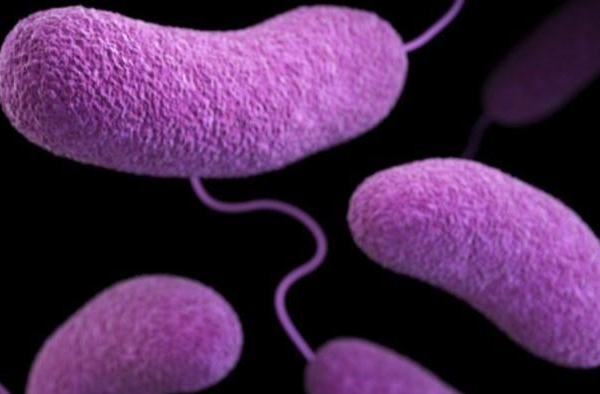
New York’s Long Island has recently seen outbreaks of the deadly bacteria known as “Flesh Eating Bacteria” or Vibrio vulnificus. Researchers are warning that if the bacteria enters the body through an open wound, there is a high chance of death within 48 hours, with a 20% mortality rate. They are urging the public to be extra cautious when swimming this summer.
Professor Christopher Gobler from Stony Brook University’s School of Marine and Atmospheric Sciences (SoMAS) revealed that his research team has identified “high-risk hotspots” of Vibrio vulnificus in various ponds and bays across Long Island.
This bacteria, classified as a “Flesh Eating Bacteria” by the Centers for Disease Control and Prevention (CDC), poses a severe threat to human health. Gobler emphasized in a press conference that it is a highly dangerous infection, with a 20% mortality rate within just 48 hours for those infected.
Studies have shown that this bacteria, originally found along the Gulf of Mexico coast, has been on the rise since its first detection in the Long Island Sound in 2023. Three deaths were reported that year due to infections.
Now researchers have discovered the spread of Vibrio vulnificus to multiple water bodies in South Fork including Sagaponack Pond, Mecox Bay, and Georgica Pond. Gobler pointed out that the bacteria’s proliferation is closely linked to nitrogen pollution, excessive algae growth, and climate change, creating a “perfect toxic storm.”
He mentioned that around 360,000 outdated septic tanks and sewage systems in Suffolk County continue to leak nitrogen wastewater underground, leading to harmful algae overgrowth.
Nitrogen not only accelerates algae blooms but also reduces oxygen levels in warm waters, providing an ideal environment for Vibrio vulnificus to thrive.
The research team also warned of harmful algae blooms in East Quogue, Southold, and the western part of Shinnecock Bay. These algae are causing shellfish to accumulate a neurotoxin, which is 1000 times more toxic than cyanide, severely impacting the local oyster industry.
Gobler highlighted that dozens of other bays and ponds in Long Island are at risk due to toxins associated with harmful algae. There have been cases where dogs fell ill or died simply by drinking from lakes in Long Island.
Although there have been no deaths due to Vibrio vulnificus since 2023 in Long Island, researchers caution that as summer temperatures rise, the risk of deadly bacteria will increase annually with the warming waters.
Experts advise the public to avoid natural water bodies like beaches, lakes, and ponds if they have open wounds during the summer. When consuming raw seafood like oysters, it is essential to practice good hygiene and verify the source to lower the risk of infection.
Vibrio vulnificus, commonly known as “Flesh Eating Bacteria,” doesn’t actually “eat flesh” but rather rapidly breaks down soft tissues such as skin, fat, and muscles during severe infections, giving the appearance of being “eaten,” hence the name by media and the public.
What is most terrifying is its potential to trigger a condition called Necrotizing Fasciitis, where the infection causes bacteria to rapidly spread along the fascia (connective tissue covering muscles and organs), leading to intense pain, skin redness, swelling, fever, blistering, tissue necrosis, sepsis, the need for amputation, and even death.
The particular danger of Vibrio vulnificus lies in its rapid onset and progression post-infection, sometimes deteriorating within hours, hence doctors often stress the importance of “racing against time.”
There are two primary methods of infection. The first is through “wound exposure to seawater,” where cuts, scrapes, or surgical wounds in contact with seawater or brackish water containing Vibrio vulnificus can lead to infection.
The second is through “consumption of raw or undercooked seafood,” with oysters being the most common source since these bacteria naturally reside in warm, low-salinity seawater.