
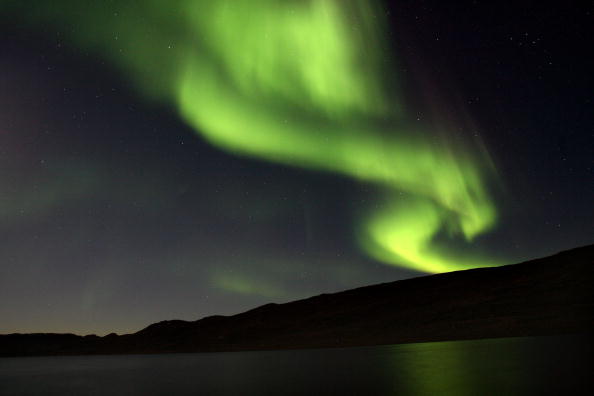
This Thanksgiving, a weak aurora may occur in the northern edge of the United States due to a solar storm.
According to a report by the Associated Press, meteorologist Mike Bettwy from the National Oceanic and Atmospheric Administration (NOAA) informed the media via email that on Thursday and Friday, many states in the northern United States may see faint auroras, but the viewing time might be short and it will depend on the intensity of the solar storm.
The following states are most likely to experience the aurora borealis in most parts: Washington, Montana, South Dakota, North Dakota, Minnesota, Wisconsin, Michigan, and Maine. In addition, northern regions of Idaho, Wyoming, New York, Vermont, and New Hampshire may also witness the aurora.
Space weather experts say that auroras may be visible from 10 p.m. Thursday night to 1 a.m. Friday Eastern Time, but it’s challenging to determine an exact time frame. As the aurora event approaches, the Space Weather Prediction Center (SWPC) website of the NOAA or aurora forecasting apps may provide the latest updates.
To catch a glimpse of this phenomenon, wait for a clear dark sky, then step outside, preferably away from bright city lights. Using a smartphone camera, you might be able to capture the faint aurora that is invisible to the naked eye.
The sun is currently at the peak of its 11-year cycle, making solar fluctuations and northern lights more frequent. Earlier this week, the sun emitted high-energy plasma pulses towards Earth.
However, experts predict that this week’s solar storm will not cause significant communication disruptions.