
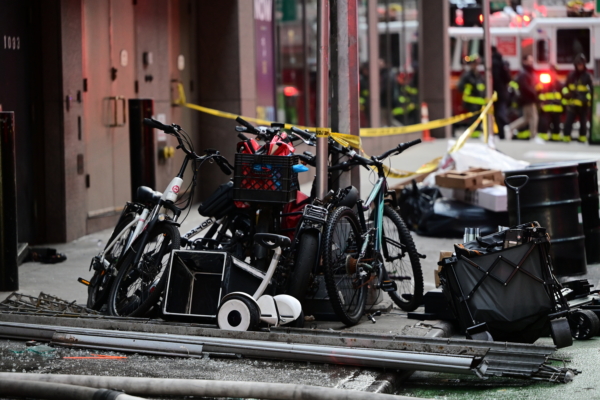
In Manhattan’s Midtown, New York City, a bike and scooter rental shop experienced two lithium-ion battery fires in the early hours of December 3rd, which resulted in an injured firefighter.
The Bike & Scooter rental shop, located on West 38th Street in Midtown, caught fire twice in the early morning as the lithium-ion batteries being charged and stored inside the shop ignited. Firefighters responded to the scene, extinguishing the fire on the first-floor storefront by 4:30 am. However, water flowing into the basement where the batteries were stored triggered a second fire. One firefighter sustained minor injuries while battling the flames and was taken to Lenox Health Greenwich Village for treatment.
The New York City Fire Department stated that the shop rents out electric bikes, scooters, and bicycles, also offering storage services for delivery workers in Midtown to store their bikes and scooters. As a result, the shop housed hundreds of lithium batteries, which were even being charged overnight in an unsupervised manner. Despite several fire department inspections revealing violations, no improvements were made. The FDNY cautioned the public that regardless of whether lithium batteries are safety certified, it is advisable not to keep them indoors and instead store and charge them outdoors whenever possible.
The incident raises concerns about fire safety practices and the potential risks associated with lithium-ion batteries. Proper handling, storage, and charging procedures are crucial to prevent accidents and injuries, especially in businesses that deal with a large number of batteries. The importance of adhering to safety regulations and guidelines cannot be overstated in order to mitigate the dangers posed by such incidents.
Fire officials are urging businesses and individuals alike to prioritize safety measures when handling lithium batteries and to follow recommended practices to reduce the likelihood of fire incidents. Increased awareness, compliance with safety protocols, and proactive measures are essential to safeguard against potential hazards and ensure the well-being of both property and individuals in the community. vigilance and precaution are key to preventing such incidents and maintaining the safety of the public and emergency responders.