
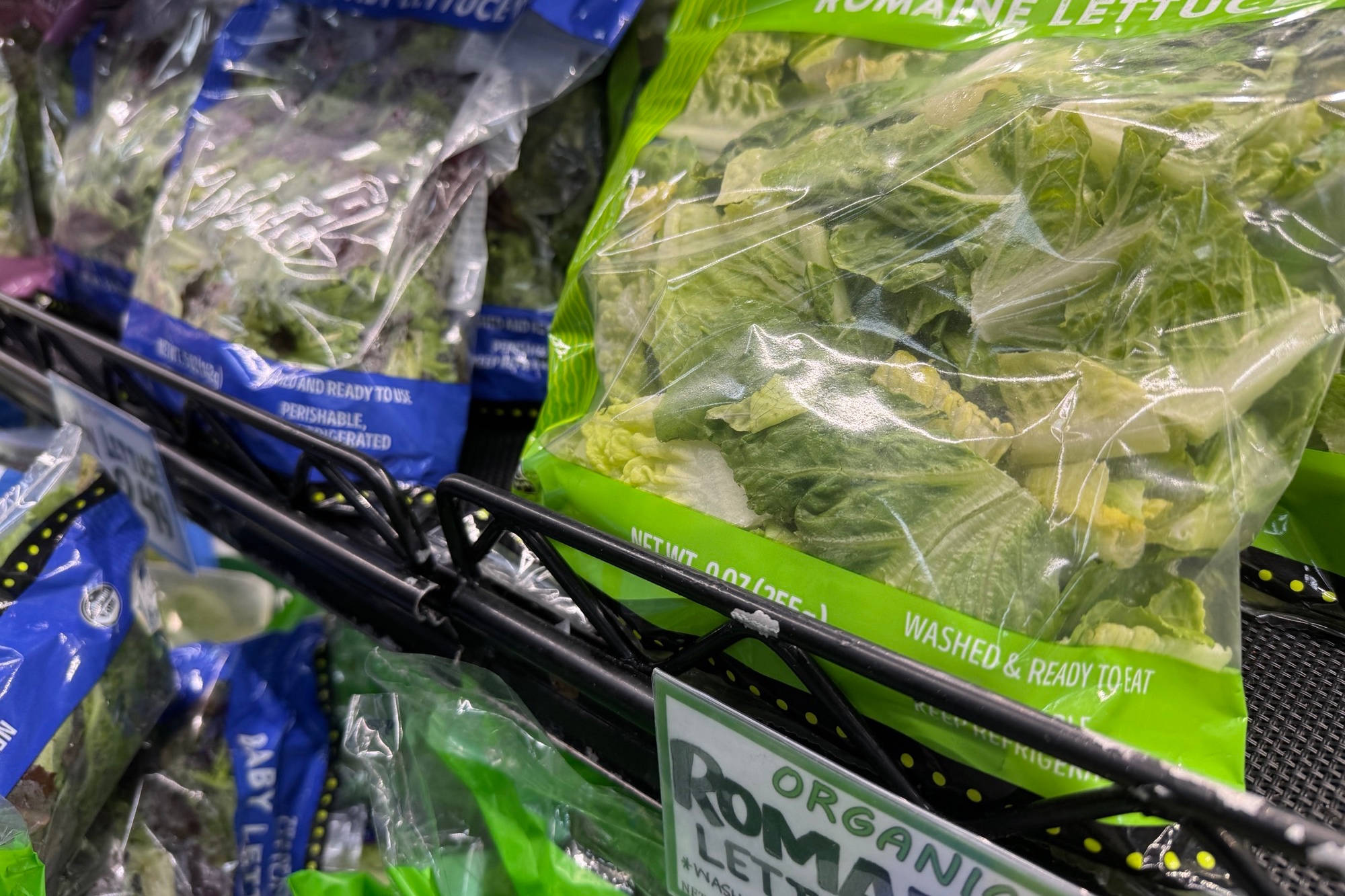
California vegetable producer Taylor Farms announced on Friday (July 17) that it is recalling certain products that may be related to the recent Cyclosporiasis outbreak spreading across the United States.
In a statement, Taylor Farms stated that “based on information provided by the U.S. Food and Drug Administration (FDA) on Thursday (July 16), Taylor Farms de Mexico will voluntarily recall all Iceberg Lettuce products produced in central Mexico.”
Despite the FDA’s traceback investigation indicating that the source of the outbreak may be limited to products from one farm, accounting for less than 1% of the total U.S. supply of iceberg lettuce, Taylor Farms decided to indefinitely withdraw iceberg lettuce produced in that region of Mexico.
Taylor Farms emphasized that its salad kits do not contain iceberg lettuce and are not involved in this outbreak.
The company expressed deep concern for all affected individuals and consumers who may have lost confidence in fresh produce due to this event. Taylor Farms stated that it will fully cooperate with the investigation and make every effort to regain public trust.
Fast-food chain Taco Bell announced on Thursday that upon learning of the FDA’s investigation into their supplier Taylor Farms, they immediately removed the lettuce ingredients from some stores and discontinued the related ingredients from their national supply chain.
According to data released by the Centers for Disease Control and Prevention (CDC), between May 13 and July 13, a total of 1,644 individuals who had dined at Taco Bell were reported to have been infected with Cyclosporiasis. The outbreak affected five states – Indiana, Kentucky, Michigan, Ohio, and West Virginia, with 94 individuals requiring hospitalization.
The CDC advised individuals in the affected areas to avoid consuming lettuce from local Taco Bell outlets.
Cyclosporiasis is caused by a parasitic infection spread through food and water, resulting in prolonged weeks of diarrhea, fatigue, and decreased appetite, but it rarely poses a deadly risk. There have been no reported deaths associated with this outbreak.
U.S. health officials mentioned that they are investigating other cases of Cyclosporiasis in 34 states across the Midwest and East Coast. Current investigations indicate that these cases are not related to the current outbreak.
The CDC pointed out a potential connection between cases in Michigan, Ohio, West Virginia, and Kentucky, with Michigan having the most severe outbreak, with over 5,000 reported infections and 102 hospitalizations.
The latest data from the CDC shows over 1,600 reported domestic cases in the U.S., with over 5,100 cases still pending further analysis to confirm their association with the outbreak.
Health officials noted that actual infection numbers could be higher than reported figures since some patients may not seek medical attention or have recovered on their own. Additionally, the confirmation process typically takes several weeks, indicating that the actual extent of the outbreak may go beyond the current known states.
Robert Barsanti, a spokesperson for the California Department of Public Health, stated that the state reported 41 cases of Cyclosporiasis between January and June, unrelated to the current outbreak. This number is lower than the state’s average of about 100 cases per year, with cases typically concentrating from May to August.
Notably, Taylor Farms, based in the Salinas Valley of California, caused a Cyclosporiasis outbreak in 2013.
During that time, numerous cases in Iowa and Nebraska were traced back to a mixed salad supplied by Taylor Farms de Mexico from Guanajuato, Mexico.
The content and conclusions of this article have been based on translations from the original source without any direct input from the reporter.