
In Southeastern and Central Europe, historical heatwaves and droughts have led to the Danube River water levels dropping to historic lows. This phenomenon has unearthed parts of the Constantine Bridge, dating back to the Roman Empire era, providing a rare opportunity for Bulgarian archaeologists to document the remnants of what is revered as one of the grandest engineering achievements of the Roman Empire.
This summer, Europe has been hit by record-breaking heatwaves, causing severe droughts in certain regions of the continent, resulting in the Danube and Rhine rivers reaching new lows in water levels.
“For archaeologists, these moments are incredibly precious, as nature briefly reveals the remnants usually hidden beneath the Danube River bed,” said Pavel Popov from the Historical Museum of Pleven, “This gives us the opportunity to observe, document, and study these remnants in their original environment.”
Commissioned by Emperor Constantine the Great, the bridge was completed in the year 328 AD, connecting the ancient city of Ulpia Oescus to Sucidava in present-day Romania. With a total length of over 2 kilometers (1.2 miles), it was considered one of the longest bridges of ancient times. However, the bridge had a short lifespan, with significant damage believed to have occurred around 367 AD.
On Tuesday, a team from the Pleven Museum conducted aerial photography and documentation of the visible remnants of the bridge near the village of Gigen in northern Bulgaria. Researchers used drones to survey and photograph the exposed bridge remnants, tracking the direction of visible bridge foundations and assessing their preservation condition. It was the first time that archaeologists from the Historical Museum of Pleven had the opportunity to directly observe and record the structure of this millennia-old bridge in its real environment.
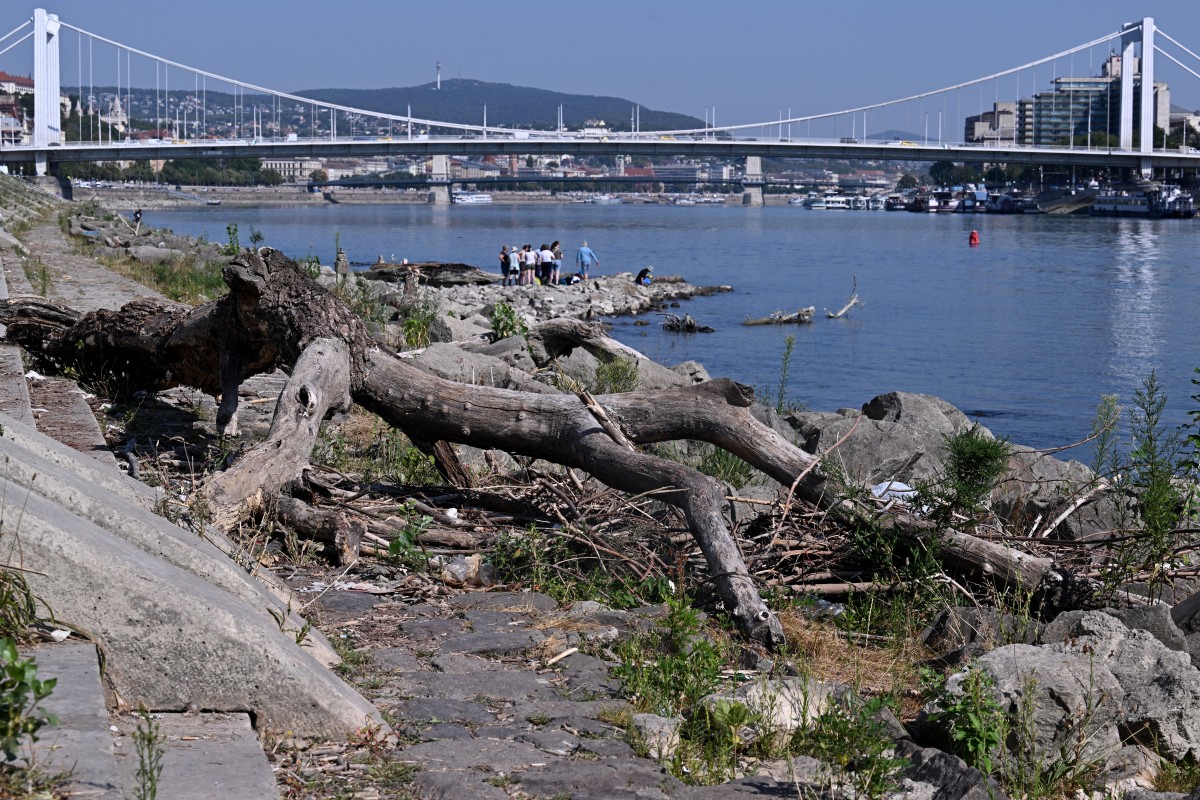
Additionally, remnants of the Franz Joseph Bridge in Budapest have resurfaced due to the Danube River water levels plummeting to extreme lows. The bridge was destroyed by retreating German forces during the Siege of Budapest in January 1945, causing parts of the collapsed bridge structure to fall into the river. These remnants, which have been lying dormant on the riverbed for over 80 years, are now clearly visible near the Liberty Bridge.