
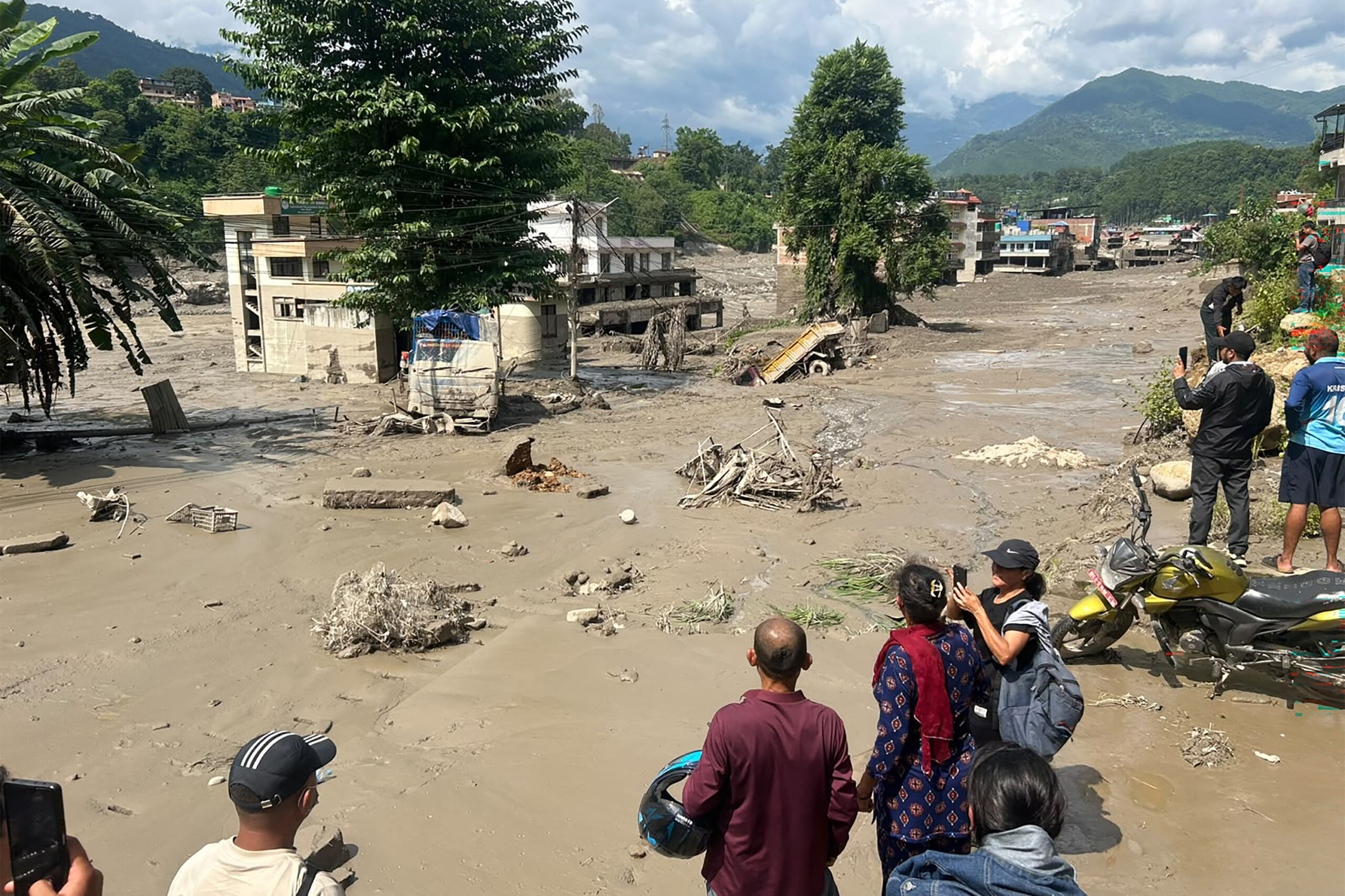
Nepalese authorities announced on Wednesday (August 26th) that a large-scale flash flood occurred in the Rasuwa region, north of the capital Kathmandu, bordering Tibet. The flood not only swept away villages but also damaged roads, bridges, and multiple hydroelectric power plants, among other critical infrastructure. Authorities warned that the death toll could continue to rise.
The flash flood affected the approximately 50,000 residents of Rasuwa County, with the areas of Timure and Syabru Besi facing the most severe impact. At least 13 armed police personnel are currently missing in the county, and authorities have been unable to contact many other security personnel. Officials have informed the media that the number of missing security personnel could be as high as 41.
Narendra Pariyar, the Chief Administrative Officer of Rasuwa, told Reuters and the BBC that they have received reports of villages and infrastructure being destroyed by the flood, but it is currently difficult to estimate the number of casualties and property losses.
Authorities are urging residents living along the Bhote Koshi River to evacuate to higher ground, remain vigilant, and take preventive measures.
The Nepal Electricity Authority (NEA) confirmed that the flood has damaged multiple hydroelectric power plants, transmission facilities, roads, and bridges. The organization added that the power supply in the affected area has been disrupted.
After convening an emergency meeting to assess the situation, Prime Minister Balendra Shah of Nepal posted on social media instructing all units to relocate people from low-lying areas to safety.
He also stated that the army, armed police, and regular police have been fully engaged in rescue operations, while coordinating with medical teams, scouts, and the Red Cross to take necessary actions.
Military spokesperson Rajaram Basnet reported that 12 people have been rescued so far, and search and rescue operations are ongoing.
Regarding the cause of the flash flood, some officials speculate it may be due to abnormal water influx from the upstream, possibly related to glacial lake outburst, snowmelt, or rainfall. An official disclosed to the BBC that the scale of destruction from this disaster on Wednesday might surpass the floods in the region last year.
The Bhote Koshi River originates from Tibet, flows into Nepal as the Trishuli River, and eventually joins the Gandak River in India.
Although the exact cause of this flash flood remains uncertain, last year the region experienced a transboundary flood, with reports suggesting it could be related to a glacial lake outburst. The flood at that time resulted in 9 deaths, 24 missing persons, and swept away the “Friendship Bridge” connecting Nepal and China, leading to months-long disruptions in trade and transportation.