
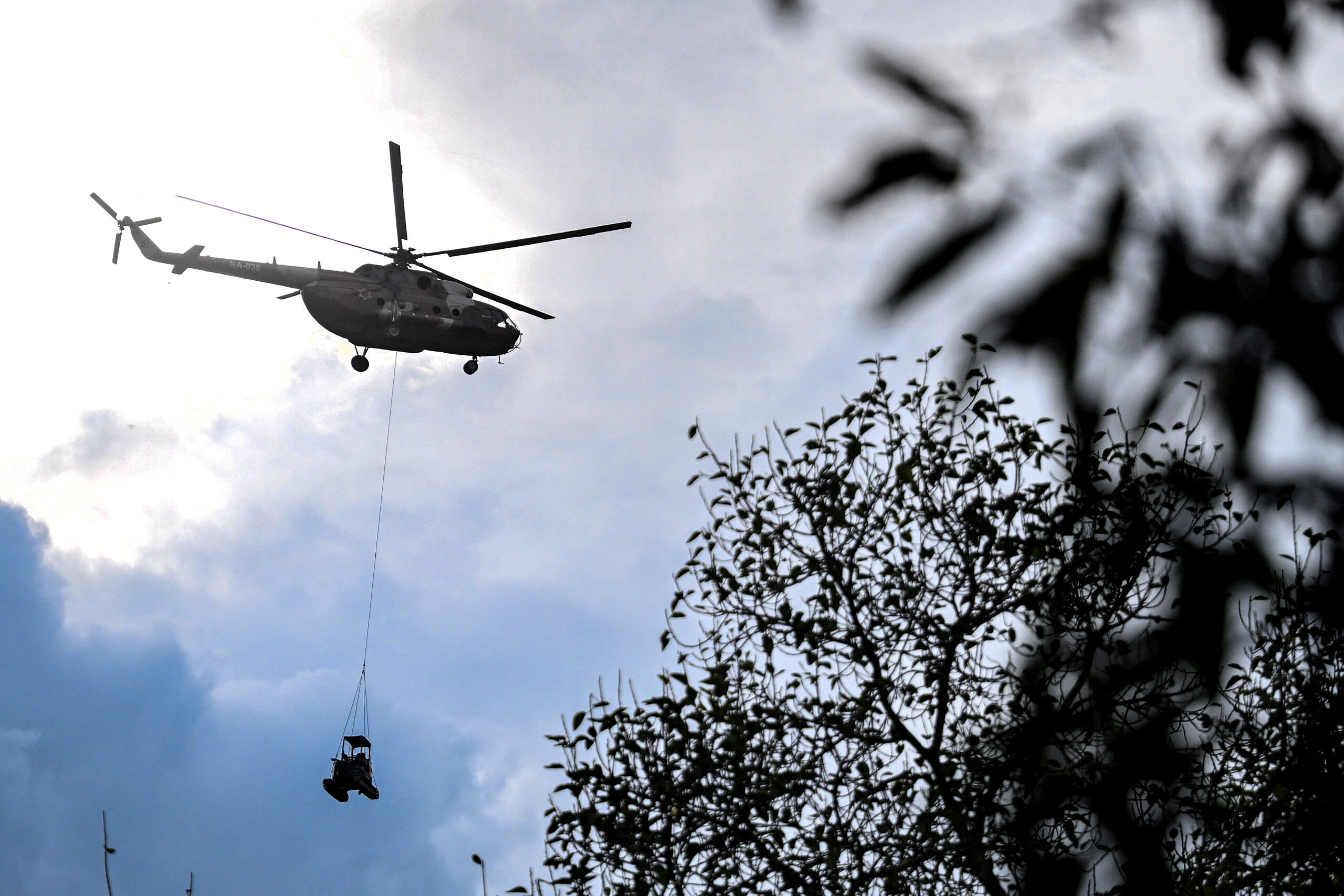
As of Monday (31st), Nepalese rescue teams are working around the clock in collaboration with experts from China and India to rescue hundreds of workers trapped in six hydropower station tunnels. The devastating mudslides that erupted on August 26 have resulted in 903 deaths and 4,247 people missing in Nepal.
According to reports from Reuters, the Nepalese government is focusing its search and rescue efforts on the hydropower station tunnels blocked by mudslides. Nepalese rescue teams have shared videos and images showing the use of excavators to search overnight and soldiers using flashlights to locate tunnel entrances.
Nepal’s disaster management authorities have confirmed that at least 933 people are missing inside the hydropower project tunnels due to the flood. Army spokesman Raja Ram Basnet said, “The accumulation of a large amount of debris has posed huge challenges to clearing the tunnels.”
Due to the humid climate, hundreds of bodies have begun to decompose, forcing rescue workers to bury these unidentified bodies in shallow graves.
Nepalese Prime Minister Balendra Shah described the disaster as “unprecedented and devastating,” mobilizing nearly 21,000 security personnel for the rescue operation.
On the evening of August 30, Shah posted on Facebook, stating, “Despite facing harsh weather, difficult terrain, and ongoing risks, we are moving forward with determination to save the lives of our citizens.”
On the Chinese side, Beijing reported that 16 people have died and 546 are missing in Jilong County. In addition to local workers, 261 foreign nationals from 23 countries near the Jilong port have been reported missing.
A bus driver from Tibet recently told Epoch Times that a large number of missing persons, including 15 drivers from the Lhasa Transportation Industry Group, remain unaccounted for. The informant revealed that these 15 missing drivers were driving 29-seater medium buses.
The son of a missing worker, Tong Guowei (pseudonym), has been waiting anxiously outside a checkpoint for days, expressing sorrow, “It’s unlikely we will find them, but we must still go to the disaster area, even if it’s just to bring back some soil.”
However, over two hundred relatives of the missing individuals were forcibly turned back upon reaching the Tibetan disaster area, with local authorities instructing them to go home and wait for updates.
Despite the heavy toll of the disaster, the Chinese authorities are actively censoring information, drawing international attention.
Nepalese officials revealed to Reuters that despite holding meetings with China before the disaster to enhance cooperation, China did not share critical data on glacial lake risks and water levels. Nepalese authorities are concerned that the lack of data sharing could hinder future disaster prevention efforts.
Following the mudslide disaster, BBC reporter Laura Bicker pointed out last Friday (28th), “Getting in touch with interviewees in Tibet’s Lhasa is often much more difficult than contacting those in Pyongyang.”
Nepalese reporter Parshuram Kaphle also harshly criticized China for not issuing immediate warnings downstream, resulting in Nepal paying a heavy price.
The current search and rescue operations are still being hampered by severe weather conditions. Chinese state media reports that eight high-risk geological disaster areas have been identified along rivers, which could potentially lead to the formation of new barrier lakes at any time.
Simultaneously, if the barrier lake formed on the Nepalese side were to breach, it could trigger a chain reaction in downstream lakes, threatening the safety of over 90,000 residents.