
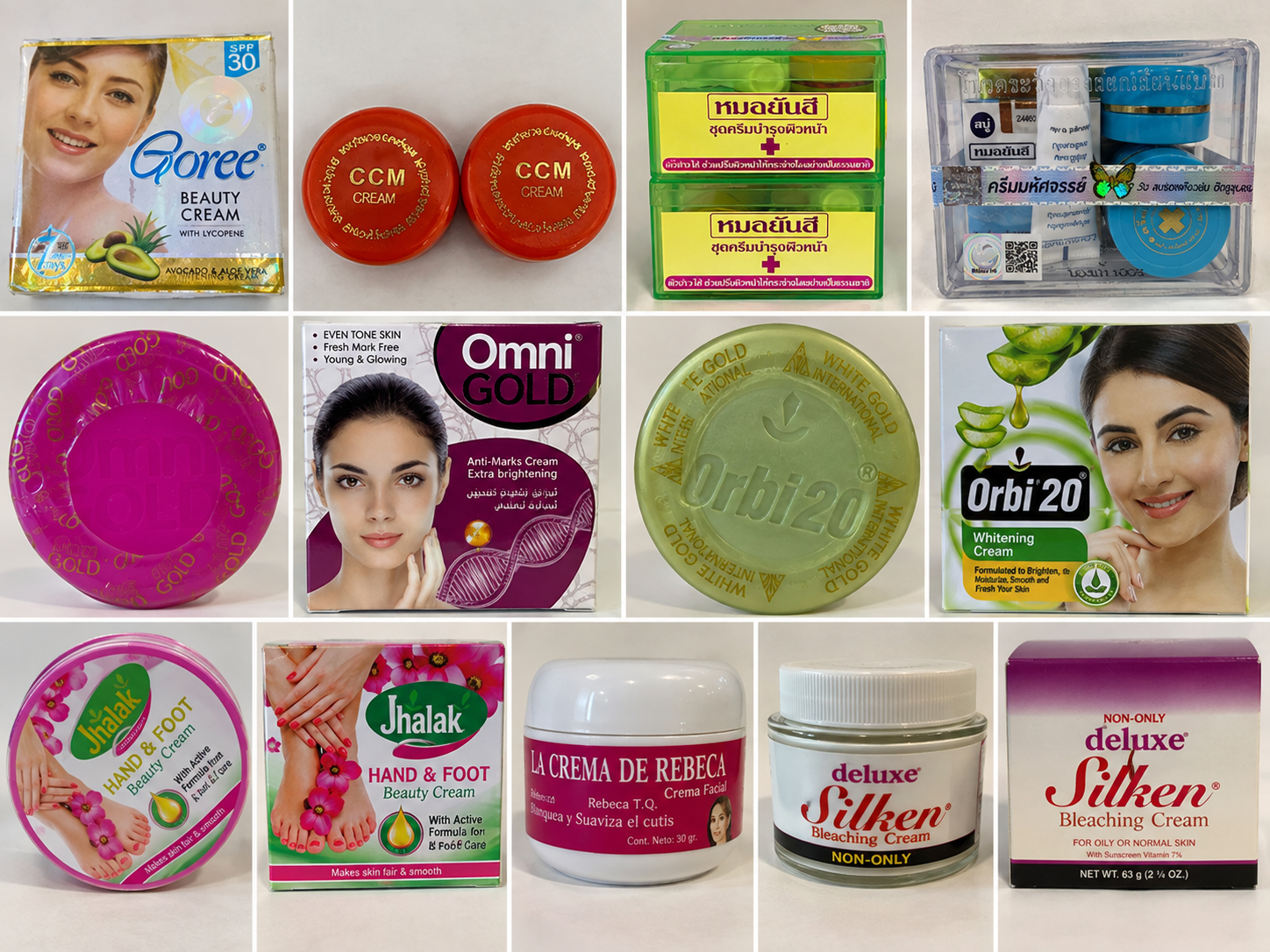
A batch of whitening products that have been warned, banned, or recalled by regulatory agencies around the world have not disappeared from the internet. A recent media investigation found that as of September 1st, over 20 such products can still be found on some major e-commerce platforms, some even rebranded, resold, and relisted by different sellers. None of these products’ ingredient labels explicitly mention the presence of “mercury.”
Mercury can enter the body through the skin, prolonged and repeated exposure to which can damage the kidneys and nervous system. US regulations prohibit the addition of mercury to general cosmetics; for unavoidable mercury residues in the manufacturing process, the content must be below 1ppm, which means not exceeding 0.1 mg per 100 grams of the product.
In a batch of whitening product test results released by the US Food and Drug Administration (FDA) this year, many were found to contain high levels of mercury. For example, the mercury concentration in Orbi 20 Whitening Cream was 27,762 ppm, equivalent to around 2.78 grams of mercury per 100 grams of the product, exceeding the stipulated limit by over 20,000 times; Deluxe Silken Bleaching Cream contained 19,027 ppm, and Jhalak Hand & Foot Beauty Cream contained 17,827 ppm.
According to Reuters, a recent investigation into mercury-containing whitening products that were previously banned or warned by various regulatory bodies found that as of September 1st, over 20 products are still available on major e-commerce platforms such as Amazon, Temu, and TikTok Shop.
Being handled by regulatory agencies does not necessarily mean that the products will disappear from online platforms.
In early August, Reuters discovered an Amazon third-party seller in India selling a product named “Beauty Brightening Cream,” which was actually the Chandni whitening cream explicitly mentioned by the FDA. The original product name was blurred in the product images. Some products were taken down, only to reappear under different sellers.
Subsequently, Reuters journalists directly made purchases. They bought several previously regulated products on Amazon sites in the UK, France, Belgium, and India; while US journalists purchased Parley Whitening Cream produced in Pakistan on Temu and TikTok Shop, and bought other whitening products that had been flagged for warnings or bans from TikTok Shop and Amazon. Similar items were also found on the Amazon UAE third-party marketplace.
When one link is removed, the same product may resurface with a different name, seller, or platform. Cross-border sales further complicate regulation and tracking as sellers, platforms, and consumers may be located in different countries.
The appeal lies in affordability and quick whitening effects. Mercury can inhibit melanin production. Winston Morgan, a toxicology professor at the University of East London, told Reuters that products containing mercury may show whitening effects in just a few days, faster than legal ingredients like kojic acid and arbutin; mercury itself is inexpensive and easily incorporated into creams.
However, the price for quick results may be paid by the kidneys and nervous system. The FDA warns that repeated use of products containing mercury can lead to serious or even permanent damage to the kidneys and nervous system as mercury can enter the body through the skin. Other household members exposed to contaminated items like towels or inhaling mercury vapors may also be at risk.
This also poses the most challenging aspect for consumers. The ingredient labels of over 20 products investigated by Reuters do not mention mercury. The FDA also alerts that some illegal whitening products may not even disclose the presence of mercury on their labels.
When contacted by Reuters, Amazon, Temu, and TikTok all stated that they prohibit the sale of noncompliant products and are in the process of removing such items or handling sellers. Amazon mentioned seller authentication, compliance documents, and third-party lab testing; TikTok stated the ban on selling products for skin bleaching, whitening, brightening, or reducing overall melanin; Temu confirmed they would deal with products that violate laws and platform rules.
The Minamata Convention on Mercury, adopted in 2013, currently has over 150 countries as signatories. Restricting mercury-containing cosmetics is not a new regulation, but cross-border e-commerce has increased the difficulty of regulation: a bottle of whitening cream may be sold by a seller from one country through an e-commerce platform in another market, ultimately reaching consumers in other countries.