
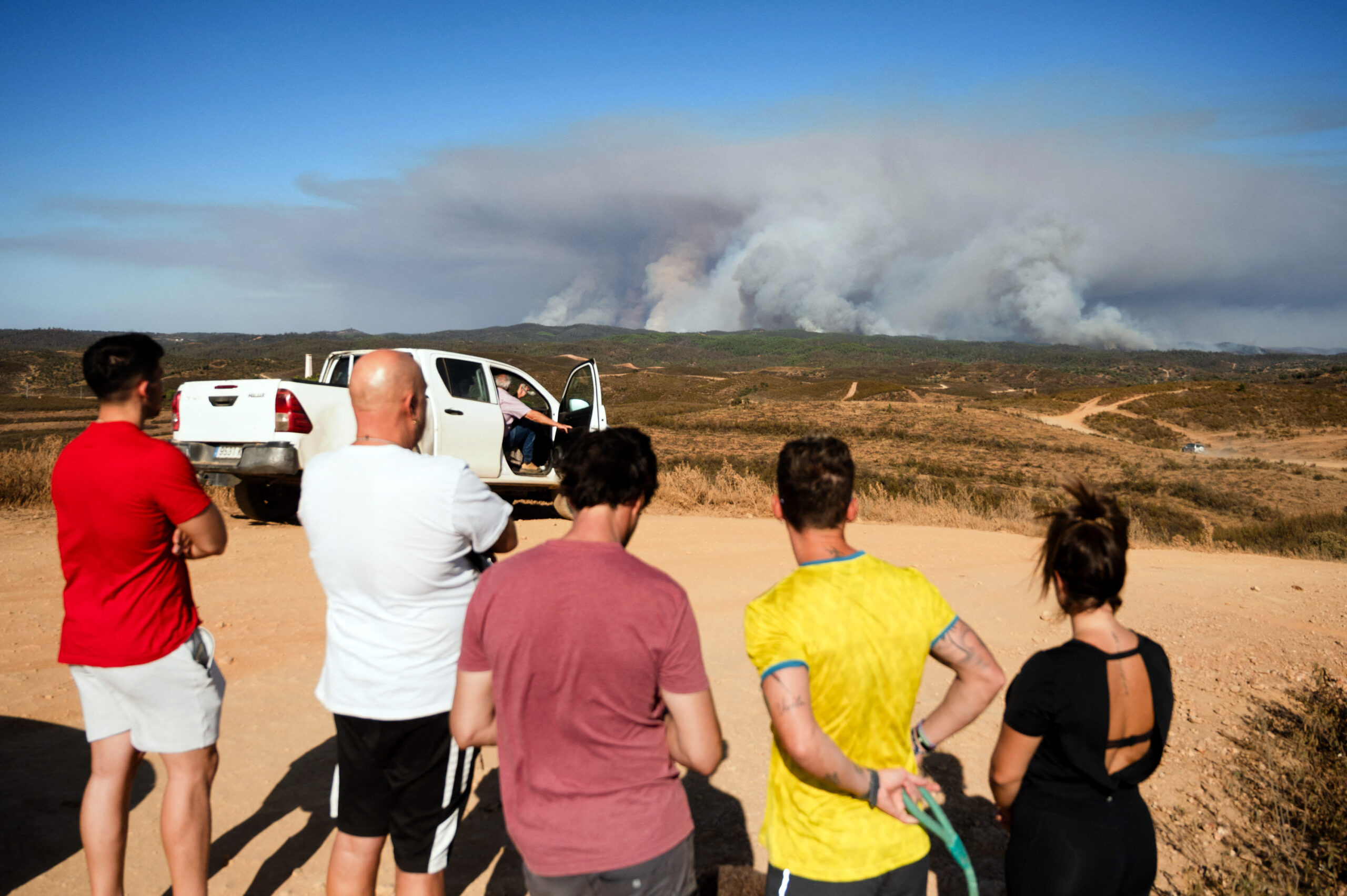
Spain is gearing up for a rare total solar eclipse by launching large-scale security deployments and public safety campaigns, coinciding with the country’s highest risk period for wildfires throughout the year. Ensuring the safety of the large number of spectators and preventing wildfires has become a major challenge for the authorities.
On the evening of August 12 (Wednesday), many Europeans will have the opportunity to witness the rare total solar eclipse. Spain is one of the best locations on the European continent to observe this astronomical phenomenon and is expected to attract around 6 million people to the areas along the eclipse path.
To handle the influx of visitors, local governments in Spain have planned 660 official observation points, set up parking lots and camping areas, and guided tourists to designated locations to watch the eclipse, thus avoiding large crowds entering natural areas prone to wildfires.
Virginia Barcones, Head of Civil Protection and Emergency Affairs at the Spanish Ministry of the Interior, told Reuters that authorities will deploy over 35,000 police officers and security personnel to reduce the safety risks associated with large gatherings.
She pointed out that Spain has already experienced a series of severe wildfires this summer, so authorities must restrict any activities that could generate sparks, such as smoking or using open flames in dry areas.
Concerns also arise about the weather conditions in some parts of Spain during the eclipse.
According to the Spanish National Meteorological Agency, temperatures could reach up to 40°C in some areas on the day of the eclipse, and the wildfire risk in some regions is assessed as “high” or even “very high.”
Spain has already faced multiple heatwaves and severe wildfires this year. So far, about 200,000 hectares of land have been destroyed by wildfires, which is approximately six times the same period in 2025.
As of Monday night, large wildfires were burning in the provinces of Huelva, Segovia, and Huesca. Thousands of residents in municipalities in Huelva and Segovia have been evacuated.
Raul de la Calle, Secretary-General of the Association of Forestry Engineers, stated that mid-August is one of the peak periods for wildfires in Spain, which coincides with this rare total solar eclipse event.
Authorities estimate that around 1.5 million people will travel by car to rural areas in central and northwestern Spain, situated in the eclipse viewing zone.
Some residents of small towns have launched advocacy campaigns, urging tourists to stay away from sensitive areas prone to wildfires.
In Buitrago de Lozoya, a town along the Lozoya River with about 2,000 residents north of Madrid, the local environmental group “Monte en Pie” even held protests against hosting large eclipse events near the forest.
The nearby town of Tres Cantos has canceled all eclipse day activities due to the wildfire risk. However, an observation point near Buitrago de Lozoya is still expected to attract around 3,000 people, including officials from the Madrid regional government.
The head of the environmental organization stated that while the total eclipse may last only a few minutes, the damage caused by a large forest fire could last for decades. “We are in a high wildfire risk area. Due to the extremely dry rural areas, barbecues and machinery use are prohibited… the more people, the greater the danger,” said Ana Hernandez, head of the organization.
Both central and local governments in Spain have issued safety warnings through social media, local media, and travel forums, urging visitors to:
– Avoid parking in unauthorized areas
– Avoid littering
– Refrain from starting fires or using barbecue grills
– Avoid using equipment that may spark in high wildfire risk areas
– Stay away from dry, wildfire-prone forests and rural areas
However, these warnings have not dampened the enthusiasm of tourists traveling to Spain to witness the total solar eclipse.
Data from travel platforms shows that searches for inland Spanish cities like Burgos and Soria have increased more than threefold among foreign tourists. Travel data company Amadeus reported a 292% increase in bookings for the Asturias region in northern Spain compared to the same period last year.
Furthermore, the Spanish Recreational Vehicle Industry Association mentioned that around 70% of the country’s rental motorhomes, camper vans, and towable RVs have been booked nationwide during the eclipse period, involving approximately 500,000 vehicles.