
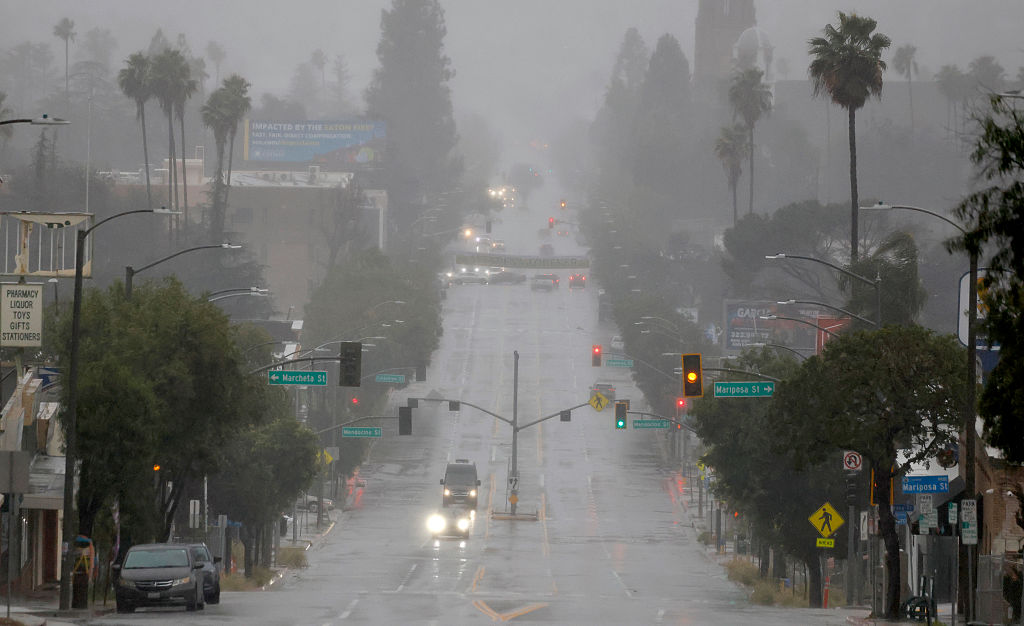
California Governor Gavin Newsom declared a state of emergency on September 21st in anticipation of what could potentially be the strongest El Niño storm season in history.
Newsom stated that declaring the state of emergency would allow state government agencies to respond more quickly to potential severe weather conditions, including strengthening roads and critical infrastructure, deploying emergency supplies, and assisting local partners in mitigating risks of flooding, mudslides, and more. “This is the purpose of our action. To provide the necessary support for the community, equip emergency personnel with the tools they need to carry out their work, and assure the people that California is prepared,” he said in a statement.
The National Oceanic and Atmospheric Administration (NOAA) predicts that this El Niño event may reach “very strong” levels in the Northern Hemisphere autumn and winter with a likelihood exceeding 90%. Between October and December 2026, there is a 75% chance of reaching “historical strength,” potentially surpassing any El Niño event recorded by NOAA since 1950.
If the predictions hold true, California could face multiple rounds of heavy rainfall, strong winds, mountain snowfall, floods, mudslides, debris flows, and coastal flooding over the coming months.
According to the state of emergency announcement, the California government will enhance flood risk prevention efforts by pre-deploying sandbags, water pumps, and other flood prevention equipment.
The Governor’s office stated that this measure aims to prepare the California National Guard to assist with flood response, search and rescue missions, engineering, and logistical tasks when needed.
The Governor also directed the state’s Environmental and Natural Resources Agency to expedite relevant permitting approvals and streamline administrative processes to support local efforts in flood, mudslide, and debris flow preparedness.
Newsom stated, “We are preparing in advance for the El Niño phenomenon because every California resident should be able to stay safely at home, stay connected with their community, and be protected when severe weather strikes.”
El Niño is a natural climate phenomenon primarily associated with abnormally high sea surface temperatures in the tropical Eastern Pacific Ocean. It alters global atmospheric circulation and rainfall patterns, causing varied impacts in different regions.
For California, a strong El Niño often increases the likelihood of more frequent and intense winter storms, as well as the risk of high winds, floods, mudslides, debris flows, and coastal flooding.
The Governor’s office noted that California has already experienced coastal flooding related to the El Niño phenomenon this year. The office stated that the “Kelvin Waves” triggered by El Niño raised sea levels, while strong swells generated by Pacific nearshore hurricanes have been hitting the California coast.
The Governor’s office urged residents to prepare for potential severe weather conditions by understanding local flood risks, clearing drainage systems, subscribing to emergency alerts, and developing evacuation plans.