
On Friday, October 16th, 2026, the Japan Meteorological Agency made a misjudgment due to a system error at noon, falsely categorizing a 6.9 magnitude earthquake in the Kamchatka Peninsula of Russia. The agency mistakenly identified the epicenter to be in the Kuril Islands with a magnitude of 9.9 and issued relevant emergency alerts for the regions of Hokkaido to Tokai in Japan, which were later urgently revoked. This marks the first time since 2007 that the Japanese emergency earthquake alert system has retracted a previously issued warning. The Meteorological Agency apologized during an afternoon press conference and denied any occurrence of a cyberattack.
The incident occurred around 12:38 p.m. local time in Japan on Friday, with the actual epicenter near the Kamchatka Peninsula of Russia at a depth of approximately 160 kilometers. However, the system mistakenly placed the epicenter in the Kuril Islands and overestimated the magnitude to 9.9, prompting alerts to be issued for regions including Hokkaido, Tohoku, Kanto, Hokuriku, Tokai, and the Izu Islands around 12:40 p.m.
Subsequently, the Meteorological Agency found that Hakodate City in Hokkaido recorded a seismic intensity of 1, while shaking of intensity 2 or higher was not observed in other areas. The alerts were then canceled around 12:48 p.m.
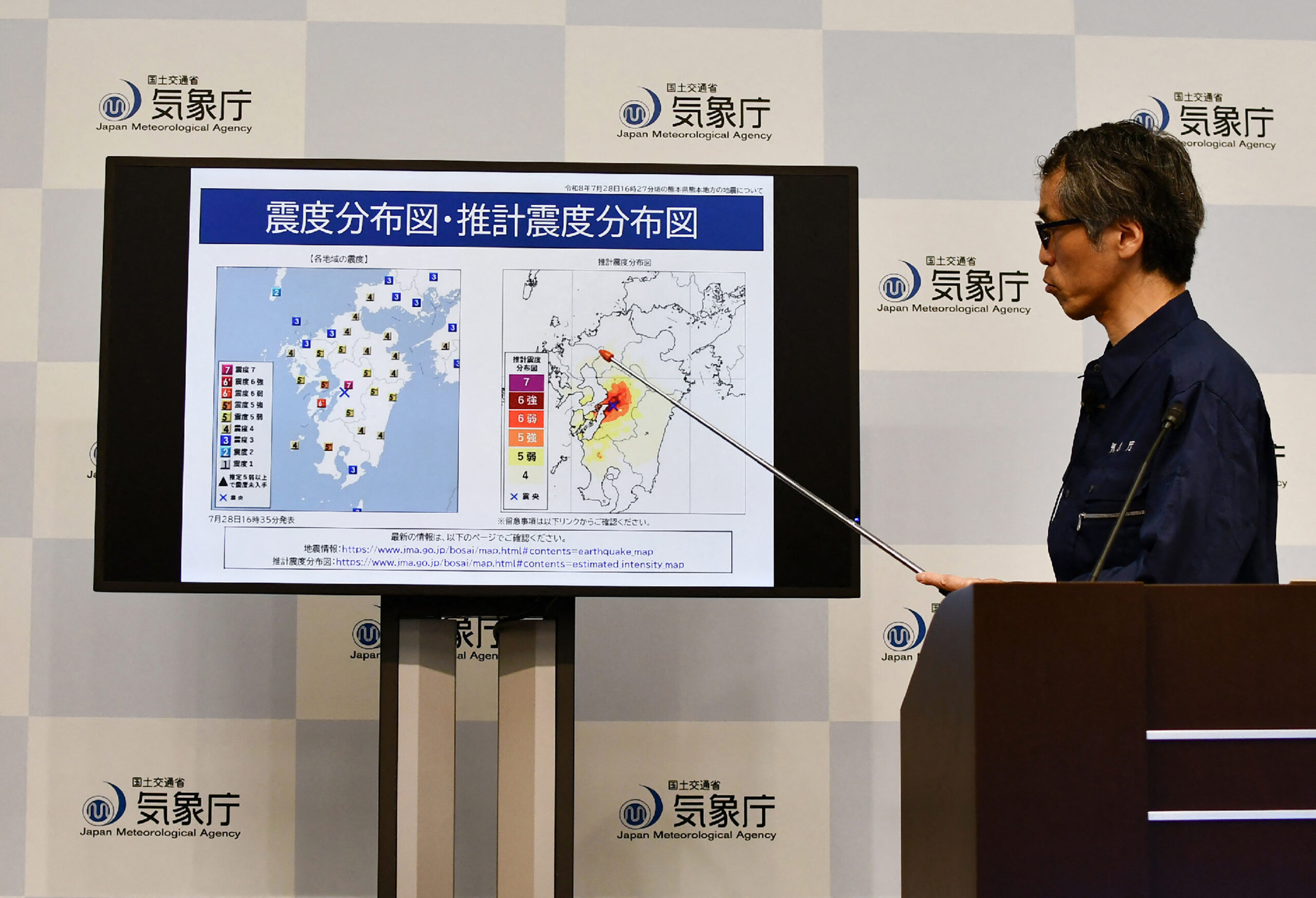
At 2 p.m. that afternoon, the Meteorological Agency held a press conference where Ayataka Ebita, the Chief of the Earthquake and Tsunami Monitoring Division, bowed and apologized. He stated, “The emergency earthquake alert with an overestimated magnitude was issued this time, causing great inconvenience to everyone, and for this, we sincerely apologize.”
He emphasized that the system was not subject to a cyberattack and that they are currently investigating the reasons for the system’s misjudgment.
The Japanese emergency earthquake alert system primarily detects early weak tremors of earthquakes, automatically calculates the earthquake magnitude and the potential seismic intensity in various regions. When the predicted maximum seismic intensity reaches weak 5 or higher, alerts are issued for areas estimated to experience intensity 4 or higher, reminding the public to take precautionary evacuation measures in advance.
The Meteorological Agency stated that they will clarify the reasons for the system’s error this time and review the alert issuing process for any possible loopholes to prevent similar incidents from happening again.