
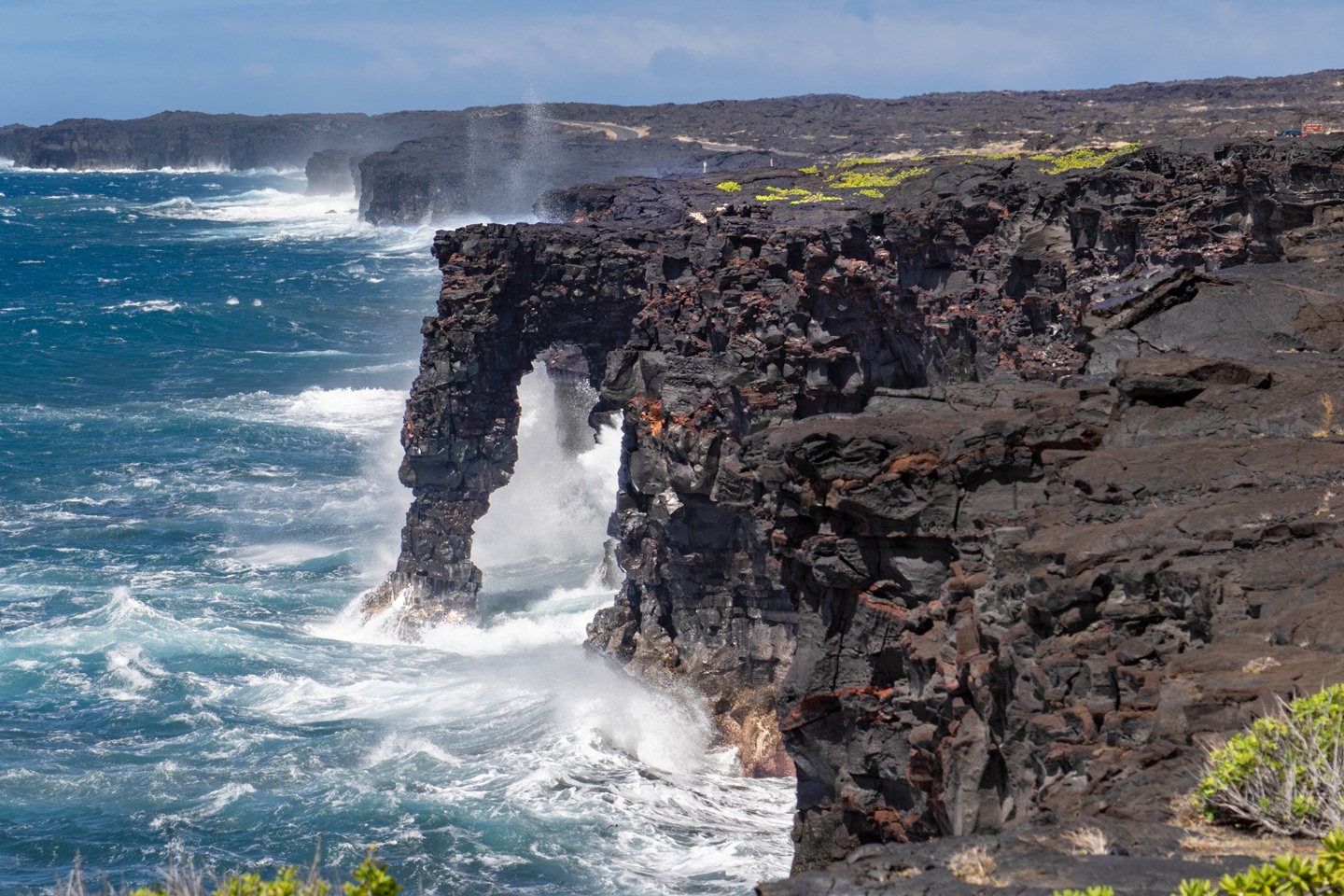
In the long-term erosion of the Pacific storms and geological evolution, one of the most famous geological wonders in the Hawaiʻi Volcanoes National Park, the Hōlei Sea Arch, has recently collapsed and disintegrated, plunging into the Pacific Ocean.
After enduring over five centuries of wind and rain, the 90-foot (approximately 27 meters) natural basalt arch has officially come to the end of its existence.
The Hōlei Sea Arch is located at the end of the Chain of Craters Road in Big Island, Hawaii. According to the National Park Service (NPS) of the United States, about 550 years ago, ancient lava flowed from the Kīlauea volcano straight to the coast; the cooled basalt endured continuous pounding and erosion by the strong Pacific waves over centuries, gradually hollowing out the arch, evolving into a natural wonder that attracted countless visitors for pilgrimage.
However, this natural structure formed by lava has always been fragile and temporary. The park management pointed out that over the years, with the scouring of giant waves, intensified cracks, and frequent seismic activity, the deterioration of the sea arch structure has accelerated. The earthquakes caused by the 2018 eruption of the Kīlauea volcano and subsequent summit collapse damaged the surrounding cliffs; in January 2020, due to the appearance of new cracks and signs of instability, the park closed the original close-range viewing area and opened a farther and safer viewing area in March of the same year.
Later that year, Tropical Storm Darby brought huge waves that directly broke off a rock at the base of the arch.
According to an official statement released by the Hawaiʻi Volcanoes National Park on Thursday, October 1st, the 90-foot sea arch was still standing tall before the park closed on September 23, but had already collapsed by the evening of Sunday, September 27.
During the period from September 23 to 27, the park was temporarily closed due to fierce winds and heavy rains brought by Tropical Storm Nolo. When the park reopened on Monday, September 28, staff and visitors discovered that the sea arch had disappeared without a trace.
The park stated, “The sea arch will eventually collapse into the sea, but as the cliffs slowly push inland, new sea arches will emerge in the future.”
The park also specifically warned that the lava coastline remains highly unstable to this day, with cliffs steeply dropping into the sea and likely to collapse at any moment. The park urged visitors not to cross the fenced-off areas or approach the cliff edges to avoid putting themselves and rescue personnel in danger.
Following the news of the sea arch’s collapse, the Hawaiʻi Volcanoes National Park posted “before and after comparison photos” on Facebook and Instagram, lamenting, “Yes, it’s true. May the Hōlei Sea Arch rest in peace (RIP Hōlei Sea Arch).” The post quickly sparked lively discussions and mourns from global netizens and old visitors.
One visitor shared a photo and expressed gratitude, saying, “We were there around 10 a.m. on September 23, and we might have been among the last to witness it still standing!”
Many visitors who have frequented Hawaii lamented, “It’s so sad to hear about the disappearance of the sea arch. Throughout the 1990s, it appeared in so many of our family vacation photos. But nature is indeed constantly changing.”
One netizen reminisced, “I was very lucky to see it during visits to the park in 2012 and 2022. Just in this decade, the erosion changes on the arch have been quite significant.”
In addition to lamenting, most netizens also expressed awe at the forces of nature, saying, “It’s truly a beautiful and special place. Although it’s heartbreaking that it’s gone, this is how nature works, and we thank it for accompanying humans for over 500 years.”