
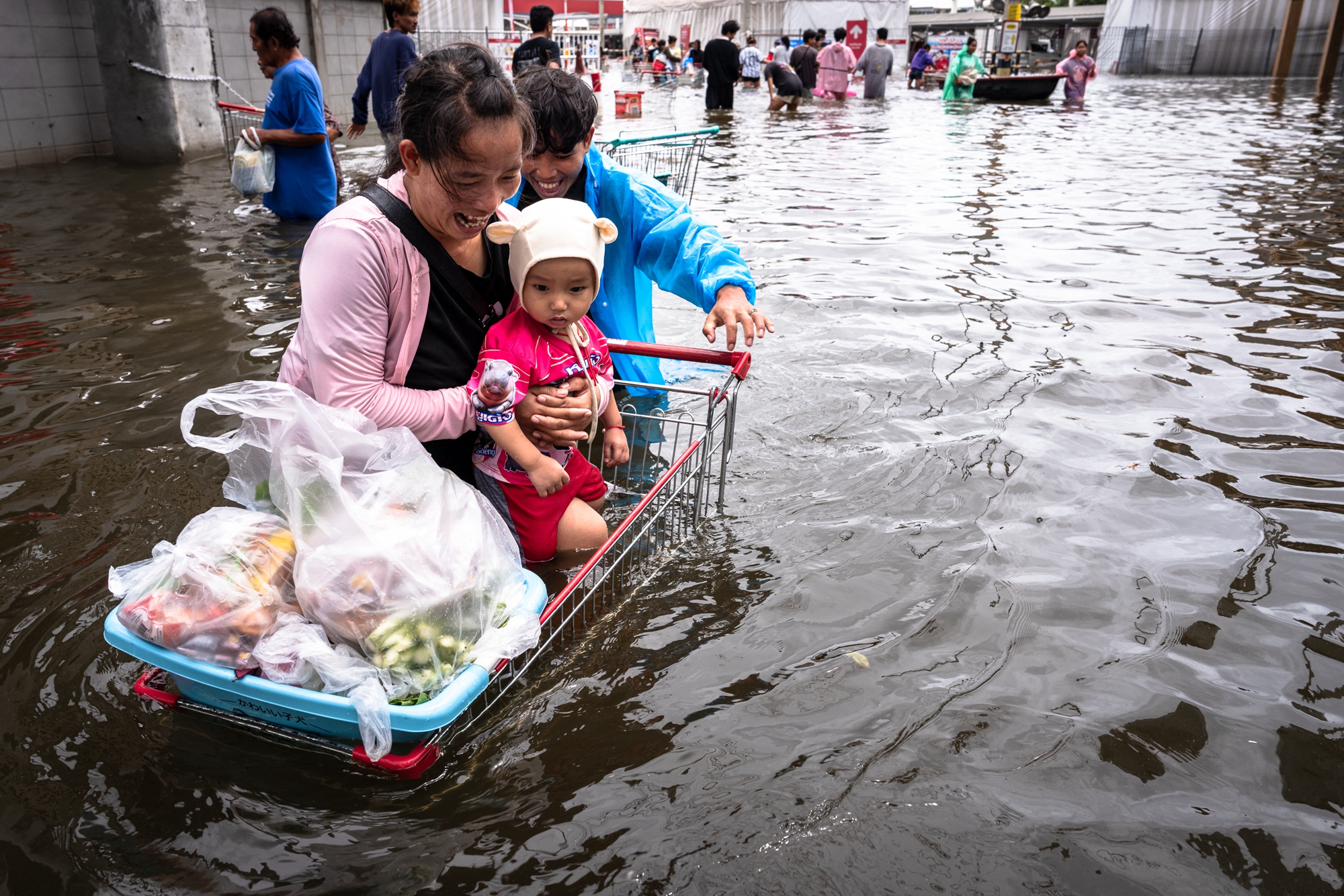
Thailand continues to be hit by heavy rains and flooding. The Thai government announced on Tuesday (September 29) that since mid-September, the death toll from nationwide flooding has risen to 23 people, with over 2.6 million people affected and some areas still severely inundated, forcing thousands of residents to evacuate their homes.
According to the latest data released by the Thai Department of Disaster Prevention and Mitigation, 29 provinces across the country are still affected by the floods, with over 2.6 million people affected, involving approximately 940,000 households.
Manila is one of the heavily affected areas, with about 700,000 residents impacted. Bangkok authorities reported that schools have been closed for the second consecutive day, with nearly 7,000 people residing in over 230 evacuation centers throughout the city.
In addition to the 4 deaths in Bangkok, 8 people have died in neighboring Samut Prakan province, 6 in Sa Kaeo province in the east, and the remaining fatalities are spread across Chachoengsao, Ayutthaya, and Nonthaburi provinces.
Last week, Bangkok experienced about 320 millimeters (12.6 inches) of rain within two to three days, nearly equivalent to the city’s usual rainfall for the entire month of September.
According to Reuters, Thailand’s Minister of Industry Varawut Silpa-archa stated that the floods have impacted approximately 1,267 businesses across 40 provinces in Thailand, including 52 factories and 1,162 small and medium enterprises.
The economic losses caused by the floods nationwide are estimated to exceed $320 million.
Thai Airways, the national airline of Thailand, faced difficulties in resuming operations after the heavy rain. Thai Airways Chief Executive Chai Eamsiri told Reuters that the airline plans to cut around 30 flights on Tuesday, accounting for about 30% of its Bangkok departures.
He mentioned that the reduction in Bangkok flights by Thai Airways will last for at least three days.
The floods have also disrupted the normal operations of Suvarnabhumi International Airport in Bangkok. Due to some airport staff being unable to report to work, baggage handling operations have been severely affected, resulting in a large number of passengers’ luggage being stranded at the airport.
On Monday, the Thai Air Force deployed 69 personnel to assist in the ground operations of Thai Airways.
On Tuesday, the Thai government approved 4 billion baht (approximately $119 million) in emergency relief funds to assist affected residents. Another long-term drainage project costing 160 billion baht has also been approved.
The government stated that if there are no more heavy rains, the major flooding in Bangkok is expected to recede within two to three days, but some low-lying areas may take longer.
While the rainfall in Bangkok is gradually decreasing, other regions of Thailand are still facing the threat of rain and flooding. The meteorological department reminds residents in mountainous and low-lying areas to remain vigilant against flash floods and landslides.
Experts point out that Bangkok’s low-lying terrain, coupled with the city’s continued sinking, poses a long-term risk of flooding. This large-scale water disaster once again highlights the challenges faced by the city’s drainage system and flood control infrastructure.