
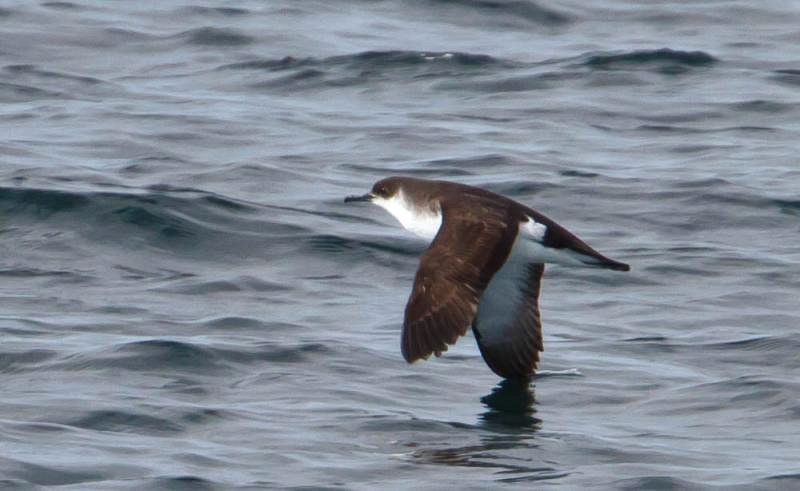
A research team led by the University of Oxford has confirmed through two decades of GPS tracking data that the Atlantic puffin (Manx shearwater) experiences a misalignment of its internal physiological clock after rapid east-west flights. This discrepancy results in a directional error of approximately 15 degrees when the birds attempt to navigate using the sun.
The findings of this research were published in the journal *Science* on October 29, 2026.
Many animal species rely on the sun as a compass to determine their direction. However, the position of the sun in the sky continually changes over time. To accurately utilize the sun for navigation, these animals must possess a physiological clock that is synchronized with local solar time, a concept referred to as a “time-compensated solar compass.” When animals swiftly move eastward or westward over a short period, the shift in local time occurs more quickly than the adjustment of their internal clocks, creating a discrepancy similar to the jet lag humans experience after long flights. Theoretically, this misalignment can cause animals to misjudge the sun’s position, leading to a deviation from their intended course.
Tim Guilford, a biologist at Oxford University and the study’s lead investigator, expressed that validating this concept in the wild seemed impossible until now.
Over a period of approximately 20 years, the research team fitted miniature GPS trackers to 1,045 breeding Atlantic puffins at breeding colonies in the UK. These seabirds would forage in areas as far away as 1,000 kilometers before returning to their nests. The researchers focused specifically on the birds’ return home journeys, analyzing a total of 1,837 consecutive flights back to their nests.
Given that the Earth rotates 15 degrees per hour, the team initially assumed that the birds’ physiological clocks would synchronize with local time at sunrise. They then calculated the expected discrepancies in the solar compass based on longitudinal shifts during the birds’ flight. These predictive models were compared with the actual GPS tracking data.
The results indicated a maximum deviation of around 15 degrees from the intended path, which aligned closely with the predictions from their models. Surprisingly, even when close to familiar coastal areas where the birds could have utilized land-based landmarks, they continued to follow the error patterns predicted, veering either toward the coastline or out to sea. This behavior suggests that the puffins integrate both the solar compass and visual cues from the coastline, demonstrating a remarkable ability to navigate even when faced with contradictory information, as they do not easily abandon their internal compass.
Fortunately, this level of navigational error typically results in only a few extra kilometers in travel distance, which is not sufficient to cause the seabirds to lose their way.
Sangeeta Rani, a chronobiologist at the University of Lucknow in India who did not participate in the study, believes that these findings indicate that birds possess the ability to integrate multiple navigational cues rather than relying on a single mechanism. In an era marked by climate change and human activities that continually alter landscapes, such navigational flexibility may aid animals in better adapting to their environments.