
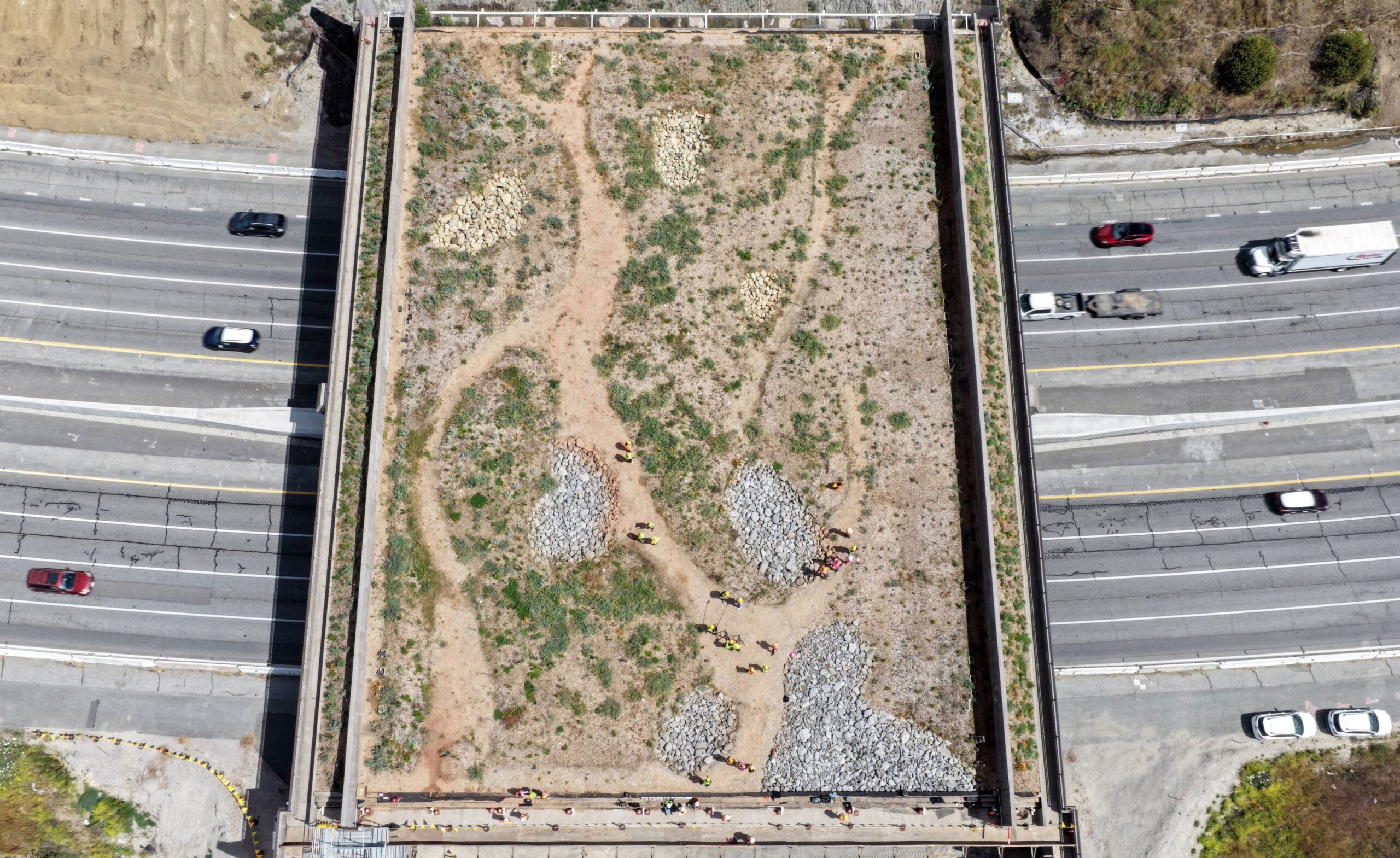
The largest wildlife overpass in North America on the I-25 interstate highway in Colorado, USA has been in operation for about 10 months, during which time there have been only 2 animal-related vehicle accidents. Previously, this highway disrupted the seasonal migration of animals in Douglas County and El Paso County, with animals being hit almost daily during the peak migration seasons in spring and fall.
According to a study commissioned by the Colorado Department of Transportation (CDOT), after the completion of 5 underpasses and fences and other facilities between 2022 and 2024, the annual average of wildlife vehicle accidents on this stretch of road decreased by about 85%, with a 91% decrease in the last year of the study period. The wildlife overpass completed in December of last year (2025) filled the gap for large animals such as deer and pronghorn that were reluctant to use the underpasses.
The I-25 interstate highway connects Denver to Colorado Springs, dividing a 39,000-acre habitat in half.
This wildlife passage system is located near the Greenland exit between Larkspur and Monument, as part of the improvements to the southern section of I-25. In addition to 5 underpasses, the system includes fences extending about 14 miles on each side of the highway, reaching a height of approximately 8 feet to guide animals towards the crossings.
The recently completed Greenland Wildlife Overpass is 209 feet long and 200 feet wide, covered with soil and planted with vegetation for the passage of wildlife. The gentle slopes at both entrances make it easy for animals to traverse.
This system allows animals ranging from deer (weighing over 300 kg) to smaller species to cross the 6-lane highway safely.
The final overpass was primarily designed for deer and pronghorn. Officials state that these animals, being highly alert, are less inclined to use the underpasses. Chuck Attardo, the Environmental Project Manager for the I-25 South Segment Corridor at CDOT, mentions that “deer and pronghorn love this open, large structure where they can see miles around.”
Attardo explains, “For decades, pronghorn traveling from Trinidad to Greenland have been searching for a crossing point on I-25. After the overpass opened, we captured footage of herds of deer crossing the bridge. Additionally, pronghorn were also observed crossing the overpass, marking their first visit to the west side of I-25 in decades.”
Monitoring footage shows that in addition to herds of deer and pronghorn, bears, deer, coyotes, and other animals safely utilize this system to cross the highway.
Apart from large animals, the Colorado Parks and Wildlife Department has documented rabbits, northern leopard frogs, and threatened species like the Preble’s jumping mouse using the passage. Biologists have placed logs on one of the passages specifically for small mammals.
Wildlife biologist Brandon Marette from the Colorado Parks and Wildlife Department stated, “The road acts as a barrier, forcing animals to struggle like playing a game of ‘frogger.'”
Marette further adds, “Upon completion of the system, small animals can avoid being preyed upon by coyotes, foxes, and eagles and safely cross I-25. We are not just focused on large predatory species but also include small animals like Preble’s jumping mouse, northern leopard frogs, and all non-listed reptiles, amphibians, and rodents.”
The overpass project originally received $30 million in funding, with $22 million from federal infrastructure investment funds and $8 million from the state government. The contractor, Kraemer North America, completed the construction for approximately $15 million, under the initial CDOT estimate of $30 million, and finished ahead of schedule.
Attardo emphasizes that reducing wildlife vehicle accidents not only ensures the safety of motorists and wildlife but also prevents property damage, saves public service costs, and reduces traffic delays. He states, “These facilities can pay for themselves in about 15 years, so why not build more?”
Currently, the Colorado Department of Transportation is working to enhance the vegetation on the overpasses to make them more attractive to wildlife. The drought this year has impacted seed germination and growth, so new topsoil will be brought in next year for replanting.
Furthermore, the department hopes to construct similar crossings in other parts of the state after receiving federal funding, including along the I-25 interstate near Raton Pass on the New Mexico border, on US Highway 40 near Empire, and on the I-70 interstate at East Vail Pass where bighorn sheep inhabit.