
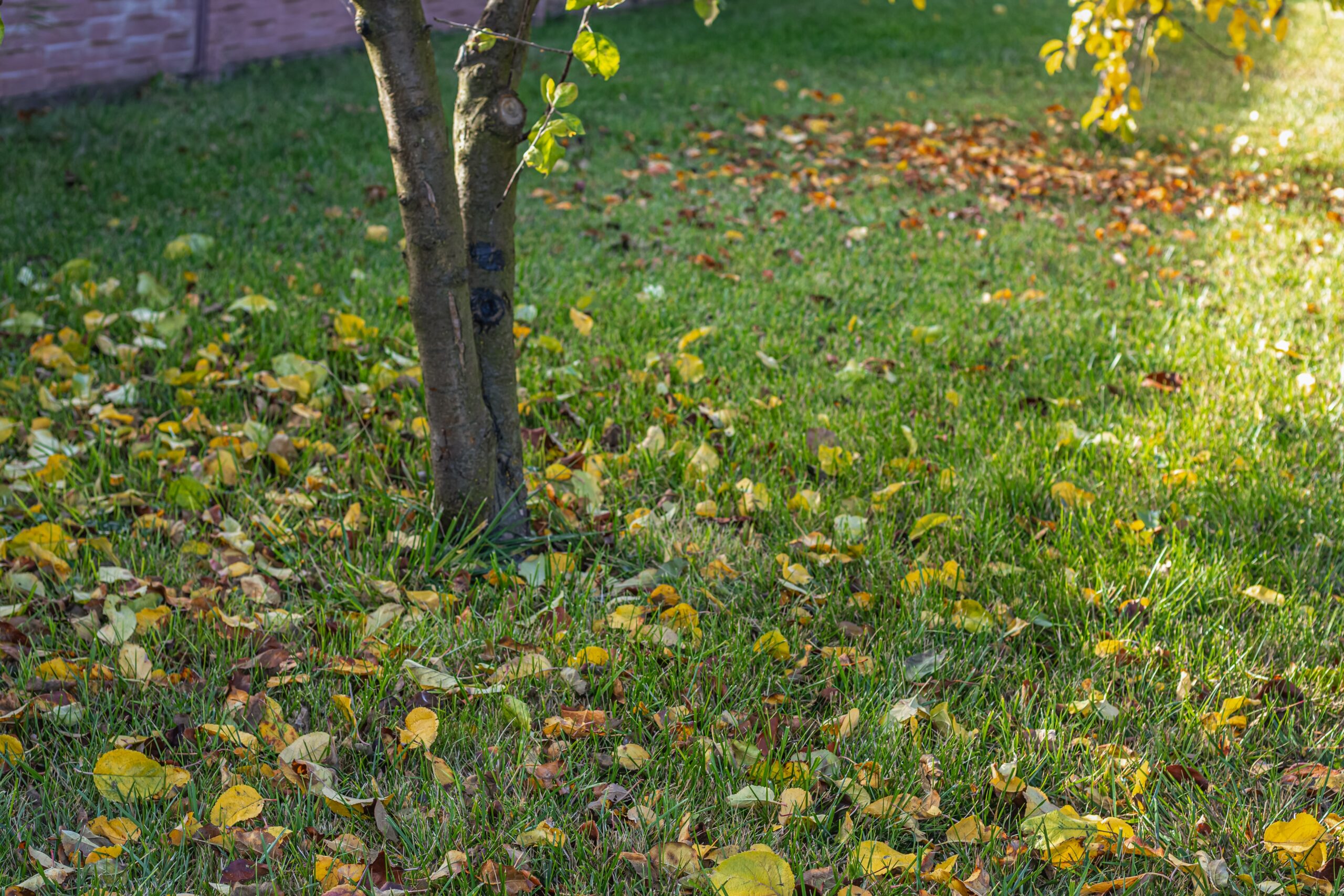
As autumn approaches, the changing color and falling leaves of trees signify the season’s arrival, commonly known as “one leaf knows autumn.” While fallen leaves may look aesthetically pleasing on a lawn, experts warn that if these leaves are not cleared, they can hinder grass growth, leading to patchy and sparse grass. Therefore, it is essential to clean up fallen leaves in the autumn to ensure a lush and vibrant lawn in the following year.
According to a report by the UK’s Daily Express, Jade Ivory, an expert from the lawn care company Green Thumb, specializing in gardening, emphasized the importance of clearing fallen leaves from lawns at this time of the year. Allowing leaves to pile up and cover the lawn could potentially cause severe damage.
She explained, “Leaving fallen leaves to accumulate on the lawn can ‘suffocate’ the grass beneath, depriving it of crucial sunlight and air. This can result in weakened grass by the following spring, leading to exposed soil.”
Sunlight is vital for lawns throughout the year, but ensuring maximum sunlight exposure during autumn is particularly crucial for storing essential energy before the harsh winter sets in.
Sunlight serves as the primary energy source for the plant’s photosynthesis process. The sugars produced through photosynthesis help strengthen the lawn’s root system, enabling it to store energy to withstand the severe cold of winter and absorb nutrients efficiently.
Southern Living magazine in the United States highlighted other reasons not to allow fallen leaves to accumulate on lawns. Quoting Marc Mayer, the Technical Operations Director of TruGreen lawn and landscaping company, the magazine mentioned that such accumulation could impede proper air circulation, leading to lawn diseases.
Mayer added, “A thick layer of fallen leaves can cause localized lawn decline, subsequently affecting the overall appearance of the lawn.”
The magazine suggested using a rake to clear fallen leaves from the lawn regularly. Raking leaves consistently is a simple way to maintain a healthy lawn and prevent leaf buildup.
Mayer advised, “Regularly raking leaves can help your lawn ‘breathe’ and stay healthy by allowing sunlight and air to penetrate through the grass layer, preventing diseases and promoting grass growth.” He recommended using gentle raking motions to avoid uprooting healthy or newly seeded grass.
Once the fallen leaves are cleared, there is no rush to discard them. They are rich in organic matter and can be excellent resources for the garden. After collecting fallen leaves, they can be used as plant mulch or added to compost bins for composting.
Mayer explained, “Using mulch can return valuable nutrients to the soil, while compost can be turned into fertile soil amendments to promote plant growth.”
Composting requires a mixture of nitrogen-rich “green materials” and carbon-rich “brown materials,” which decompose to form soil amendments. “Green materials” include fresh leaves, trimmed grass clippings, vegetable and fruit scraps, tea bags, and coffee grounds, while “brown materials” include dry leaves, hay, wilted plants, wood chips, shredded paper, and sawdust.
When using fallen leaves as mulch, they should be spread around plants without touching the stems or leaves to prevent adverse effects on the plants. So, how many fallen leaves are needed?
Horticulture expert McMahon suggested, “Around vegetables and annual plants, a mulch layer thickness of 2 to 3 inches (5.1 to 7.6 centimeters) is sufficient, while for perennial plants, shrubs, and trees, the mulch layer should be 3 to 6 inches (7.6 to 15.2 centimeters) thick. If using mulch between garden rows, a thicker layer of fallen leaves can be used.”
It’s worth noting that aside from fallen tree leaves, fallen fruits from fruit trees should also be dealt with as they can have adverse effects on the lawn, blocking sunlight and air like fallen leaves and flattening the lawn due to their weight.
Professional gardener James Lewis stated that if fallen fruits are not cleared, the lawn may suffer damage or even death. Within a day, the grass may start turning yellow, entering a dormant state two days later, and wilting within two weeks.
The cost of lawn restoration can be high and sometimes irreversible. In the worst-case scenario, you may need to invest in re-establishing the lawn.