
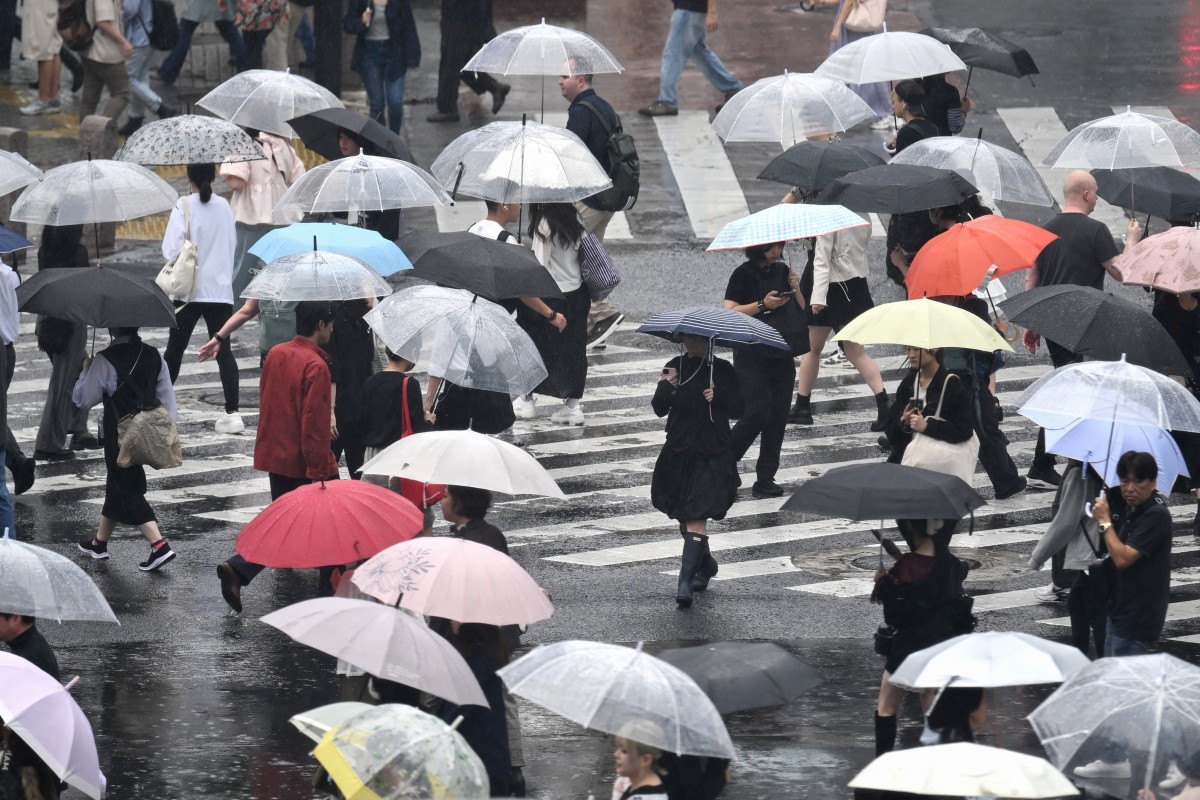
Recently, multiple regions in Japan have been continuously affected by the autumn rain front and typhoon activities, resulting in prolonged rainy weather. On September 29, the heart of Tokyo saw rain again, marking the 34th consecutive day of precipitation since August 27, breaking the record for the longest continuous rainy days in recorded statistics.
According to data from the Japan Meteorological Agency, the heart of Tokyo (observed at the Chiyoda Ward Nortenmaru Park) recorded precipitation for 34 days straight from August 27 to September 29, surpassing the previous record of 33 days set from June 27 to July 29, 2019. This is the longest recorded period since 1886, signifying over a month of daily rainfall in Tokyo.
The amount of rainfall has also been significantly above average. As of September 28, the accumulated rainfall in Tokyo’s central area reached 629 millimeters in September, nearly three times the usual amount for this period, approaching the record for the highest monthly rainfall set in September 1958. The highest single-day rainfall occurred on September 21, reaching 156 millimeters, influenced by a typhoon at that time.
This autumn, the autumn rain front has lingered near Honshu, Japan’s main island, multiple times, coupled with the consecutive impact of several typhoons, resulting in prolonged rainy weather in the Kanto region (eastern Japan with Tokyo at its center). The continuous influx of warm and humid air along the front has further increased the amount of rainfall.
The extended period of rainfall and lack of sunlight have begun to impact agriculture. Sunlight hours in September have been significantly lower, at only about 40% of the usual amount, increasing the risk of plant diseases and limiting pest control measures such as pesticide spraying due to weather conditions.
On September 29, the Kanto region continued to be affected by the autumn rain front. The maximum temperature in Tokyo was expected to be around 21 degrees Celsius, feeling cool, with intermittent rainfall likely to persist.
As of September 29, the Northwestern Pacific in 2026 has already generated 26 typhoons, slightly higher than the annual average from 1991 to 2020. Typhoon 26, known as Skilling, is currently moving northeast from the southern waters of Japan, expected to approach the Izu Islands area from September 30 to October 1. As the typhoon approaches, coastal areas of Kanto may still experience rainfall due to the influence of the autumn rain front.
Meteorological forecasts indicate that on September 30, Tokyo will remain predominantly cloudy with chances of rainfall. The weather around October 1 will depend on the movements of the autumn rain front and Typhoon 26. As the typhoon gradually moves away, Tokyo is expected to gradually welcome clear skies, bringing an end to the prolonged period of rainy weather.