
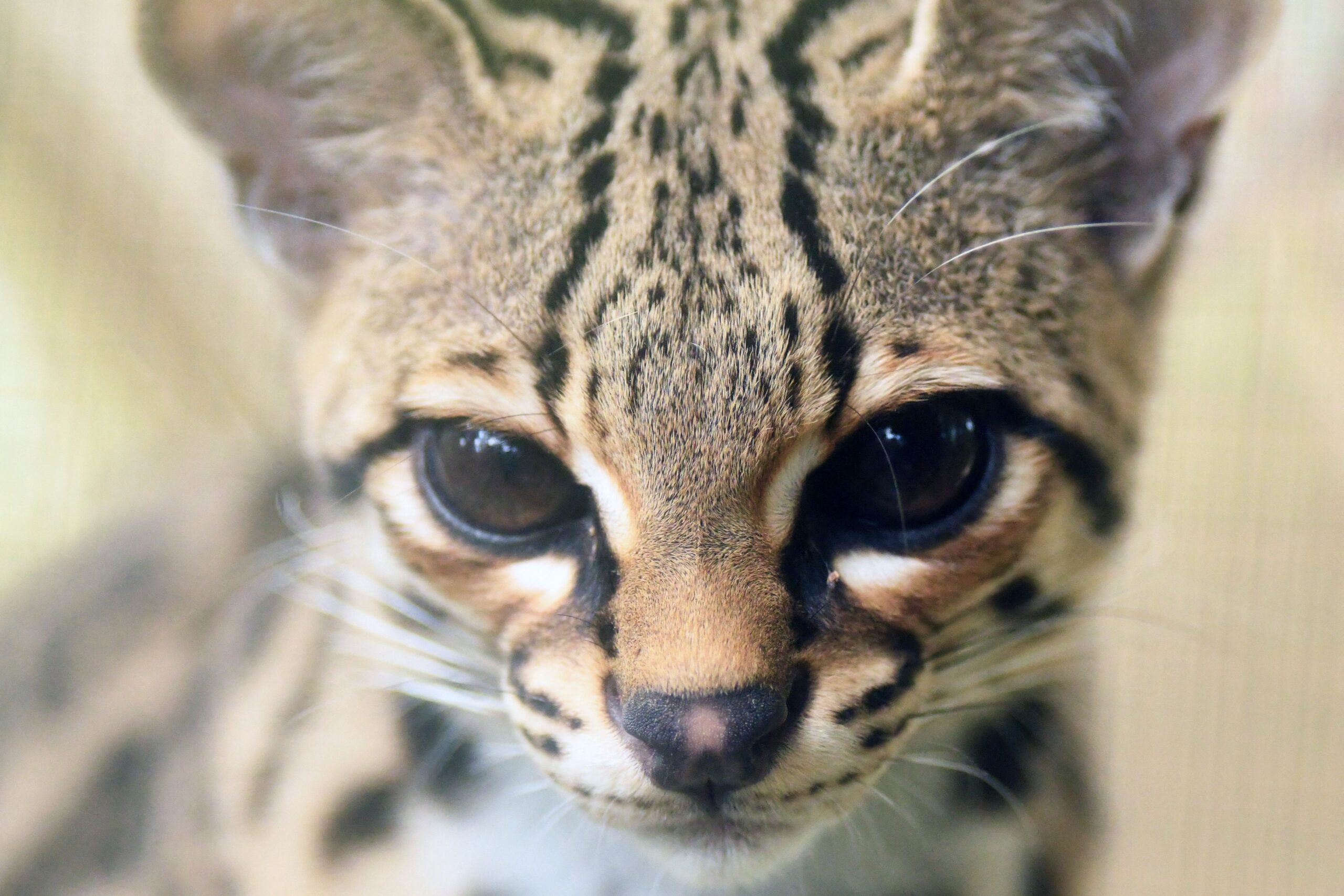
In the cloud forests of Bolivia in South America, a small wild cat that has long been familiar to local residents but has never been officially recognized by the scientific community has recently been confirmed as a new species. Researchers have named it the Bolivia Tiger Cat (Leopardus tilcayo), marking the first time in over a century that a new living wild cat species has been formally described.
This multinational research finding was published in the journal “Current Biology” on Thursday, September 17. The research team analyzed the complete genomes of 38 Leopardus genus felines from various locations in South America, including 8 museum specimens. The results revealed that the population previously considered as the “tiger cat complex” actually consists of 5 distinct species with significant genetic differences.
The newly discovered Bolivia Tiger Cat, known locally as “Tilcayo,” was initially noticed by researchers when a male tiger cat was found by local residents and brought home, later transferred to the Senda Verde Wildlife Sanctuary in the Yungas region of Bolivia. This male cat, approximately 10 years old, is one of the few living individuals currently known to scientists.
Researchers observed that the appearance of this cat does not completely match the previously known tiger cats, especially with larger and differently shaped markings on its body. This prompted a reevaluation of the classification status of the Bolivia Tiger Cat.
The Bolivia Tiger Cat inhabits the Yungas cloud forests on the eastern side of the Andes Mountains. It is small in size, with a body length of about 46 cm and a weight of around 1.4 kg, smaller than a typical house cat. The coat is light brown with dark, irregular rosette markings on its body.
Genetic analysis by the research team suggests that the ancestors of the Bolivia Tiger Cat diverged from other tiger cat lineages around 1.4 million years ago. Thus, the researchers concluded that the genetic differences in this population have reached the species level and officially named it Leopardus tilcayo, retaining the local name “Tilcayo.”
The research also reclassified the South American tiger cat complex. Previously, this group was roughly divided into the Northern Tiger Cat (Leopardus tigrinus), Southern Tiger Cat (Leopardus guttulus), Eastern Tiger Cat (Leopardus emiliae), and Pampas Cat (Leopardus pajeros). However, the new genome analysis showed that the related populations could actually be distinguished as 5 different species. This highlights the tiger cat as a typical cryptic species, where different species appear very similar in appearance and are difficult to differentiate with the naked eye, requiring a combination of genetic and evolutionary data to confirm their differences.
In addition to the new species in Bolivia, the research team also described a new subspecies of tiger cat in the Yungas region of Peru, formally named Leopardus tigrinus antisuyo after the former Inca Empire administrative region of “Antisuyu.”
The scientific community currently has limited knowledge about the habits and population size of the Bolivia Tiger Cat. Researchers found remains of small rodents in feces samples, indicating that they may feed on small rodents; infrared cameras also captured their activity, suggesting they may be primarily active at night.
Jonas Lescroart, an evolutionary biologist at the University of Antwerp in Belgium and one of the lead authors of the paper, expressed surprise that the Bolivia Tiger Cat turned out to be a distinct species, as no one had previously suggested it could be a different species or subspecies.
The researchers pointed out that this discovery not only alters the scientific understanding of the evolutionary history of tiger cats but also highlights the vast biodiversity yet to be discovered in South America. Correct species classification for these populations that appear similar but have distinct evolutionary histories is crucial for future conservation efforts.
The Yungas forests are currently facing threats such as deforestation, agricultural expansion, and mining. The research team has provided the latest classification research to the International Union for Conservation of Nature (IUCN) for future reassessment of the conservation status of the independent lineages of tiger cats. The IUCN Red List currently roughly categorizes the Northern Tiger Cat and Southern Tiger Cat as two “vulnerable” species, with declining populations. Lescroart warned that the crisis level of the Bolivia Tiger Cat may be directly elevated to “endangered.”
Due to the lack of comprehensive data on the population size and distribution of the Bolivia Tiger Cat, researchers believe that further investigation of its population size and habitat condition will be crucial in the next stage.