
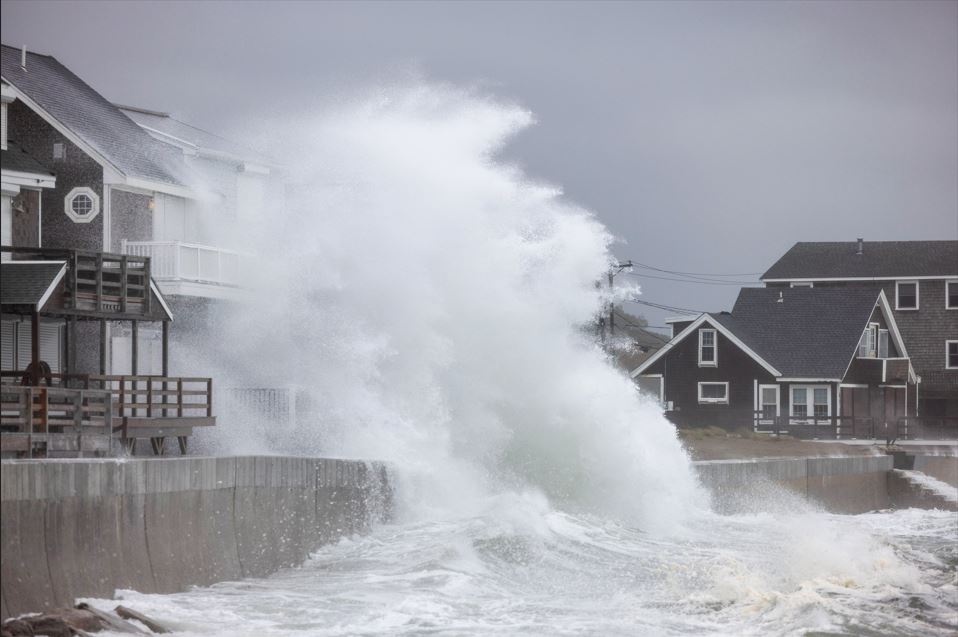
A strong “Nor’easter” battered the U.S. East Coast on Saturday, September 26, sweeping from New England region affecting states from North Carolina all the way up to Maine. The storm brought heavy rain, giant waves, destructive strong winds, and coastal flooding, resulting in at least one fatality and prompting multiple states to declare emergency status.
New York City Housing Authority (NYCHA) reported that a 56-year-old man was fatally struck by a fallen tree while crossing a parking lot in Brooklyn during the intense storm.
According to WABC, NYCHA expressed deep sorrow in a statement regarding the tragedy and extended condolences to the family of the deceased and the NYCHA community.
Footage from WJAR TV showed waves crashing onto the shores of Narragansett Town beach in Rhode Island, with the southern New England and mid-Atlantic coastal regions expected to suffer the most severe flooding.
The impact of the storm also extended to several states including:
– Connecticut
– Massachusetts
– New Hampshire
– New Jersey
– New York
– Virginia
– Maryland
– Delaware
Parts of New Jersey also experienced road flooding, including Long Beach Island where streets and residential yards were submerged during high tide.
Governor Mikie Sherrill announced that 8 counties, including Ocean County where Long Beach Island is located, in New Jersey are now under emergency status.
Following the update, Governor Sherrill mentioned on X platform that conditions in some areas may improve, but the storm is not yet over. Authorities are closely monitoring the evening high tide situation and urge residents to remain vigilant and follow local government guidelines.
New York state also declared a state of emergency in coastal areas.
The U.S. National Weather Service warned that the most severe flooding might occur during consecutive high tide periods.
Forecast indicates that wind gusts in some areas of New Jersey, Rhode Island, and Massachusetts may reach speeds of up to 60 miles per hour (approximately 97 kilometers per hour).
The strong winds also resulted in widespread power outages. According to power tracking data cited by the Public Broadcasting Service (PBS), nearly 100,000 customers were without power in New Jersey, New York, Connecticut, and Massachusetts on Saturday morning.
The storm disrupted weekend plans for many, leading to the cancellation or postponement of several music concerts, sports events, and outdoor activities. Some airlines offered fee waivers for passengers affected by flight delays.
Meteorologists stated that this storm system is expected to slowly move north over the weekend, continuing to bring rain and coastal flooding along its path.
Authorities reiterated the importance for residents to avoid driving or walking through flooded roads, stay away from coastlines impacted by giant waves, and closely monitor local weather alerts and emergency notifications.