
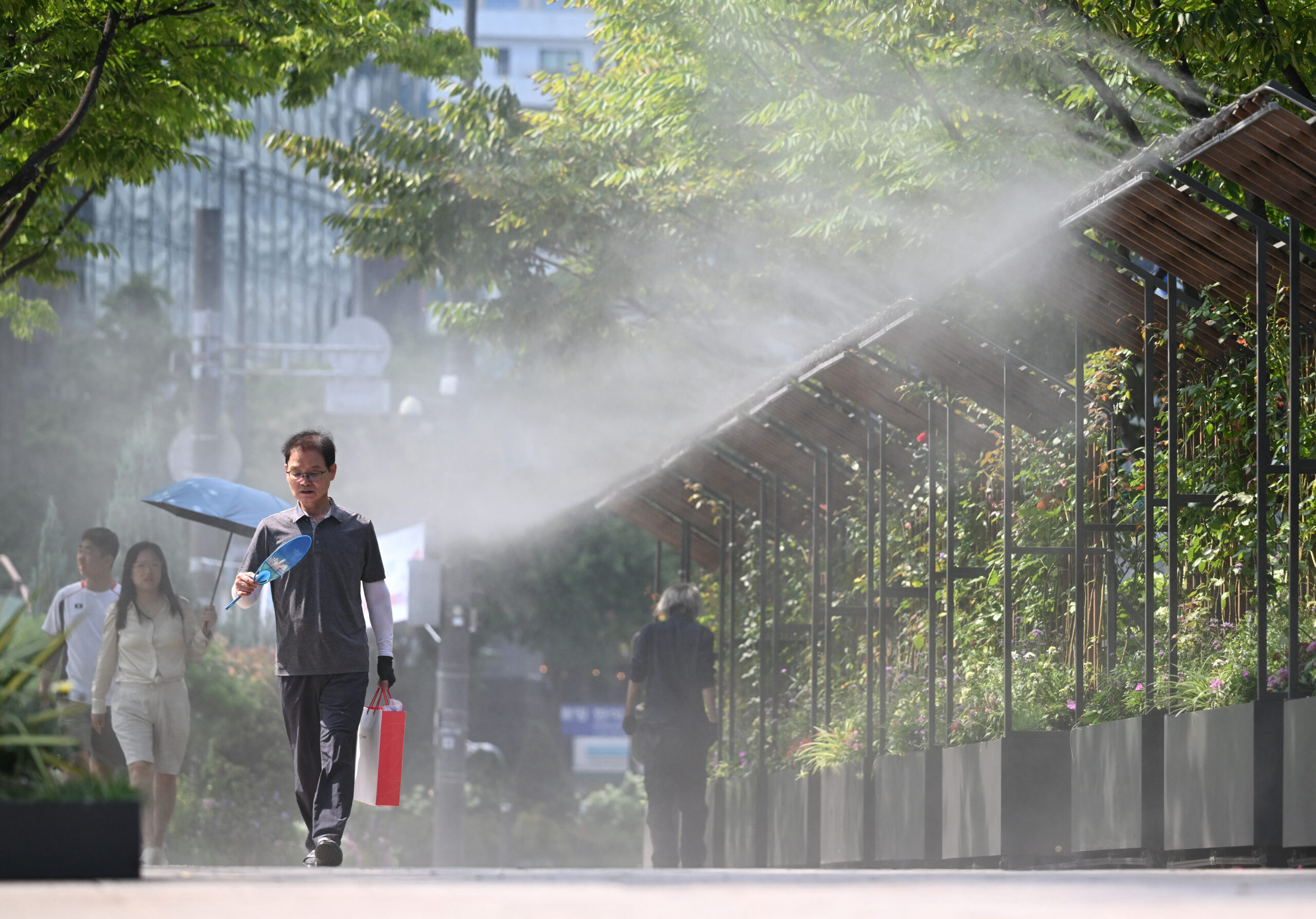
A record-breaking heatwave is currently sweeping across the Korean Peninsula. On Sunday (August 2), the city of Yangsan in South Gyeongsang Province, South Korea, recorded a high temperature of 42.5°C, breaking the highest temperature in South Korea’s 122-year history of meteorological observations. As the heatwave spreads from the southeast to the west, the Seoul metropolitan area is expected to face severe heatwave conditions this week.
According to the latest data from the Korea Centers for Disease Control and Prevention, since mid-May, 1,889 people in South Korea have suffered from heat-related illnesses, with an additional 14 deaths reported.
Meteorological experts point out that the heatwave is currently spreading towards the west. With the lower-level winds shifting to the east, the airflow passing over the Baekdudaegan mountain range, a massive mountain range considered the backbone of South Korea’s geography and culture, is creating hotter and drier downslope winds on the lee side, potentially further raising temperatures in the Seoul metropolitan area west of the mountains.
The Seoul Metropolitan Government held an emergency response meeting on Monday (August 3), forecasting that the highest temperatures and heat indices in the city this week could reach 37°C.
To cope with the high temperatures, Seoul has deployed 205 water trucks to spray and cool down the 1,982 kilometers of roads. During the period of high-temperature advisories, busy traffic areas are being sprayed up to six times a day.
Additionally, the city government has dispatched home care workers to visit approximately 63,000 vulnerable residents, including elderly living alone, people with disabilities, and patients with chronic illnesses, to prevent heat-related diseases.
The South Korean government has raised the heatwave response alert to the second-highest level, activated additional disaster relief funds, and increased inspection frequencies in affected areas.
South Korean Prime Minister Han Seong-sook has ordered all ministries and local governments to mobilize all available resources to address the risks of heatwaves and drought.
At the same time, the electricity sector has initiated emergency measures. Due to the increased use of air conditioning, it is expected that South Korea’s electricity consumption will reach a historical high in late August.
The extreme weather is also affecting daily life for the public. The Korea Baseball Organization (KBO) recently made the historic decision to cancel professional baseball games scheduled in Busan and Changwon over the weekend. The KBO officials emphasize that if dangerous extreme weather persists, a more flexible “delayed start” mechanism will be implemented, allowing games scheduled for the evening to be delayed by up to one hour to ensure the safety of players and fans.
In regions where ground personnel find it challenging to provide full coverage, some local governments have begun using drones for inspections.
North Gyeongsang Province has deployed drones equipped with thermal imaging cameras and loudspeakers to broadcast heatstroke prevention guides over summer tourist gathering areas; South Jeolla Province and Yeosu County are collaborating with local civilian drone clubs to patrol 13 towns daily, reminding residents to avoid outdoor work during hot periods.
This heatwave is also affecting North Korea. According to North Korean state media reports, temperatures in some parts of the country are approaching 40°C, with the capital city of Pyongyang experiencing five consecutive “tropical nights” (nighttime temperatures above 25°C), and a high-temperature warning covering most parts of the country expected to last a week.
North Korean state media indicated that tens of thousands of people visited the Geumma Beach in Wonson in July; footage from the Korean Central Television showed the Pyongyang Water Park crowded with summer vacationers.
During the ongoing heatwave, authorities advise the public to avoid outdoor activities, especially between 2 p.m. and 5 p.m., and to rest in shaded or cool places. In terms of beverages, it’s recommended to choose plain water or sports drinks and avoid consuming drinks containing caffeine or alcohol.