
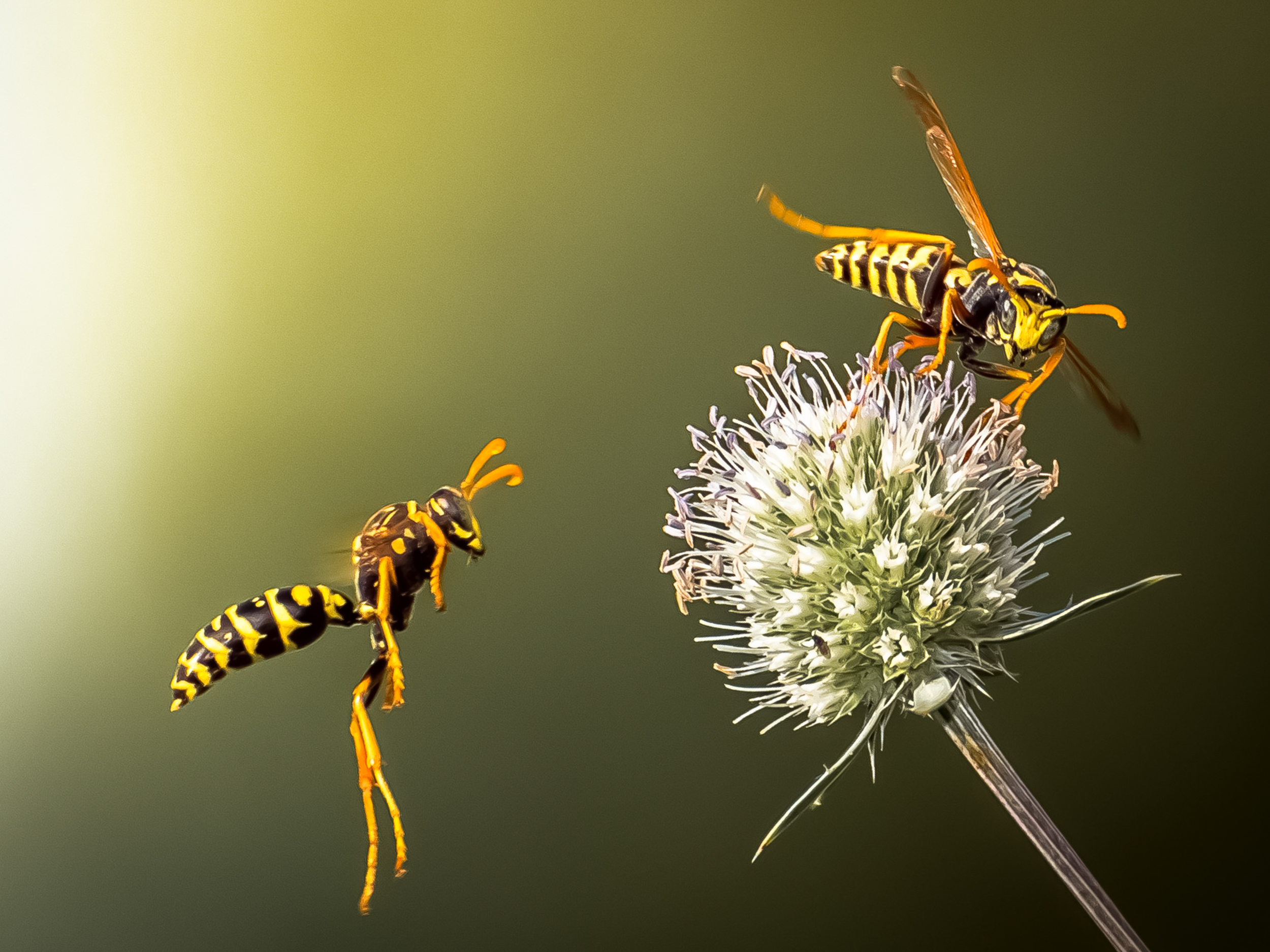
Yellow jackets are known for their aggressiveness, and getting stung by them can lead to allergic and toxic reactions, with severe cases even resulting in death. After the nesting period in summer, yellow jackets expand their alertness and foraging range in autumn, reaching peak activity and aggressiveness. To counter this, experts suggest planting three types of aromatic plants in the garden to deter yellow jackets and reduce the risk of being attacked.
According to a report by the UK’s Daily Express, yellow jackets consume protein during the summer to maintain their strength and feed their larvae, thus spending more time catching insects. However, as autumn arrives and the weather gets colder, the queen bee will stop laying eggs.
This means the colony will gradually disperse, and yellow jackets will need to forage alone, leading them to fly around gardens. To avoid attracting yellow jackets, it is recommended to cover trash cans and promptly clean up fallen fruits in the garden.
It is advisable not to swat or use insecticides against yellow jackets as they release a pheromone upon death, which actually attracts more yellow jackets.
Elizabeth Waddington, a horticulturist at First Tunnels, a UK garden arbor and accessories manufacturer, shared natural methods to repel yellow jackets. She suggested planting aromatic plants like spearmint, thyme, and eucalyptus to utilize their strong scents for deterring yellow jackets. Additionally, lining birdhouses with foil or soaping them can also prevent yellow jackets from nesting inside.
When yellow jackets are searching for food, they are easily attracted by sweetness, but the strong aromas of spearmint, thyme, and eucalyptus can interfere with their senses and act as a deterrent, keeping them away.
These aromatic plants simply increase the difficulty for yellow jackets to locate nearby food sources, potentially causing them to leave in search of easier sugar sources. By planting these plants near your patio or garden resting area, you can keep yellow jackets away.
Since yellow jackets are attracted to fruits left in bird feeders or scattered seeds (which may contain residual sugar), bird feeders can also become clustering spots for yellow jackets. By regularly cleaning bird feeders and hanging aluminum foil near them, you can prevent yellow jackets from nesting or lurking in the vicinity.
Aluminum foil will shimmer in the sunlight, confusing yellow jackets and making them unsure of the direction, as they might mistake it for a moving predator and stay away.
In addition to the aforementioned plants, mint, lemongrass, and tansy are other bee-repelling plants that can be grown in gardens, as reported by Good Housekeeping. These plants can help keep yellow jackets away from your outdoor space.
You can also purchase or make traps to catch yellow jackets. These traps use enticing substances like sugar water to lure yellow jackets into a container where they get trapped. You can easily make a trap at home by cutting the top off a 2-liter plastic bottle, invert it, and place it in the lower half of the bottle. Hang the trap on branches where yellow jackets frequently gather.
A study published in 2016 revealed that mixing acetic acid with water, creating vinegar, can produce an effective solution to trap yellow jackets and other pests. By mixing apple cider vinegar, sugar, and water in a bowl, placing it near the nest, yellow jackets will be lured into the solution and perish.
To prevent yellow jackets from invading your home, it is advised to seal any small holes that may allow entry, such as tears in window screens or tiny openings around power lines. Late autumn (when most worker bees have died) or early spring (when nests are inactive) are the best times to perform this task.
Jim McHale, the general manager of a pest control company in the United States and an entomologist, suggests seeking professional help if you discover a yellow jacket nest, as safely and effectively removing it requires specialized skills.
Amir Khan, a British doctor, previously shared a clever tip for repelling yellow jackets using a copper coin. Rubbing the coin or any copper item on the skin emits an odor that drives away insects like yellow jackets because they cannot tolerate the scent.
In conclusion, by employing these natural methods and precautions, you can effectively deter yellow jackets from nesting in your surroundings and reduce the risk of encountering them during autumn.