
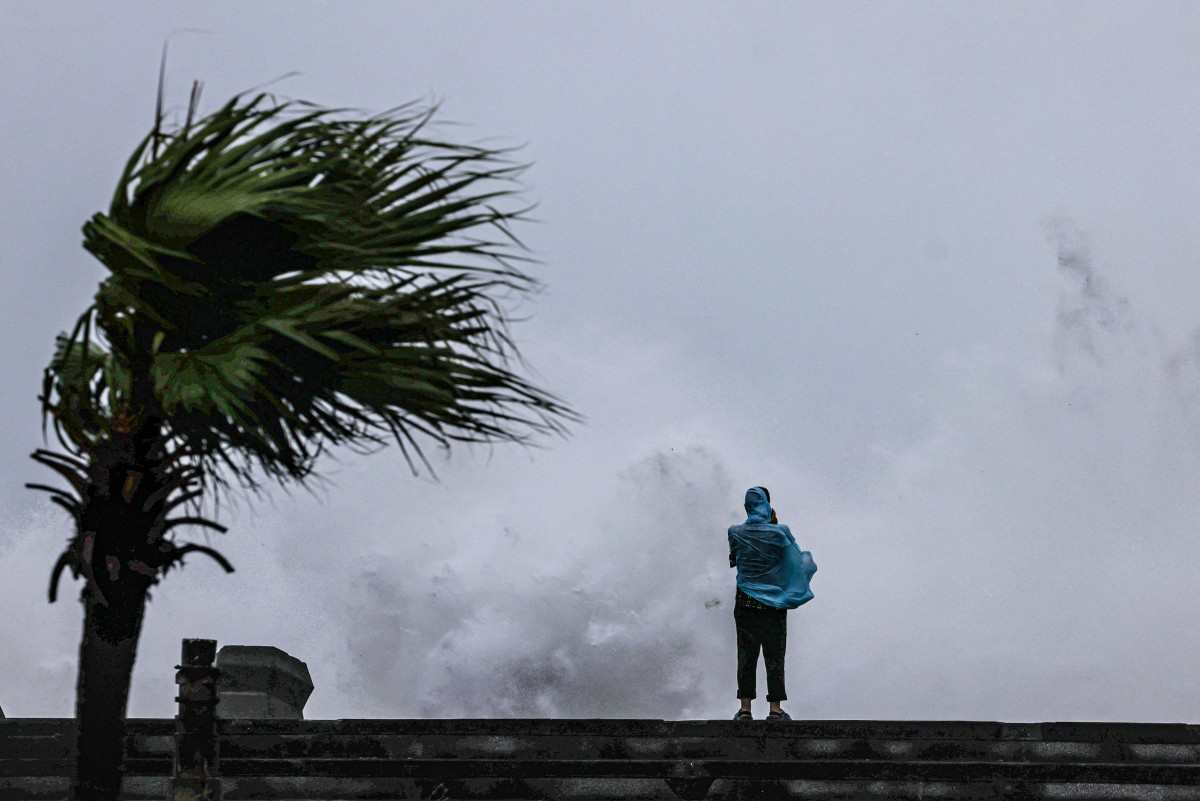
Typhoon “Bavi” is wreaking havoc in parts of Asia, causing significant damage. In the Philippines, at least 17 people have been reported dead. Mainland China has urgently evacuated over 1.8 million people. In Taiwan, at least 113 injuries have been reported, with over ten thousand people evacuated and more than 200,000 households experiencing temporary power outages. Japan’s Okinawa Prefecture’s southern islands have issued warnings for high waves, strong winds, and storm surges, with at least 12 people injured and over 200 flights cancelled.
Countries and regions affected by Typhoon “Bavi” include the following:
Typhoon “Bavi” made landfall in northern, northeastern, and eastern Taiwan on Saturday morning, bringing strong winds and heavy rainfall.
According to Taiwan’s Central Disaster Response Center, by Saturday evening, Typhoon “Bavi” had gradually moved away from Taiwan. As of 7 p.m. on Saturday, 113 people were injured during the typhoon’s impact, some from accidents while riding motorcycles in wet and windy conditions. A total of 14,600 people were evacuated. The storm has caused a total of 2,156 reported incidents, mainly involving fallen trees, damaged streetlights, and downed power lines. Due to the typhoon, schools and offices in some areas of Taiwan were closed on Saturday.
Taiwan’s Ministry of Economic Affairs stated that as of 8 p.m. on Saturday, over 240,000 households experienced power outages, with more than 95% of them restored by then.
According to Japan’s Kyodo News, powerful Typhoon “Bavi” swept across the Okinawa Prefecture’s Miyako and Yaeyama islands on Saturday, bringing strong winds and heavy rain. Maximum instantaneous wind speeds exceeding 40 meters per second were recorded in Miyakojima City, with over 190 millimeters of rainfall in 24 hours. The Japan Meteorological Agency warned the public to be vigilant against geological disasters and river flooding.
In Okinawa Prefecture, 12 people sustained minor injuries as a result of being knocked down by large waves or strong winds. All Nippon Airways and Japan Airlines primarily operating flights in the Okinawa and Amami regions had to cancel multiple flights.
According to the Zhejiang Meteorological Bureau, Typhoon “Bavi” made landfall near Kanmen, Yuhuan in Taizhou, Zhejiang around 11:20 p.m. on Saturday with maximum near-center winds of 13 on the Beaufort scale (40 meters per second).
During the landfall, wind speeds gradually increased along the coasts of Zhejiang and Fujian provinces, prompting the issuance of red alerts for high waves in many areas.
According to the Zhejiang Meteorological Service on Saturday evening, the spiraling cloud system of “Bavi” had covered the entire sky over Zhejiang.
Ahead of the typhoon’s arrival, nearly 400 flights were canceled in Shanghai. Zhejiang evacuated over 1.7 million people, with neighboring Fujian province evacuating more than 100,000 residents. Authorities anticipate “Bavi” will bring “heavy rainfall” to eastern Zhejiang and northeastern Fujian.
The Philippine National Disaster Risk Reduction and Management Council reported on Saturday that monsoon rains in the country intensified by Typhoon “Bavi” resulted in landslides and floods in the southern region, leading to 17 reported deaths and 9 missing persons.
Of the 17 fatalities, 10 were from landslide incidents in Malapatan town in Sarangani province, 2 drowned in Bukidnon province, and 5 perished in landslides in Lanao del Sur province.
Additionally, four individuals were reported injured in landslide incidents. Over 500,000 people in the Philippines were affected by severe weather conditions, with over 11,000 forced to evacuate their homes.