
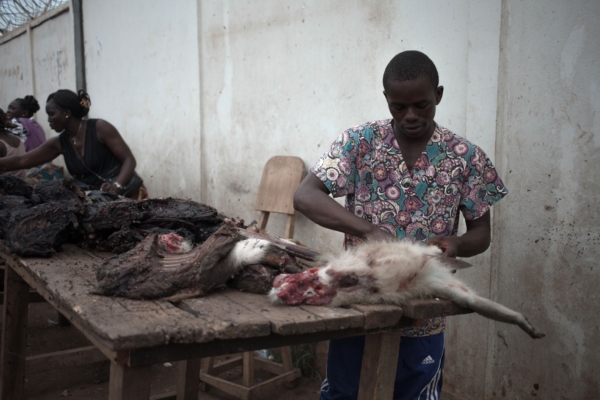
The Minister of Health of the Democratic Republic of the Congo (DRC), Samuel Roger Kamba, confirmed on Friday evening (May 29) that the suspected cases of Ebola in the country had rapidly increased to 1,028 cases, a significant rise from the previous day’s 906 cases. Experts warn that the outbreak may be related to the local community’s habit of consuming bushmeat.
This outbreak is caused by the rare Bundibugyo virus of Ebola, for which there are currently no approved drugs or vaccines available, making the situation dire.
According to official data, there are currently 225 confirmed cases. The World Health Organization (WHO) suspects that the virus may have been spreading unnoticed for several weeks before the outbreak was officially declared on May 15, suggesting that the actual scale of the epidemic may be greater than the reported numbers.
The outbreak occurred in eastern Congo, where apart from facing the deadly virus, the region is also plagued by armed conflicts with rebel groups and a large population displaced due to violence, making disease control and contact tracing even more challenging.
Experts indicate that the focus on public health has once again shifted to the prevalent bushmeat trade in the Congo Basin.
Locally, hunting, slaughtering, and handling infected bushmeat from wild animals like bats, monkeys, or antelopes, are major pathways for the virus to jump from animals to humans.
Dr. Tolbert Geewleh Nyenswah from the Africa Centers for Disease Control and Prevention told the Associated Press, “Once there is contact between humans, animals, and the environment, such outbreaks are likely to occur frequently. This is why adopting the ‘One Health’ approach is crucial in combating viral outbreaks because we still interact with bats, our hunters still kill monkeys, and we are close to the natural environment.”
“One Health” is a holistic approach to public health aiming to continuously balance and optimize the health of humans, animals, plants, and ecosystems.
Despite the severe and highly deadly symptoms of the Ebola virus, breaking the chain of transmission faces significant cultural barriers.
Dr. Misaki Wayengera, a health consultant and microbiologist from Uganda, explained that as the outbreak occurs sporadically in communities with a long-standing tradition of consuming bushmeat, some people “do not believe in the connection,” while others are “completely ignorant” of the health threats posed by consuming bushmeat. He stated, “It is very difficult to change some core customs.”
In the Congo Basin and surrounding areas, many rely on bushmeat as their primary source of animal protein. The Center for International Forestry Research estimates that 4.5 million tons of bushmeat are extracted from the Congo Basin annually.
According to WHO, certain fruit bats are considered natural hosts of the Ebola virus. However, in many regions of Central and West Africa, bats are considered a delicacy. Grilled fruit bat soup is highly popular, and various parts of monkeys are also in demand.
Even leading up to the outbreak, bushmeat trading continued at Masina Market in Kinshasa, where traders sold antelopes, rodents, and snake meat from the Congo Basin.
They mentioned that they had already ceased selling monkey meat as monkeys could be hosts of the Ebola virus.
A vendor, Charles Ntanga, told the Associated Press that their customers come from various backgrounds, stating, “We sell bushmeat. We rely on this business to survive.”
The tug-of-war between livelihood needs, cultural customs, and disease prevention and safety is making the response to the epidemic in the Congo more challenging.