
Typhoon “Jangmi” is currently making its way through Kyushu in western Japan, following its sweep through Okinawa, causing severe impacts in the region. As of Tuesday afternoon, the storm has already injured at least 9 people and left approximately 48,000 households in Okinawa and Kagoshima prefectures without power.
The Japan Meteorological Agency issued warnings of possible landslides, flooding, and river overflow as the typhoon approaches various parts of Japan.
The powerful typhoon “Jangmi” has brought heavy rainfall, with 209.5 millimeters of rain accumulated within 24 hours in the town of Tenjin, Kagoshima Prefecture, breaking local historical records for June. Earlier, Miyazaki Prefecture issued a “Level 3” heavy rain warning for places like Nisshin City, in addition to a “Level 3” landslide warning for places like Miyazaki City. Evacuation orders have been issued for Miyazaki City, Miyakonojo City, and Kushima City, with authorities estimating over 200,000 households may need to evacuate.
Meteorological agencies predict rainfall of up to 350 millimeters over the next 24 hours in the Tokai and Kinki regions, with the Kanto region expecting strong winds and heavy rain.
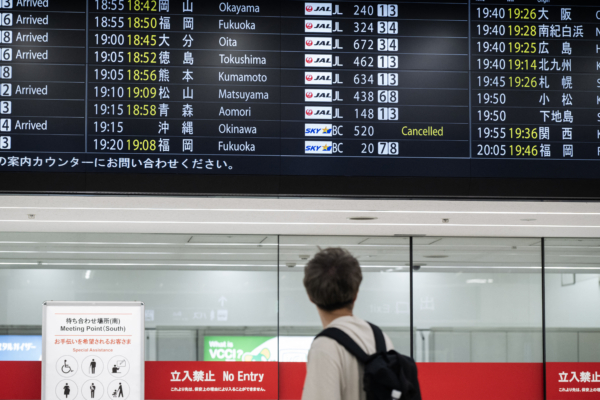
The storm has significantly impacted transportation by air, land, and sea.
As of Tuesday, a total of 331 flights have been canceled, mainly on routes to and from Kyushu, with Japan Airlines (JAL) canceling 170 flights and All Nippon Airways (ANA) canceling 67 flights. Additionally, 64 ferry routes have been suspended, and the Tokaido Shinkansen line may experience delays or suspensions from Tuesday evening to Wednesday, along with possible changes in schedules for the Sanyo and Kyushu Shinkansen lines due to increased wind speeds.
Japanese Chief Cabinet Secretary Toshimi Kihara stated during a press conference on Tuesday morning that the government is closely collaborating with local authorities to monitor the situation and provide emergency response.
He emphasized the expanding impact of the typhoon, urging people in affected areas to pay close attention to evacuation information from local governments, evacuate promptly when necessary, and maintain a high level of vigilance in taking actions to protect their safety.
Kihara also issued a warning that the typhoon is expected to move along the southern coast of Honshu towards the northeast on Wednesday, potentially disrupting the transportation network in the Tokyo metropolitan area from Wednesday morning onwards, advising commuters and travelers to make necessary preparations in advance.
As of noon on Tuesday, the center of Typhoon “Jangmi” was located approximately 110 kilometers southwest of Yakushima Island, with a central pressure of 975 hPa, moving northeast at a speed of about 35 kilometers per hour.
Near the center, the maximum sustained wind speed is 25 meters per second, with gusts reaching up to 35 meters per second (about 126 kilometers per hour).
The meteorological bureau warns that due to intense raincloud clusters on the northern and eastern sides of the storm center, severe thunderstorms and strong winds may occur even in areas where the center has not yet arrived or has moved away, emphasizing the need for people to remain cautious.