
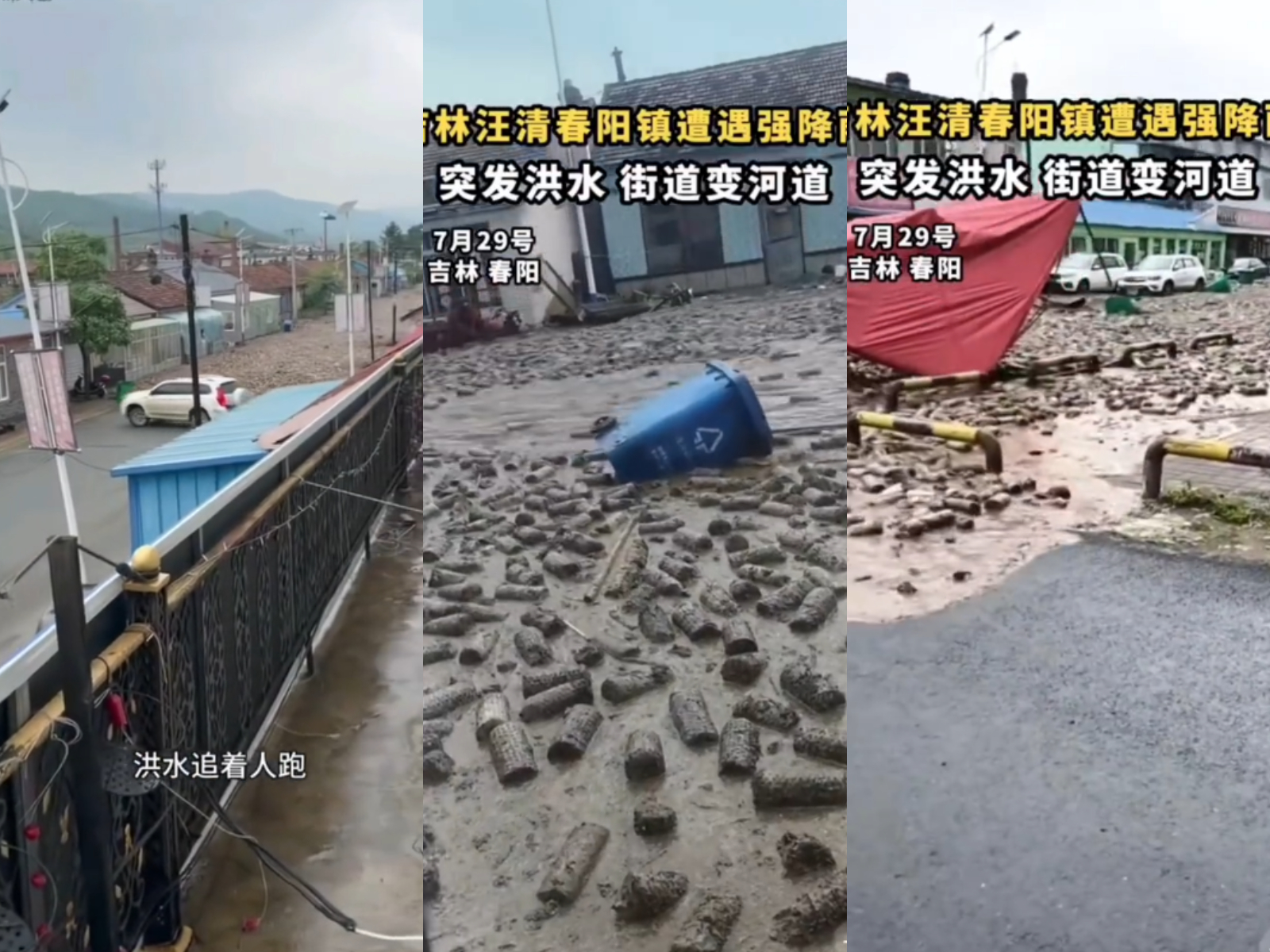
On July 29th, the Wangqing County in Yanbian, Jilin Province, China, experienced extreme heavy rainfall, causing rivers to swell rapidly and leading to significant losses for many mushroom growers whose black fungus packs were washed away by the floods.
From midnight to noon on the 29th, Yanbian Wangqing County was hit by extreme convective weather, resulting in short-term intense heavy rainfall. The average rainfall across 197 stations in the county was 53.1 millimeters, with the highest recorded rainfall reaching 188.8 millimeters.
The heavy rainfall caused the Ga Ya River Tianqiao Ling Station and the Chunyang River Tianshan Station to exceed the guaranteed water levels, while the Shuanghe Qianhe Station surpassed the warning water level. Some residents in the affected towns were trapped due to the intense rainfall. By 2 p.m. that day, the local flood control emergency response was raised from Level II to Level I. The county implemented emergency control measures known as the “Five Stops” (stopping classes, transportation, work, production, and business), urgently relocating over 7,000 people with “no reports of casualties”.
Wangqing is known as the “hometown of black fungus,” with mushroom cultivation being a primary source of income for local farmers. It was reported that the heavy rain led to floods in areas like Chunyang and Tianqiao Ling towns in Wangqing.
Videos circulating online showed floods inundating the streets of Chunyang town, carrying a large number of mushroom packs with them. A jeep was seen hastily turning around to avoid the rising water, and a woman was seen abandoning her car to escape. According to Upstream News, floods caused some businesses in Chunyang town to be flooded, merchandise soaked, and several shop owners forced to evacuate to higher ground.
According to meteorological forecasts, Wangqing County is expected to receive a further 10 to 20 millimeters of rainfall in the future, although the overall rainfall trend is weakening. Due to the impact of the previous typhoon “Bavi,” the water levels in various rivers remain relatively high, with many sections of dikes and roads still not fully recovered. Water levels may continue to rise steadily.