
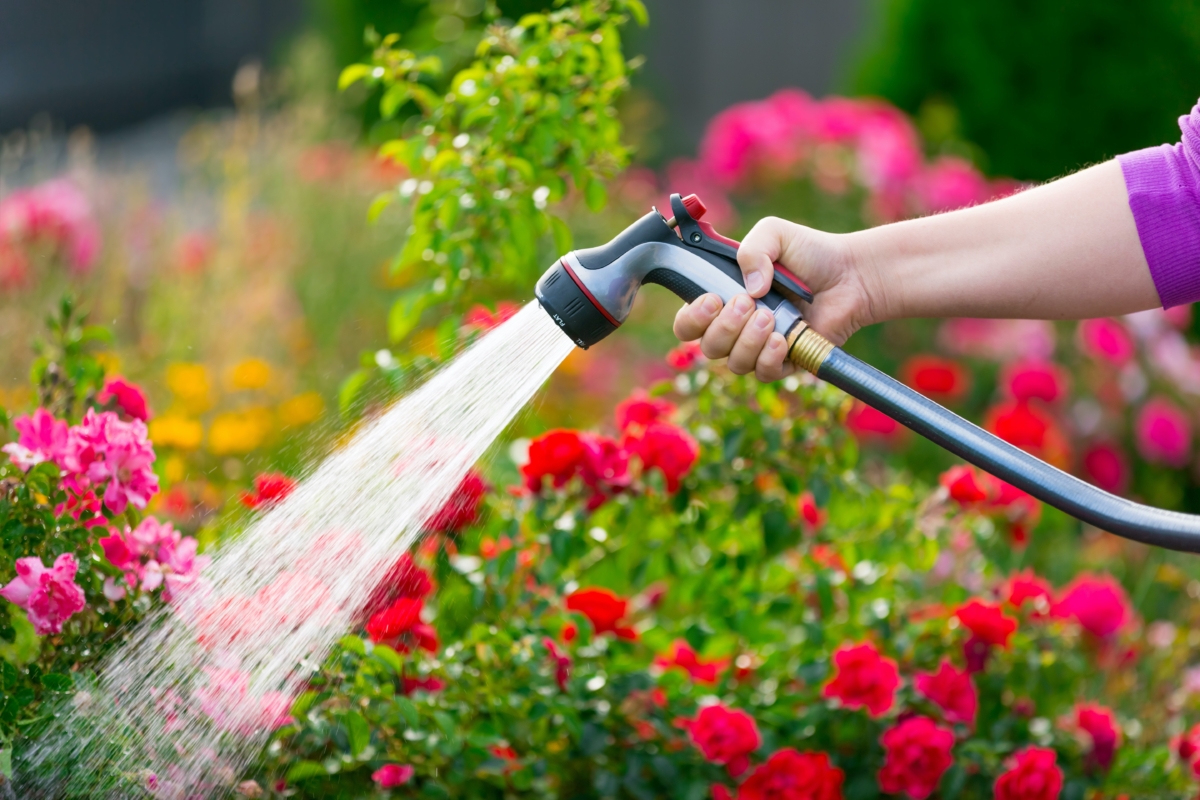
In the scorching heat of summer, dry weather has become a common phenomenon. Many people water their gardens every day to combat the heat, yet their beloved gardens still appear wilted, with flowers and vegetables ceasing to grow and even developing diseases. Little do they know that improper watering time or methods can actually decrease the resistance of plants to high temperatures. Watering more wisely, instead of more frequently, can help flowers, vegetables, and shrubs withstand the summer heat, making your garden healthier and saving water in the process.
**Translation of the article**:
**Incorrect Watering Mistakes and Correct Practices**
One of the most common mistakes is watering during the hottest part of the day. High temperatures, strong sunlight, and wind can cause water to evaporate before it is absorbed by the soil, leading to the risk of dehydration for plants even after watering.
The correct practice is to water in the early morning whenever possible. The cool temperatures of the morning facilitate deeper soil penetration of water. Watering in the morning reduces the time the leaves stay damp compared to evenings, thus decreasing the risk of diseases. If mornings are inconvenient, watering in the late afternoon or evening is the next best option.
According to the gardening guide released by Penn State Extension, watering in the morning is mainly recommended for overhead irrigation or watering from above, as it has little impact on drip irrigation. Drip irrigation delivers water directly to the root area, usually keeping the foliage dry.
A common mistake is quickly sprinkling the garden with water daily. Rapid watering only wets the soil surface, encouraging plants’ roots to stay near the surface. Surface soil dries out most quickly in hot weather, leading plants to wilt rapidly. Additionally, keeping the soil surface wet continually provides ideal conditions for weed seeds to germinate, promoting weed growth.
The correct practice is deep watering to allow moisture to penetrate several inches into the soil. Thoroughly soak the soil once or twice a week (depending on rainfall, soil type, and temperature) to encourage roots to grow deeper and become more resilient against drought.
Frequently watering the leaves increases the risk of fungal diseases (such as powdery mildew and leaf spot). Moreover, this practice wastes water as the water does not reach the plant’s roots where it is truly needed.
Mississippi State University Extension suggests that water, especially droplets clinging to leaves and stems, plays a critical role in plant diseases. Unlike other crucial factors like temperature, water and humidity are sometimes controllable. Prolonging the period that leaves remain wet can trigger the activation of more pathogens. By adopting proper watering techniques, the risk of plant diseases in the garden can be minimized.
The correct practice involves aiming the hose or watering can at the plant’s root zone or using a drip irrigation system to provide direct water to the roots.
Many irrigation systems operate on a predetermined schedule regardless of the garden’s actual water needs. Continuing to water after heavy rainfall not only wastes water but also increases the risk of oversaturating the soil and causing root issues.
The proper approach is that most established plants require about 1 inch of water per week, including rainfall; however, potted plants and newly planted flowers may need more frequent watering. Installing an inexpensive rain gauge can help you determine if nature has already taken care of watering for you.
During hot periods, many plants exhibit drooping or wilting leaves as a way to conserve water. While temporary leaf wilting is normal, many mistake it for dehydration, leading to immediate watering.
The correct method is to check the soil moisture level before watering. Insert your finger into the soil 2 to 3 inches deep. If the soil feels cool and moist, wait until later to evaluate the plant’s condition.
Apart from watering plants correctly, mulching is also a useful tool to help plants combat the heat of summer. Applying a 2 to 3-inch layer of organic mulch like shredded bark, pine needles, or compost helps maintain cool soil temperatures, slow down water evaporation, and reduce the frequency of watering. Ensure that the mulch is kept a few inches away from the plant stems or tree trunks to prevent rotting.
In conclusion, when a heatwave strikes, the solution is not to increase water quantity indiscriminately but to water more wisely. Deep watering, checking soil conditions before watering, and watering at appropriate times can make your garden healthier and more water-efficient.