
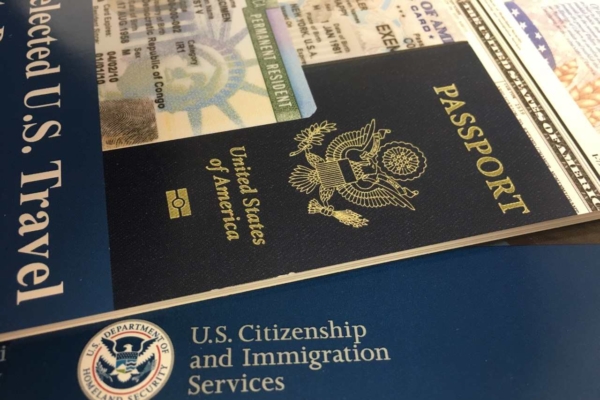
The tightening of immigration policies in the United States is bringing about tangible changes for more applicants, with stricter scrutiny and significantly reduced approval rates.
According to Huang Shaoxuan, head of family immigration at the Southern California Maple Law Group, data released by the U.S. Citizenship and Immigration Services (USCIS) in the second quarter of this year shows declining approval rates for family immigration, employment-based immigration, and asylum applications, with the exception of categories like EB-1 and EB-2 which have maintained higher approval rates.
Huang Shaoxuan has observed that not only the United States but also traditionally popular destinations such as Europe, Canada, and Australia have been tightening immigration policies in recent years. He anticipates that immigration policies will continue to tighten in the next two to three years and advises individuals with relevant plans to take action sooner rather than later.
The U.S. Department of Justice recently announced a marriage immigration fraud case involving thousands of participants in New York’s Chinese community. Huang Shaoxuan believes that this case will have a visible impact on marriage immigration as USCIS will impose higher evidentiary requirements on proving the authenticity of marriages.
In the 2025 fiscal year, USCIS issued approximately 1.3 million green cards, with over half of them in the family-based category, and marriage immigration occupying a significant portion within family immigration, while employment-based green cards only accounted for a small percentage.
Given the popularity of marriage green cards, Huang Shaoxuan points out the inevitable presence of sham marriages. He mentions cases where applicants hastily submitted their applications with minimal evidence, only to be requested for additional documentation by USCIS.
USCIS has implemented more practical evidentiary requirements, aiming to scrutinize marriage green card applicants more rigorously in terms of their social relationships and finances. Huang Shaoxuan believes that immigration enforcement may be strengthened in the future, leading to more frequent on-site inspections.
Furthermore, USCIS has started cross-departmental collaborations to comprehensively review visa or immigration applicants’ information. Huang Shaoxuan noted that in the past, USCIS and the Department of State did not always interact. However, in recent years, the two departments have begun working together, and USCIS often checks applicants’ previous non-immigrant visas to verify information, uncovering many discrepancies.
For instance, a client of Huang Shaoxuan’s applied for immigration, but USCIS requested additional documents due to inconsistencies in his father’s name on previous travel visa applications 15 years ago in his home country. It was later revealed that inaccuracies were due to information provided by a travel agent when applying for the visas.
In addition, USCIS now utilizes AI to assist in reviewing information. Huang Shaoxuan mentions that AI analyzes a wide range of data, cross-referencing databases to identify inconsistencies that may have been overlooked manually, particularly discrepancies in an applicant’s current and past records.
The implementation of cross-departmental collaboration and AI-assisted comprehensive applicant data review poses significant challenges for marriage green card applicants. Huang Shaoxuan concludes that this marks the strictest green card review process in history and emphasizes that the scrutiny for marriage green card applications will only become stricter as time progresses.