
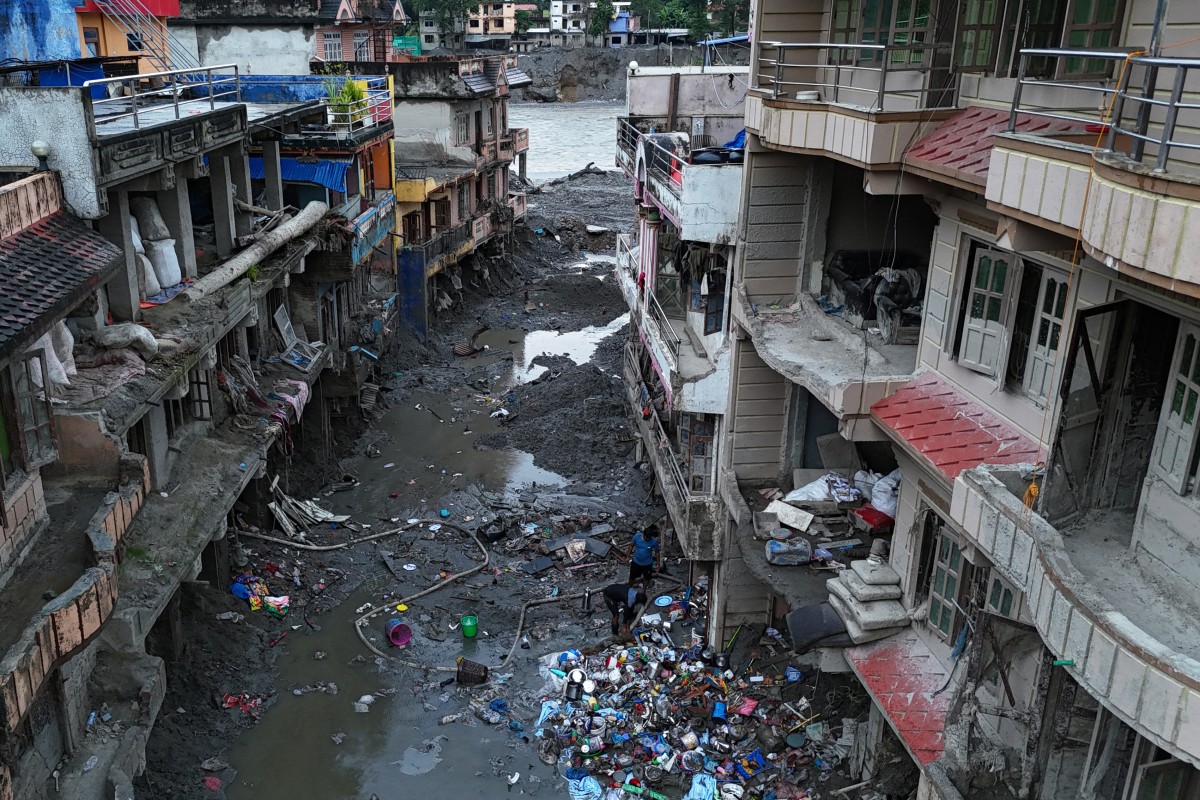
Heavy rain and storms in India and Nepal have triggered floods and landslides. As of Sunday (September 27), 56 people have died in India, and 14 people have died while 11 remain missing in Nepal. A total of 70 lives have been lost in the two countries.
In Uttar Pradesh, a state in northern India, the rainfall from September 25th to the 27th reached 66.5 millimeters, significantly higher than the normal 7.6 millimeters for the same period in previous years, according to Hrishikesh Bhaskar Yashod, the relief commissioner of the region.
Authorities in India are conducting rescue operations in the affected areas and distributing relief materials. Officials have been instructed to assess the damage to crops and initiate compensation efforts. Apart from the 56 fatalities, 46 people have been injured, and over 1,000 houses have been damaged.
The Central Water Commission of India stated that the situation is “serious” based on the monitoring data from 30 river gauge stations in 7 states. The water levels of major rivers including the Ganga, Gandak, Kosi, Bagmati, and Narmada have exceeded the danger mark.
Uttar Pradesh, with a population of over 240 million, is the most populous state in India. During the monsoon season from June to September, the state often faces heavy rainfall and thunderstorm activity.
Nepal, a neighboring country of India, has also been hit by floods and landslides. Authorities warned on Sunday that more flash floods are likely to occur. Flood alerts cover 49 out of 77 districts in the country.
Officials from the Ministry of Energy in Nepal reported that power supply has been completely disrupted in the regions of Manang, Mustang, Myagdi, and Baglung. Efforts are underway to restore electricity services.
Biraj Bhakta Shrestha, the Minister of Water Resources and Energy in Nepal, stated that the floods in the Rahuganga River have damaged a 40-megawatt hydropower project and transmission towers.
The Minister of Communications, Bikram Timilsinha, mentioned that the floods and landslides have damaged fiber optics and power supply facilities, leading to disruptions in communication services in some areas of Nepal.
Shanti Mahat, a spokesperson for the National Disaster Risk Reduction and Management Authority, mentioned that while Rasuwa and Nuwakot counties need to remain vigilant, they are not currently considered high-risk areas. These two counties were heavily affected by the flooding and mudslides that occurred on August 26 in the border region between Nepal and Tibet, resulting in over 1,450 fatalities in Nepal with thousands still missing.