
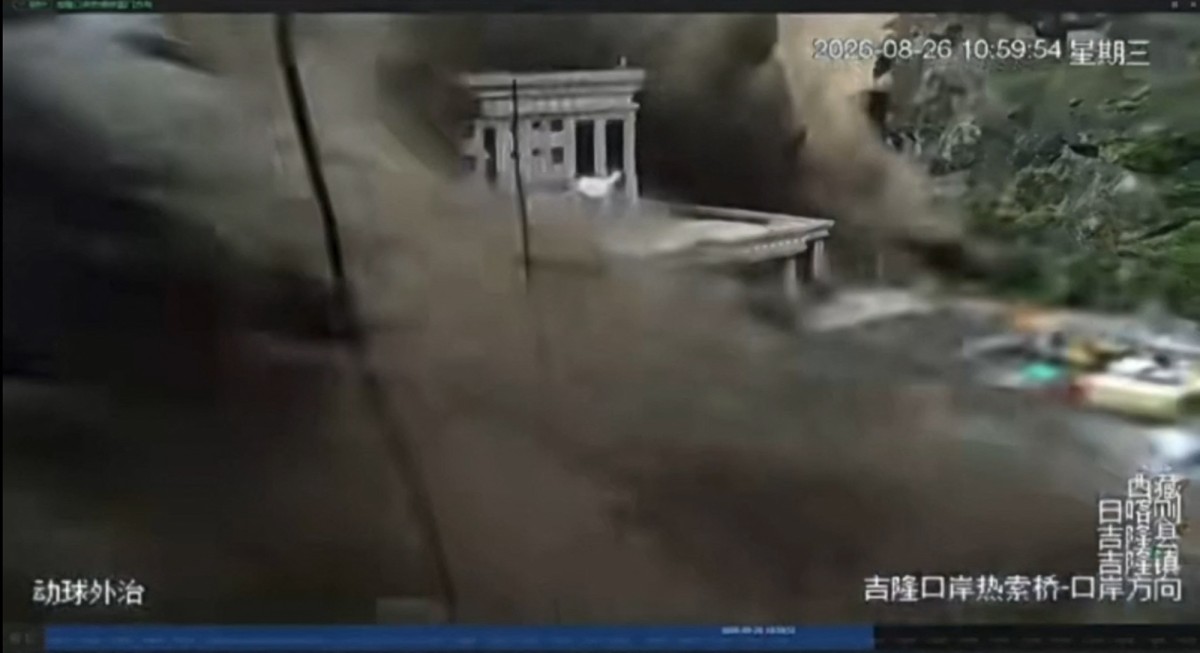
Border Flash Floods in China-Nepal Border Leave Behind a Trail of Tragedy
The flash floods and debris flow that occurred at the China-Nepal border have resulted in the deaths of 675 people in Nepal, with over 2,400 individuals missing. China has also reported a significant number of casualties and missing persons, with many families anxiously awaiting news of their loved ones, some traveling to Lhasa and Shigatse, while others facing obstacles in the disaster area’s vicinity. Meanwhile, the Chinese authorities have been accused of unifying propaganda narratives, blocking network messages, sparking criticism.
On August 26, a rare ice-rock collapse led to flash floods and debris flow at the China-Nepal border. According to the latest data from Nepal’s National Disaster Reduction and Management Authority as of 5:30 pm local time on August 29, the death toll from the flash floods has risen to 675, with 2,426 people missing, including over 700 foreigners.
Due to consecutive days of rainfall and dense fog, Nepal temporarily halted search and rescue operations on the 29th and instead sought international assistance for tunnel rescue and DNA identification of remains. The U.S. State Department announced a $500,000 aid package and dispatched disaster response advisers; the UK Prime Minister and the President of the European Commission expressed support; South Korea sent a rapid response team to rescue its citizens; Australia confirmed 34 Australians missing; neighboring India has delivered ten tons of relief supplies and plans to dispatch tunnel rescue teams and prefabricated bridges for support.
Facing the heavy casualties in neighboring countries, China’s side has also been deeply affected by the disaster, but rescue operations and public opinion control have been launched simultaneously.
A severe mudslide erupted at the Gyirong Port in Tibet, with fears of over a hundred fatalities! Around 10:30 am on August 26, a severe mudslide erupted in Nepal, surging into the Gyirong County at the Gyirong Port in Shigatse, causing significant casualties and missing persons. Many buildings at Gyirong Port were buried, roads, communications, and power supplies to the port completely cut off. It is reported that the disaster, occurring on the Nepalese side, may be related to snowmelt and the sudden rise in the Bhote Koshi River’s water level.
Xinhua News Agency of the Chinese Communist Party reported that as of 1 am on the 29th, the mudslide at the Gyirong Port in Gyirong County, Shigatse, Tibet, had resulted in 7 deaths and 554 missing persons.
After the disaster, a so-called official “propaganda directive” requesting media to unify their reports emerged on the internet. The content stated that all media outlets could only repost the unified press releases from central media and must place “a mudslide occurred on the Nepalese side” in the first sentence of the report, highlighting Nepalese casualties and downplaying the domestic Chinese disaster.
According to officially released rescue footage, rescue personnel can be seen clearing rubble manually in a thick debris field, continuously calling out “is anyone there.” As more than two days have passed since the incident, some netizens have questioned the authenticity and effectiveness of the operation, mocking the actual possibility of finding individuals under tons of debris.
At the same time, Chinese cyber police have taken administrative penalties against two netizens for reasons like “fabricating exaggerated casualty numbers” and “distorting the causes of the disaster,” either requiring them to undergo criticism and education or sign guarantees to control their speech.
One of the biggest natural disasters in 2026
As the Chinese authorities block information and the outside world is eager to verify the truth, many family members of the missing individuals in Tibet are also anxiously awaiting news.
A tour bus driver in Lhasa, Soban, interviewed by The Epoch Times, mentioned that all 15 tour bus drivers from his company were near the Gyirong Port, and all are currently missing.
“There are many of my friends there, but only 15 at the scene, all from our company, Lhasa Traffic Industry Group, but all are missing now.”
He explained that the 15 drivers were driving 29-seat tour buses, with some responsible for picking up tourists and some for dropping them off in the vicinity of the Gyirong Port.
Soban shared that he had operated tour routes in the Gyirong area last year but did not this year, which helped him avoid this disaster.
In his account, the number of vehicles at the port exceeded just tour buses. “There were many vehicles on-site, maybe there were hundreds, not to mention other trucks and cars.” This suggests that during the mudslide, a large number of workers, drivers, tourists, and other passing individuals may have gathered near the port.
Regarding the progress of the search and rescue efforts, Soban sounded notably heavy-hearted. He stated, “Currently, the search and rescue has reached the central location, with a few people found and rescued on the Nepalese side, but no one on the Chinese side.”
Soban also narrated an experience of one fellow villager: this driver had been scheduled to go to the Gyirong Port to pick up a tour group but had to return to Lhasa for something suddenly, hence missing the day’s trip. “This villager somehow returned to Lhasa for a vehicle inspection, narrowly escaping a disaster; it’s all fate.”
Some videos showed houses surrounded by debris flow, with people watching the terrifying scene from upstairs as the houses remained standing.
Shocking footage emerges: Netizens say prayers have succeeded
Similarly stranded outside the checkpoint, another family eagerly awaiting news of their missing brother, a truck driver who shuttles between China and Nepal year-round.
A resident of Sichuan, Zeng Hui, interviewed by The Epoch Times, mentioned that his brother is an international logistics truck driver, shuttling between Lhasa and Nepal. During the disaster occurrence, he was waiting for clearance near the Gyirong Port.
Zeng recalled that he had spoken to his brother on the day before the disaster. “My brother said there was a road collapse in Nepal, he was waiting at the border gate, but then the incident happened the next day, and we haven’t been able to contact him since.” This call turned out to be the last contact Zeng had with his brother.
Zeng subsequently contacted the logistics company where his brother works. According to the information provided by the company, during the disaster, his brother was approximately 200 meters near the border gate. For a long-haul truck driver running a Nepal route, the port is a crucial area for vehicle waiting, clearance, and handover. Zeng said, “I’ve been to that port, there are a lot of people; it’s crowded everywhere.”
After the disaster struck, Zeng rushed from Sichuan to Tibet in the hopes of getting closer to the incident site to search for his brother, but he explained that the disaster area was now off-limits, so the family could only hurry to Lhasa and wait for further arrangements. He mentioned that his brother had been in this job for almost a year, and though the family had hoped he would return, his brother chose to stay on that transportation route.
Zeng was interviewed by a reporter on August 26 as he was heading to Lhasa. Upon his arrival in Lhasa on the 27th, he continued to keep in touch with his brother’s company and relevant parties but still had not received any precise information about his brother.
By the 29th, Zeng, when interviewed again, mentioned that they still could not reach Gyirong, and the company had no further updates. Zeng also spoke about what he knew regarding the search and rescue efforts, stating that progress was slow, and his brother’s specific location and condition remained uncertain.
These scenes were captured by a Nepalese flood survivor who narrowly escaped a moment of life and death.
Updated on August 29, 2026 (Beijing time). The official death toll figures from Nepal have risen significantly once again. AP cited the National Disaster Reduction and Management Authority (NDRRMA) in Nepal for August 29’s latest numbers, reporting 626 deaths and 2,426 missing individuals. This marks an increase of 47 deaths and 502 missing persons compared to the previous figures of 579 dead and 1,924 missing. AP also noted that over 3,700 individuals in Nepal have been rescued…
More information:pic.twitter.com/VmSclv6YQ1
Similar to Zeng, another family, who hurried overnight from Lhasa to find their two brothers missing, were awaiting news outside a checkpoint.
Regarding the disaster, a leading expert on foreign affairs and strategy in Nepal, Parshuram Kaphle, openly criticized the Chinese authorities for failing to issue timely warnings downstream during a critical period of upstream flooding, resulting in a heavy loss of life for Nepal.
This marks the second consecutive year in which the Chinese authorities have faced public backlash for not issuing warnings about floods originating from Tibet to Nepal.
A woman rescued by the Nepalese army. She has lost her home, family, and friends and remains in a state of shock.
pic.twitter.com/8HbH8SUG0o
In July 2025, a glacial lake outburst flood (GLOF) occurred in the Gyirong area of Tibet, triggering a transnational major flood that destroyed bridges connecting the two countries and resulted in multiple deaths and disappearances in Nepal. At the time, the Chinese authorities also failed to issue timely notifications. Though the two countries had pledged to establish a cross-border “real-time flood warning and hydrological data-sharing mechanism,” it evidently did not withstand this test.
As for the cause of this disaster, the Chinese side believes it may be related to glacial collapse. However, Yijin Du, founder of the Taiwan Artificial Intelligence Laboratory and the PTT forum platform, analyzed the disaster from pre-disaster aerial images and suggested that this catastrophe should not be solely attributed to a natural calamity. Ignoring factors like engineering design and “fighting for land with the river” may have led to such a massive loss of life. The primary large buildings on both sides of the river where the incident occurred were constructed by Chinese enterprises.
Appalling: Just a few days before the outbreak of the major flood in Nepal, a blogger captured the Chinese frantically constructing hydropower facilities on the Nepalese side – continuous blasting, without safety measures, completely disregarding environmental protection. The Chinese authorities in occupied Tibet used the same methods to build hundreds of dams!
In a video, all one can see is excavation, tunneling, crushed stones, and cliff operations. This is not the “Belt and Road Initiative”; it’s turning the Himalayas into a quarry…
(picture link)
The tragic wait and inquiries of the families of the victims redirect attention to the disaster itself: how did this transboundary flood form, and why couldn’t timely warnings be issued?
On August 28, the National Key Laboratory of Geological Disaster Prevention and Geological Environmental Protection at Chengdu University of Technology released a preliminary assessment indicating that this disaster originated from the collapse of a high-altitude ice-rock body at around 5,190 meters in Nepal. The impact on the valley led to a transformation into mudslides and high-sand floods, with seismic signals indicating a magnitude equivalent to a 5.1 earthquake. It discharged over 3,300 meters in altitude along the river channel, directly hitting the Gyirong Port.
The report also mentioned that this transboundary watershed had experienced a severe disaster chain event on July 8, 2025. The event was triggered by the glacial lake outburst flood from the Purchepu Glacier, converting into floods/mudslides, damaging the China-Nepal Friendship Bridge. Both events shared similar downstream propagation channels, affecting the Gyirong Port and the Ressoa area.
More concerningly, the Gyirong Port in Tibet had conducted an emergency evacuation drill for a “glacial lake outburst” not long ago and was only 21 days apart from the actual disaster.
On August 5, the official WeChat public account of Gyirong reported that the Gyirong County Natural Resources Bureau, in conjunction with the Tibet Geothermal and Geological Brigade, conducted the “Gyirong County 2026 Glacial Lake Outburst Geological Disaster Emergency Evacuation Practical Exercise” in the Reso Village, simulating scenarios of Guaobanu ice lake’s water-level surge, dam cracking, and the risk of an outburst.
In the wake of the actual disaster on August 26, related drill videos surfaced, sparking rapid discussions. Critics argued that despite officials being aware of severe risks in the area, the disaster preparedness exercise was superficial.
Nepalese affairs columnist Parshuram Kaphle recently harshly criticized the Chinese authorities for not issuing immediate warnings downstream during the critical flooding event, leading to a devastating loss of life in Nepal.
This marks the second year in a row where the Chinese authorities have faced public backlash for not warning about upstream floods originating from Tibet to Nepal.
(pic link)