
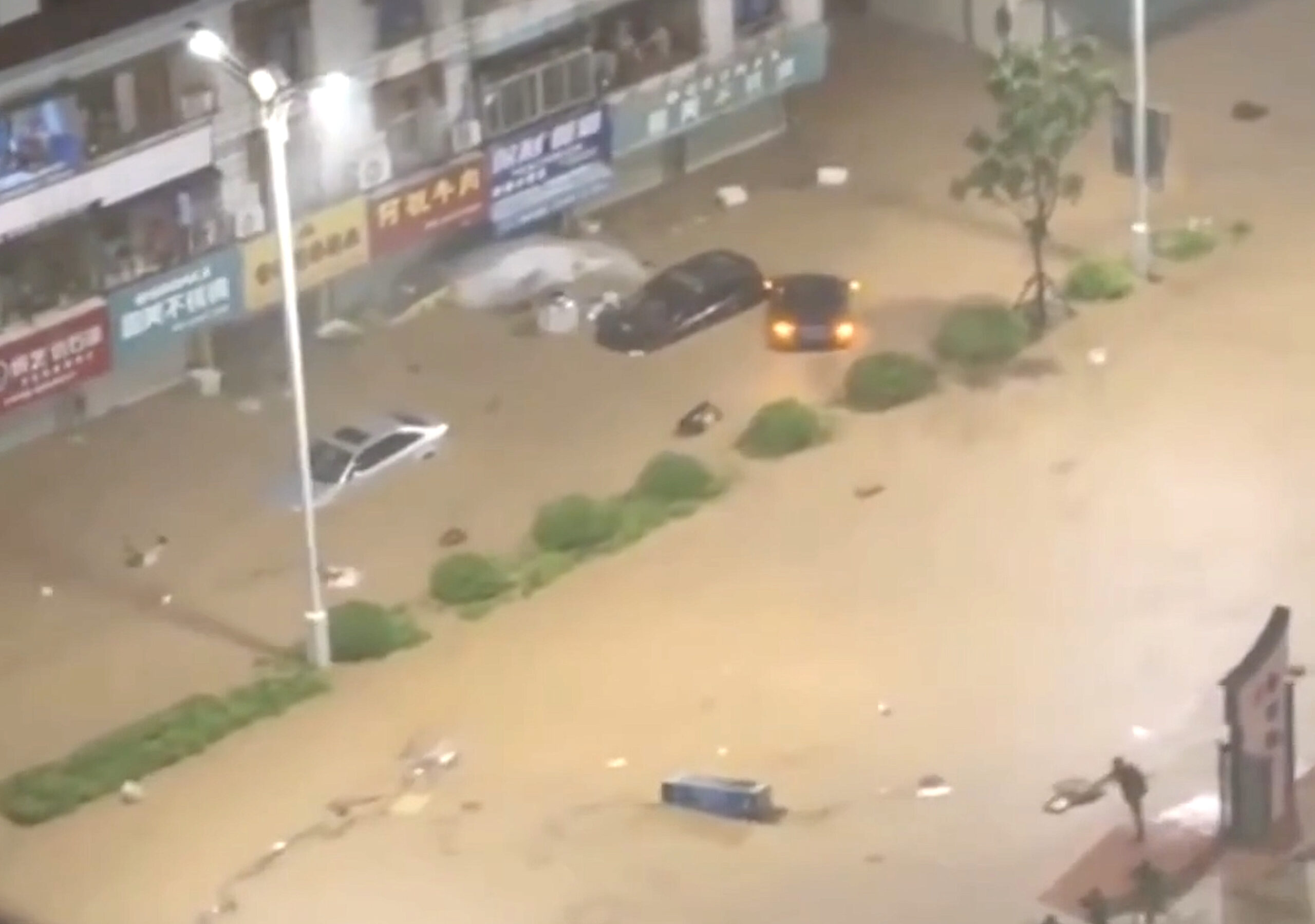
Typhoon “Chadel” re-intensified after being downgraded, bringing heavy rainfall to Fujian and Guangdong provinces. Overnight, streets in parts of Fujian were flooded, with local residents reporting that the floodwaters came rapidly, causing extensive damage to shops, vehicles, and even local government buildings. Questions were raised about the timely opening of water gates in the area.
Typhoon “Chadel,” the 18th typhoon of the year, was located about 345 kilometers southwest of Shanwei City, Guangdong Province, with maximum wind speeds near the center reaching level 8 and a wind speed of about 18 meters per second on September 1st.
One unique aspect of Typhoon “Chadel” was its unexpected change in course, originally forecasted to hit Taiwan but diverted towards mainland China. After making landfall in Taizhou, Zhejiang on August 28th, it passed through several provinces including Zhejiang, Fujian, Jiangxi, Guangxi, Guangdong, and Hainan.
In Fujian, continuous rainfall has led to severe flooding in some areas, with some places experiencing heavy rainfalls, causing serious waterlogging in Quanzhou.
Although previously weakened and declassified on August 30th, “Chadel” redeveloped after lingering in the ocean, reaching tropical storm status again on September 1st. The Central Meteorological Observatory warned of heavy to torrential rains in the coming days in eastern parts of Fujian, southern parts of Zhejiang, and eastern parts of Guangdong, with some areas expected to receive extremely heavy rainfall.
Quanzhou City experienced sudden heavy rainfall in the early hours of September 1st, resulting in severe urban flooding, with streets turning into rivers and numerous vehicles being swept away. Authorities issued a red alert for heavy rain.
Former Hong Kong Observatory Director, Lin Chao-ying, expressed astonishment at the resurgence of “Chadel,” questioning the mysteries of nature through social media. He emphasized the unpredictability of weather patterns and urged vigilance among locals as the typhoon lingered near Hong Kong.
Local business owners described the devastating impact of the flooding, with shops filled with water, causing substantial losses to their merchandise. The sudden onset of the flood caught many residents off guard, hindering evacuation efforts.
Residents reported damage to numerous shops and vehicles, particularly those near riversides, with losses extending to public facilities and surrounding areas. Waterlogged streets, mud, and debris created challenges for cleanup operations, leaving households with ruined belongings.
The impacts of the flooding extended to underground spaces and adjacent facilities, with flooded businesses and water-damaged vehicles being prominent issues. Concerns were raised regarding the management of a water gate in the area, with reports suggesting delays in opening the gate, leading to difficulties in water discharge.
Efforts to clear debris and assess losses were in full swing among residents, but fears of subsequent rainfall exacerbating the situation loomed large. The uncertainty surrounding the movement and intensity of “Chadel” prompted weather warnings and highlighted the risks of secondary disasters in the region.
Continued heavy rainfall in Fujian raised concerns about potential landslides, debris flows, and flash floods in areas already saturated with moisture. The combination of high winds and saturated ground posed challenges for residents and authorities in mitigating further damage.
Despite ongoing relief efforts and cleanup operations, the threat of secondary flooding and the uncertain trajectory of “Chadel” emphasized the need for continuous monitoring and preparedness in the affected regions. The resilience of communities in facing natural disasters was put to the test, underscoring the importance of coordinated response efforts and proactive measures to mitigate future risks.