
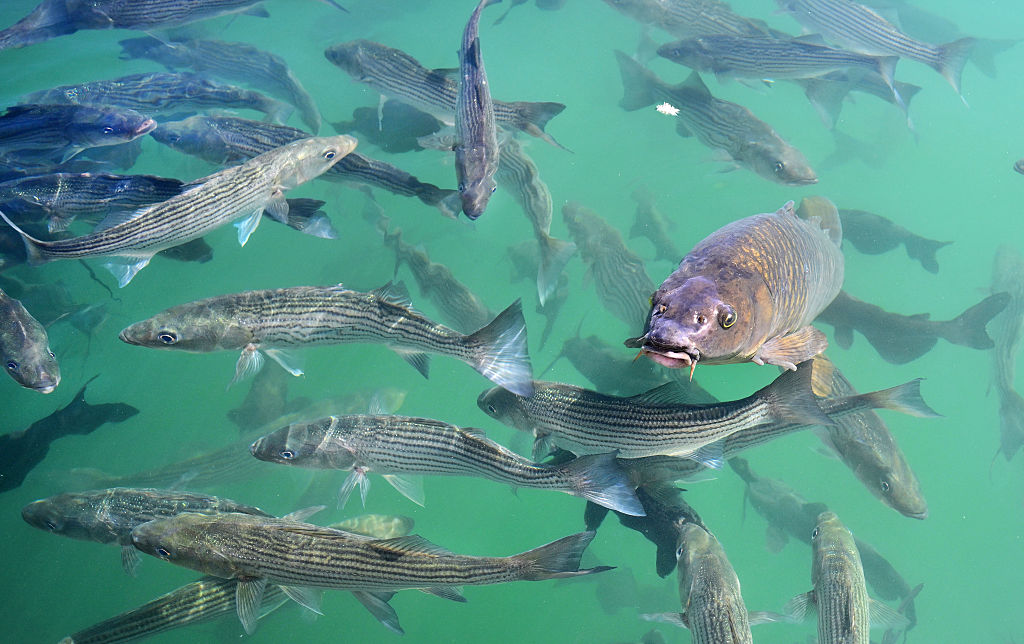
Nepal and China’s Tibet border witnessed a glacier collapse in the Himalayan region on August 26th, resulting in severe disasters. As the floodwaters gradually recede, a large number of mysterious giant fish have unexpectedly appeared in the disaster area waters, sparking local residents to rush for fishing. Fishermen in various areas have described these fish as unusually large in size, with some even resembling dolphins.
These giant fish species appeared at the end of August in the Gandak River and flood-prone areas in Bihar, India.
Fisherman Chatu Sahani told The Hindu, “After the floods in Nepal, the waters of the rivers in Bihar became swift, and strange, rare fish species appeared in the rivers. We rarely see these types of fish when fishing, and most of the fish die shortly after being caught.”
Another fisherman, Vinod Nishad, pointed out that among the fish caught recently, species such as barali, goita, and rohu can be identified, with these fish weighing between 27 and 45 kilograms.
The Bihar government has not confirmed whether these peculiar fish species are toxic but expressed concerns about potential contamination of the fish.
Local authorities have issued a notice urging people not to catch, consume, purchase, or sell any unfamiliar or rare fish washed in by floods. They also cautioned against assuming the safety of consuming these fish based on their appearance similar to commonly eaten fish species. If unfamiliar fish are caught, locals are advised to report to fisheries officials or local authorities for identification and safety assessment before handling them.
Authorities stated that these fish might have come into contact with sewage, dead animals, or decaying matter during the flood, leading to contamination by bacteria, viruses, or fungi. They emphasized the importance of not consuming any unfamiliar or rare fish species until their identification and safety have been confirmed by relevant departments.
This warning extends beyond the Gandak River basin. Following the floods in Nepal, the water levels of the Gandak, Ganges, and Kosi Rivers have significantly risen, and giant fish have been found in West Champaran, East Champaran, Gopalganj, Bagaha, Saran, and other areas.
Some people who consumed these giant fish have reported feeling unwell. Officials advise seeking medical attention immediately if symptoms such as vomiting, severe diarrhea, abdominal pain, dizziness, fainting, or difficulty breathing occur.
Sameer Kumar Sinha, director of the Wildlife Trust of India, mentioned that the mysterious fish recently appearing in the Gandak River are suspected to be “goonch catfish,” scientifically known as Bagarius bagarius, or locally called “Gochita.”
Sinha highlighted that this type of catfish inhabits swift rivers in India, Nepal, and other regions, and their bodies quickly rot after death, posing health risks if consumed after decomposition. He urged the public to heed the government’s warnings.
The International Union for Conservation of Nature (IUCN) has listed the goonch catfish as a threatened species.
This article references reports from The First Post and The Independent.