
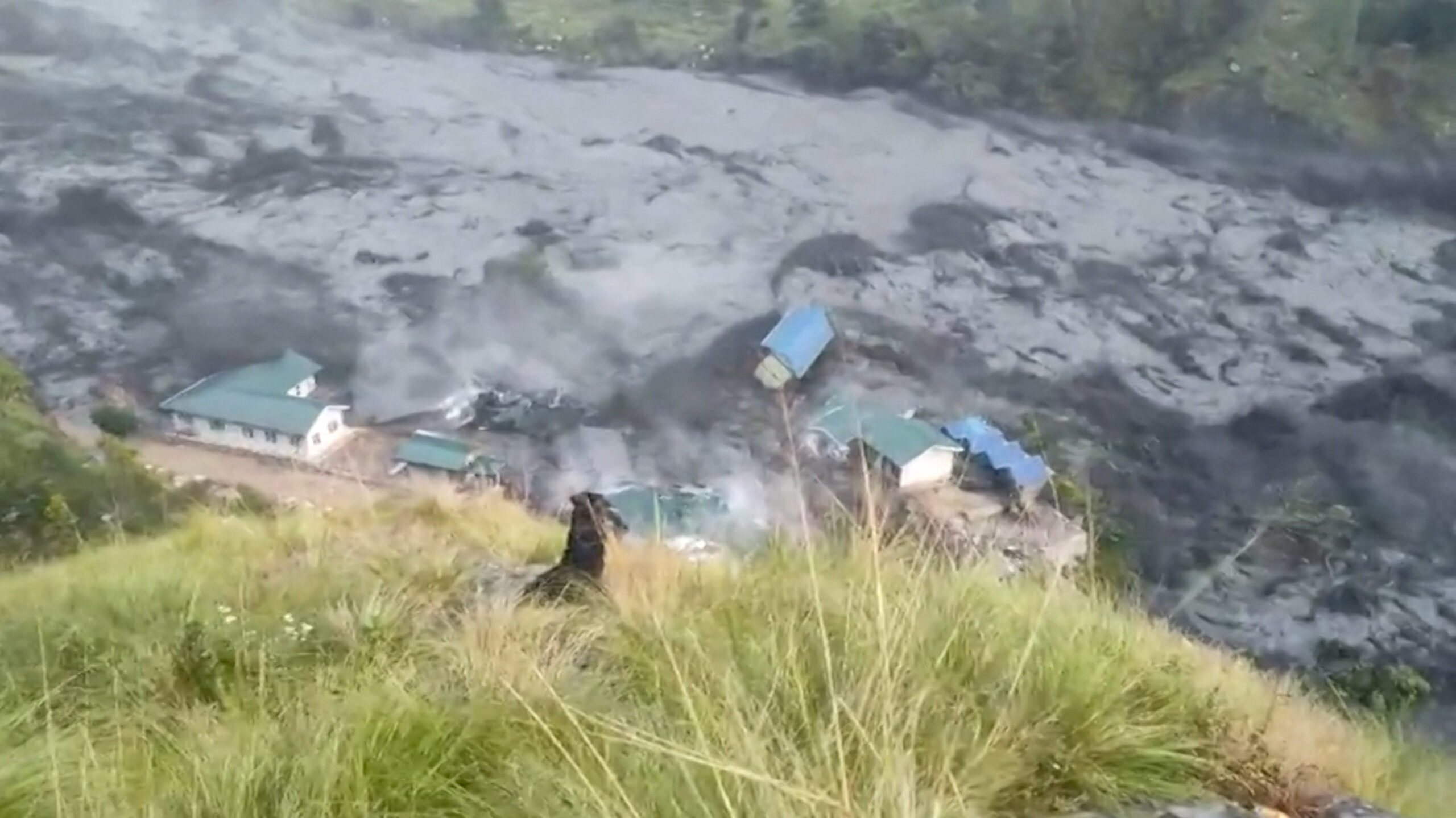
After a devastating flood that killed over a thousand people just two months ago, the Himalayan region of Nepal was hit by severe flash floods on Sunday morning, causing around 10 people to go missing and destroying dozens of houses, bridges, and hydropower stations.
In the central Gorkha district of Nepal on Sunday, the water level of the Budhi Gandaki River rose rapidly, with dark gray mudslides engulfing settlements along the banks, leading to at least 40 houses and several key bridges being washed away. An under-construction hydropower plant was also severely damaged.
According to reports from Agence France-Presse and other media outlets, five residents in shanties along the Ungilung River in Chumchet, the 6th Ward of the Chumubri Rural Municipality, went missing after the flood. Additionally, 4 to 5 herders are unaccounted for, bringing the total number of missing persons to around 10.
The National Disaster Risk Reduction and Management Authority (NDRRMA) of Nepal monitored that between 6:30 am and 8:40 am on the day of the incident, the water level of the Budhi Gandaki River rose from 3.66 meters to 8.43 meters, well above the 5-meter danger mark. During a brief 10-minute period from 8:30 to 8:40 am, the water level surged more than 2 meters.
Subsequently, local hydrological monitoring stations and measurement facilities were also destroyed by the floods.
Interestingly, there was no rainfall in the area at the time of the incident. Reuters reported that the flash flood occurred due to a severe dry-land landslide in the upstream Chumnubri Rural Municipality, temporarily blocking a river tributary and creating a dammed lake, which then burst, causing a sudden rush of water.
According to the BBC’s on-site coverage, the timing of the flash flood coincided with the first day of the important Nepali festival of “Dashain,” when local residents and children were preparing to celebrate. The sudden disaster forced residents to evacuate to higher ground without being able to gather their belongings. Laxmi Gurung, the Deputy Mayor of Chumubri Rural Municipality, confirmed that at least 40 houses in five different settlements were swept away by the flood.
In addition to the loss of infrastructure, the raging mudflows carried away a significant number of yaks and other livestock crucial for the livelihood of highland residents, posing a serious economic and survival challenge to the local farming and herding communities.
The Nepali Army has mobilized rescue teams urgently, deploying the Rapid Response Battalion from the capital of Kathmandu to the disaster area and using helicopters for aerial reconnaissance and rescue operations. By Sunday afternoon, the military had successfully airlifted nearly 50 residents and tourists stranded in high-risk areas of landslides to safety.
As the Budhi Gandaki River is a tributary of the Trishuli River, authorities have further expanded downstream vigilance and evacuation efforts. The National Disaster Reduction Agency has issued high alerts and emergency evacuation notices to riverside areas of Gorkha, Tanahun, Chitwan, and Nawalparasi along the Budhi Gandaki and Trishuli Rivers to guard against potential major secondary flooding downstream.
Currently, the international charity organization “Save the Children” and UN agencies have mobilized emergency response teams to provide humanitarian assistance in the disaster area.
This flash flood comes just two months after Nepal’s last historic flood. In late August, due to a glacial avalanche and extreme rainfall in the Himalayan region, a massive flood occurred at the Nepal-China border, resulting in over 1,400 deaths in Nepal and more than 5,000 people missing. Despite the cross-border nature of the flood disaster, international media and observers have pointed out a lack of transparency in the specific casualties and losses in the Tibetan region on the Chinese side.