
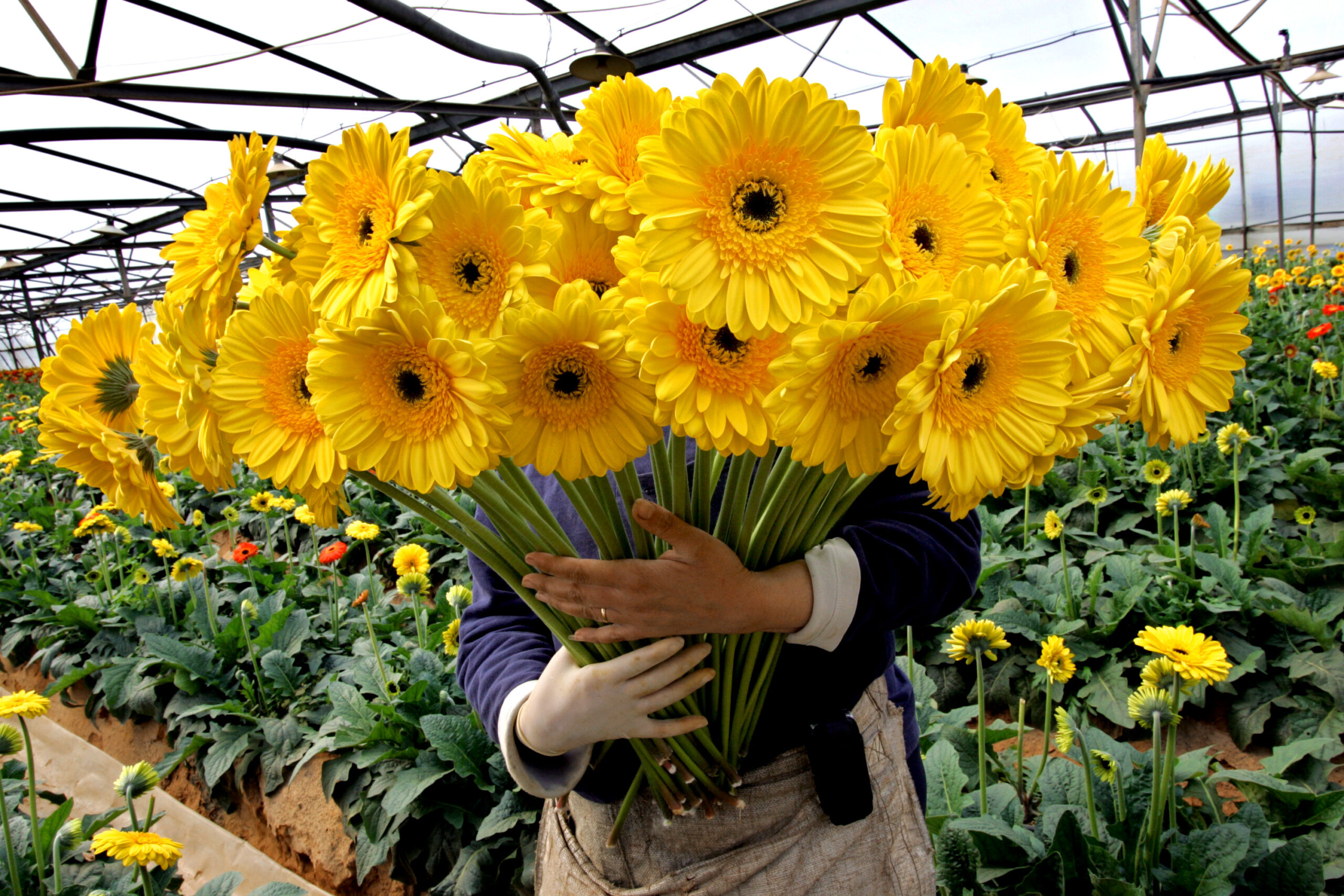
With heatwaves becoming more frequent and intense, some farmers in Japan are adjusting their work hours to avoid the high daytime temperatures. From flower growers and asparagus farmers to chicken raisers, some agricultural workers have shifted their working hours to cooler periods in the night or early in the morning. Similar practices have also been adopted by farmers in Vietnam and Spain.
According to a report by Reuters, 36-year-old Motoaki Iijima, who runs a flower farm in Nikko City, Tochigi Prefecture, is busy harvesting pink and orange African chrysanthemums in the greenhouse at night until the morning sun becomes too scorching to continue.
Iijima mentioned that a part-time worker suffered heatstroke while harvesting sunflowers in the greenhouse three years ago, prompting him to change the harvest time. When the outdoor temperature exceeds 35°C, the temperature inside the greenhouse can rise above 40°C.
Wiping sweat off his forehead under rows of fluorescent lamps, Iijima expressed, “The time around dusk and dawn is very precious as that’s when we can be outdoors. We have gradually become ‘night owls’ to protect our bodies and ultimately our lives.”
In order to adapt to the new work hours, workers at Iijima’s farm start work two hours earlier. 68-year-old worker Miyoko Asada arrives at the farm shortly after sunrise every day, describing it as a “race against time” to harvest and load flowers onto trucks before the temperature becomes unfavorable for work and the flowers wilt.
48-year-old chicken farmer Tetsuya Usuyama is also finding ways to cope with the high temperatures. He mentioned that a three-day heatwave six years ago resulted in over 500 egg-laying chickens suffering heatstroke and dying.
Now, his midnight routine is set: at 2:30 AM, the lights in the two chicken coops automatically come on, waking up 4,400 caged egg-laying hens to feed before their appetite is suppressed by the heat.
Usuyama has installed fans in the coops, sprinkled water on the roofs, and added citric acid to the drinking water of mother hens, yet the sudden July heat this year still caused him to lose 130 chickens.
Usuyama told reporters, “For farmers, summer has become a new threat, akin to a bird flu outbreak.”
Currently, the Japanese government has begun to address the risks of high temperatures through workplace regulations and “smart agriculture” technologies. According to Reuters, the new workplace regulations that came into effect in 2025 require employers to establish heatstroke notification procedures and emergency response plans. Japan is also promoting technologies such as drones and robots in smart agriculture to reduce the time workers spend in high-temperature environments.
Data from “The Lancet Countdown” shows that the high temperatures in 2024 resulted in the Japanese agricultural sector losing 926 million potential labor hours. The total potential income loss across all industries in Japan is approximately $46 billion, accounting for about 1% of Japan’s GDP.
The aging of Japanese agricultural workers also increases their vulnerability to the effects of high temperatures. Reuters cited data indicating that about 70% of Japanese farmers are 65 years old or older. Recent agricultural data in Japan shows that the average age of core agricultural workers is 67.7 years, with those aged 65 and older making up about 70%.
A study led by researchers from Stanford University published in “The Lancet Planetary Health” on August 17 suggests that individuals over 60 may experience “irreversible heat stress” in lower heat environments compared to younger people. This refers to the state where the body cannot maintain a stable core temperature, which could lead to severe health damages and increased risks of death.
The research team pointed out that older people may have weaker abilities in sweating, cardiovascular regulation, and skin blood vessel dilation, making their tolerance for high temperatures narrower compared to younger individuals.
Statistics in Japan further highlight the risks that agricultural workers face in high temperatures. According to Reuters citing relevant statistics, there were 59 agricultural workers who died from heatstroke in Japan in 2024, breaking the record and doubling the number of deaths compared to 2021.
Furthermore, a survey conducted by the Japan Meteorological Association in 2025 revealed that among farmers aged in their 20s to 50s, about 60% reported experiencing heatstroke themselves or knowing someone who has, while nearly 60% of farmers mentioned adjusting their work hours earlier or later.