
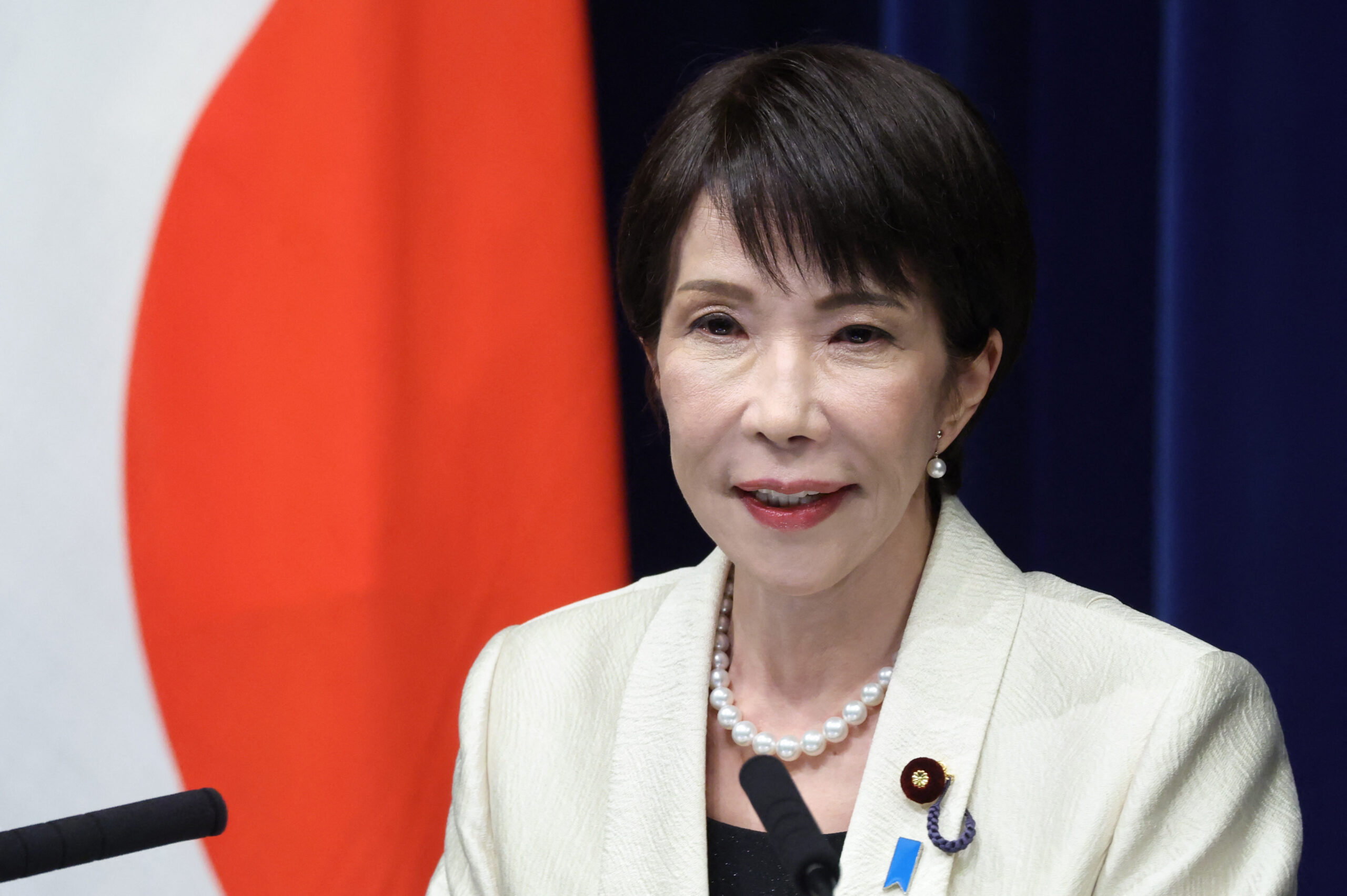
The Japanese government held the “Green Transformation (GX) Implementation Conference” at the Prime Minister’s Office on August 26 to announce a comprehensive plan to enhance the resilience of the energy supply-demand structure in response to the potential risks of oil supply disruptions due to the turbulent situation in the Middle East.
This plan includes supporting the construction of alternative pipelines bypassing the Strait of Hormuz and promoting diversification of crude oil procurement sources to reduce energy supply risks. The Japanese government also proposed maximizing the use of nuclear power, promoting the introduction of renewable energy, and accelerating the green transformation (GX).
Japan plans to promote diversification of crude oil procurement sources to reduce reliance on transporting oil through the Strait of Hormuz.
Prime Minister Takanichi Hayashi requested the Minister of Economic and Industrial Affairs, Akasawa Ryo, to compile a comprehensive plan to strengthen the energy supply-demand structure by the end of August during a ministerial meeting related to the situation in the Middle East on June 26. Hayashi emphasized the need to increase energy options through crisis management-oriented investments to turn crises into growth drivers.
Official data from Japan’s Ministry of Economic and Industrial Affairs shows that over 90% of Japan’s crude oil imports rely on the Middle East, and disruptions in shipping through the Strait of Hormuz could threaten energy supply. The Japanese government is studying the use of alternative transportation routes from countries like Saudi Arabia and the United Arab Emirates and promoting diversification of crude oil procurement sources to mitigate supply risks.
Under the new plan, Japan will support domestic companies in participating in projects for alternative pipelines bypassing the Strait of Hormuz in oil-producing countries in the Middle East and consider providing support through the Japan Oil, Gas and Metals National Corporation (JOGMEC).
Prior to this, a relevant working group from Japan’s Ministry of Economic and Industrial Affairs had proposed reducing reliance on importing crude oil through maritime passages like the Strait of Hormuz and utilizing existing alternative transportation routes from Saudi Arabia, the United Arab Emirates, and other countries.
In terms of crude oil procurement, Japan will establish a mechanism for relevant companies to collectively share the increased transportation costs when importing crude oil from regions outside the Middle East, encouraging companies to expand procurement from non-Middle Eastern regions to further diversify energy supply sources.
The new plan will also include naphtha in the reserve system to address the risk of supply interruptions in the petrochemical industry.
Naphtha is an essential raw material for producing plastics, printing inks, and other chemical products. Insufficient supply in the past has led to some companies ceasing the sale of related products or simplifying product packaging.
In terms of energy policy, the Japanese government plans to maximize the use of nuclear power while increasing investments in next-generation technologies like solar cells to advance the green transformation (GX). The Japanese government aims to reduce dependence on fossil fuels, expand a stable supply of non-fossil energy sources, and enhance the stability and security of energy supply.
Meanwhile, the rapid development of artificial intelligence (AI) and data centers is driving an increase in Japan’s electricity demand. The Japanese government is prioritizing ensuring stable electricity supply, improving energy self-sufficiency, and promoting the development of non-fossil energy as key aspects of its energy policy.
(Contribution from Reuters to this article)